
Why Decentralized Messaging Is the Next Big Thing in 2026
From Matrix protocol to peer-to-peer chat networks, decentralized messaging is gaining momentum. Explore why users are demanding alternatives to centralized platforms.
The Centralization Problem
Today, a handful of companies control the messaging infrastructure for billions of people. When one of these platforms goes down — as happened during several high-profile outages in recent years — hundreds of millions of conversations stop simultaneously. When a company changes its privacy policy, billions of users must accept it or leave. This concentration of power over personal communication is increasingly seen as a structural risk, not just an inconvenience.
What Is Decentralized Messaging?
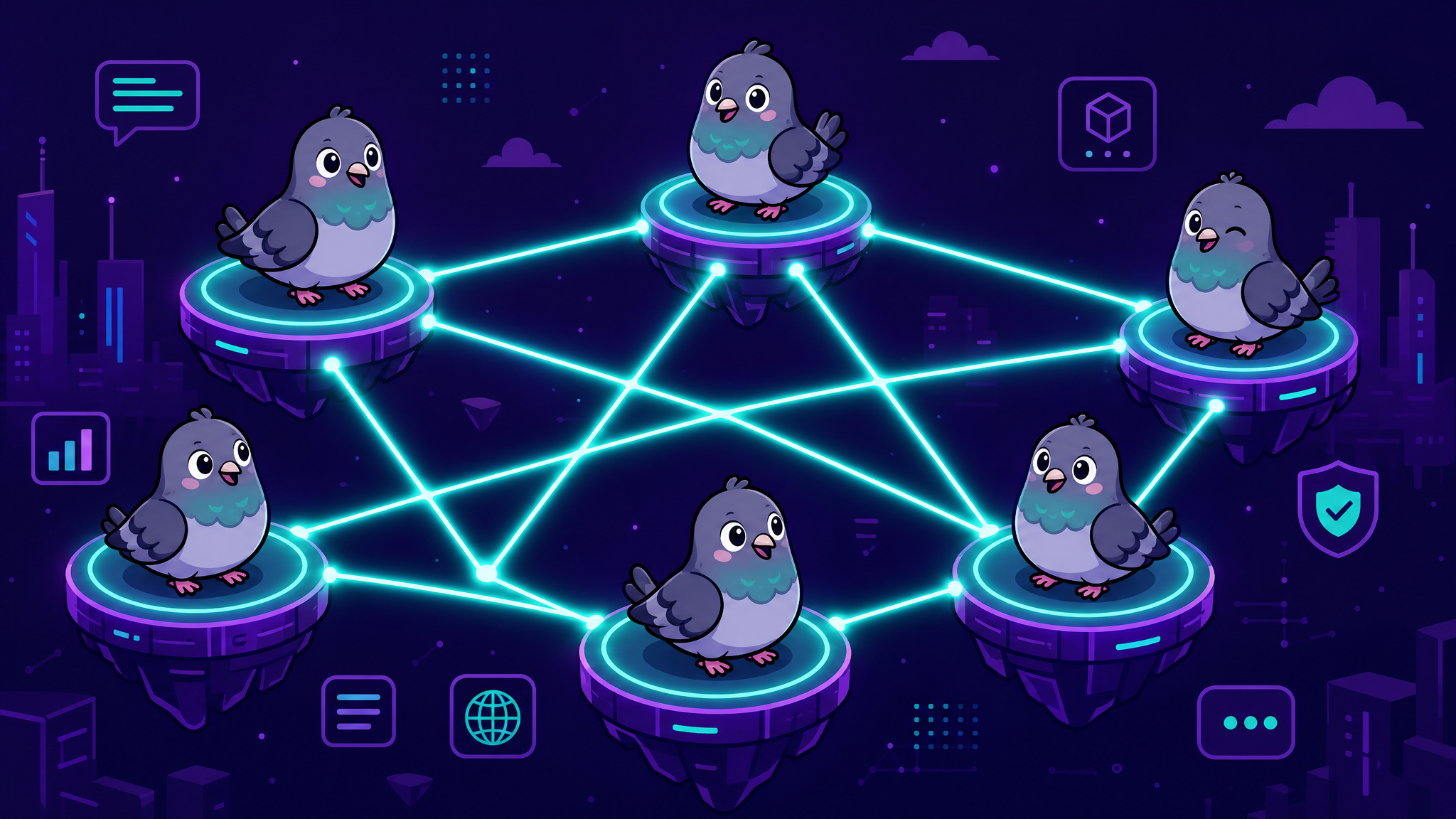
Decentralized messaging removes the single point of control. Instead of all messages flowing through one company's servers, they pass through a distributed network of independent servers (federated model) or directly between devices (peer-to-peer model). Think of it as the difference between having one post office for an entire country versus having neighborhood mail carriers who cooperate.
The Matrix protocol, for instance, allows anyone to run their own messaging server that communicates with every other Matrix server. ActivityPub, the protocol behind Mastodon, is being extended for direct messaging. And newer technologies are exploring fully peer-to-peer approaches where no server exists at all.
Why 2026 Is the Tipping Point
Regulatory Pressure
The EU's Digital Markets Act and similar legislation worldwide now require large messaging platforms to support interoperability. This means WhatsApp, iMessage, and others must eventually allow messages to flow to and from other services — fundamentally shifting the landscape toward open standards.
Privacy Awakening
Data breaches and surveillance scandals have made "trust us" an insufficient privacy model. Decentralized systems where no single entity has access to all conversations offer a fundamentally stronger privacy architecture. You don't need to trust a company's promise when the system is built to prevent access by design.
Technical Maturity
Early decentralized messaging was clunky and unreliable. Modern implementations have solved the hard problems: offline message delivery, cross-device sync, rich media support, and group conversations all work smoothly. The user experience gap has largely closed.
Challenges Still to Overcome
Decentralized messaging isn't without obstacles. Discovery — finding and connecting with friends — is harder without a central directory. Moderation becomes more complex when no single authority can enforce content policies. And the network effects that keep users on centralized platforms are powerful: your friends are already on WhatsApp, so why would you switch?
Interoperability mandates help solve the network effect problem. Improved protocol standards address discovery. And community-based moderation models, already proven in the Mastodon ecosystem, show that decentralized doesn't mean unmoderated.
What This Means for Your Messaging Future
You may not switch to a fully decentralized messaging app tomorrow. But the trajectory is clear: the future of messaging is more distributed, more interoperable, and less dependent on any single company's goodwill. The pigeons are leaving the cage — and they're building their own networks.

Writer & Editor at PigeonChat
Related Articles

Why people search for the best chat app UAE option

Why users search for a best chat app UAE option

Why users search for a best chat app UAE option

What makes a pigeon chat app different online

Why chat folders matter for busy group conversations