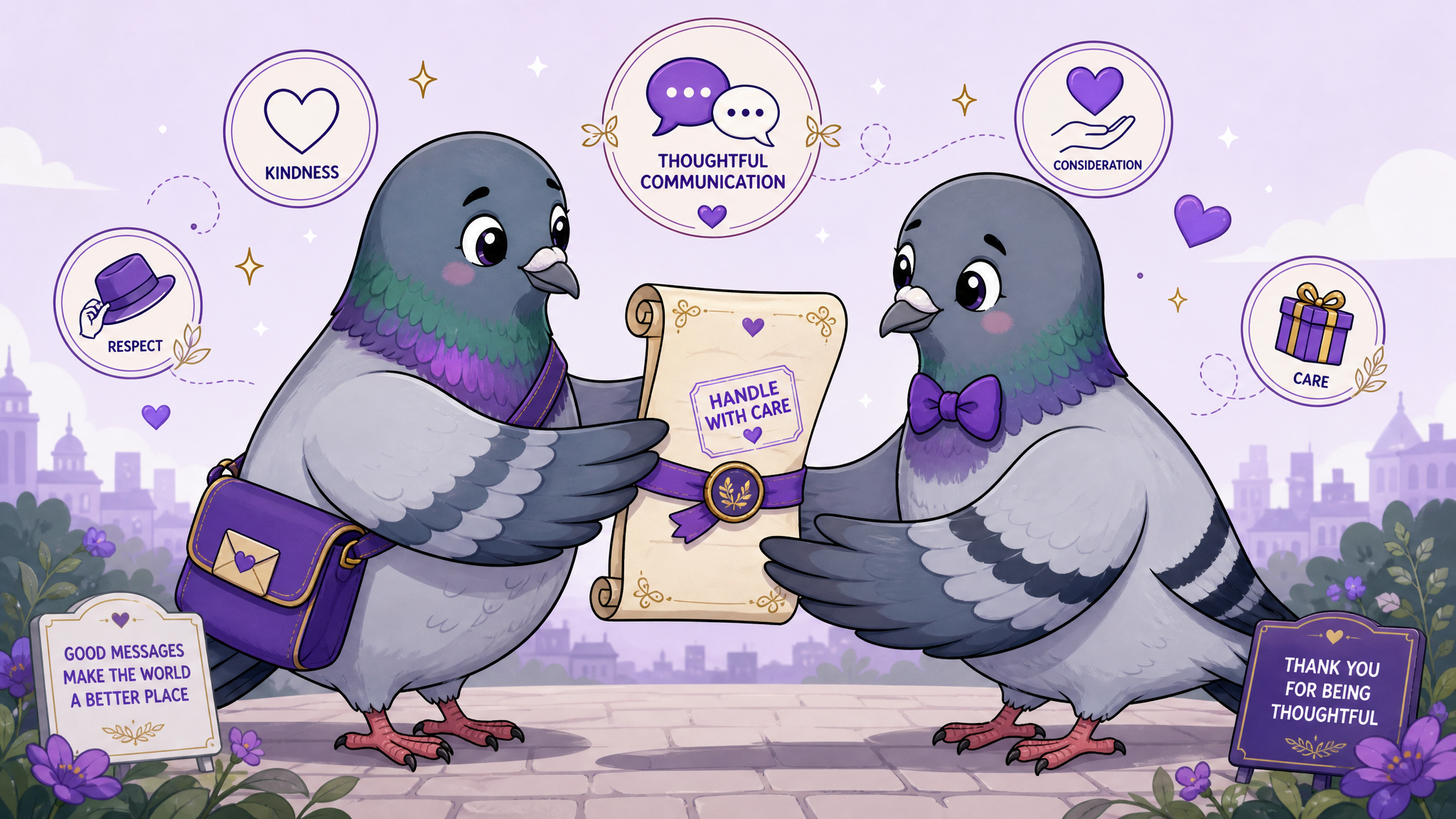
The Etiquette of Forwarding Messages: When Sharing Becomes Oversharing
Forwarding messages is effortless. But just because you can share a private conversation doesn't mean you should. Navigate the unwritten rules of message forwarding.
The One-Tap Dilemma
It takes exactly one tap to forward a private message to someone else. One tap to share a friend's vulnerable confession with your partner. One tap to send a colleague's frustrated rant to the group chat for laughs. One tap to redistribute a private photo to an audience it was never intended for. Messaging apps have made sharing frictionless — but friction, it turns out, served an important social function.
The Unwritten Rules of Message Forwarding
Rule 1: Private Messages Stay Private
If someone sends you a message in a private one-on-one conversation, the default assumption is that it was intended for your eyes only. Forwarding it to others — regardless of how innocent the content seems — violates that implicit trust. The only exception is when the sender explicitly says "feel free to share this."
Rule 2: Context Doesn't Transfer
Messages are crafted for their intended audience. A sarcastic joke between close friends becomes offensive when forwarded to an acquaintance who doesn't understand the dynamic. A frustrated vent about work becomes career-ending gossip when forwarded to the wrong person. Before forwarding, ask: "Would this mean the same thing to the recipient as it did to me?"
Rule 3: Screenshots Are Forwards in Disguise
"I didn't forward it, I screenshotted it" isn't the defense people think it is. A screenshot of a private conversation shared with others is functionally identical to forwarding. In some ways it's worse — it preserves the visual evidence in a way that's harder for the original sender to dispute or contextualize.
When Forwarding IS Appropriate
- Helpful information — news articles, event details, practical advice meant for broad sharing
- With explicit permission — "Can I share this with Sarah? She'd find it useful"
- Public content — messages from channels, public groups, or broadcast lists designed for redistribution
- Safety concerns — if someone is in danger or a message contains evidence of harmful behavior, sharing with appropriate parties (not the group chat for entertainment) is justified
The Misinformation Problem
Forwarding chains are the primary vector for misinformation in messaging apps. A false claim gets forwarded 6 times and suddenly appears "viral" — lending it false credibility. WhatsApp's decision to limit forwarding to 5 chats at a time reduced viral misinformation by 70%. Before forwarding news or claims, verify the source. If you can't verify it, don't amplify it.
A Simple Test Before You Forward
Before tapping that forward button, run this mental checklist:
- Would the original sender be comfortable with this being forwarded?
- Does the recipient need this information, or am I just sharing for entertainment?
- Is the content verified, or could I be spreading misinformation?
- Could this cause harm — to the sender, to relationships, to someone's reputation?
If any answer gives you pause, the message stays in its original conversation. Trust is built in years and destroyed with a single tap.

Writer & Editor at PigeonChat
Related Articles

Why people search for a pigeon chat app online

Why users search for a pigeon chat app online

Why people call pigeons a messaging app joke
Dating, Community & Making Money on PigeonChat.site
Why chat folders matter for busy group conversations