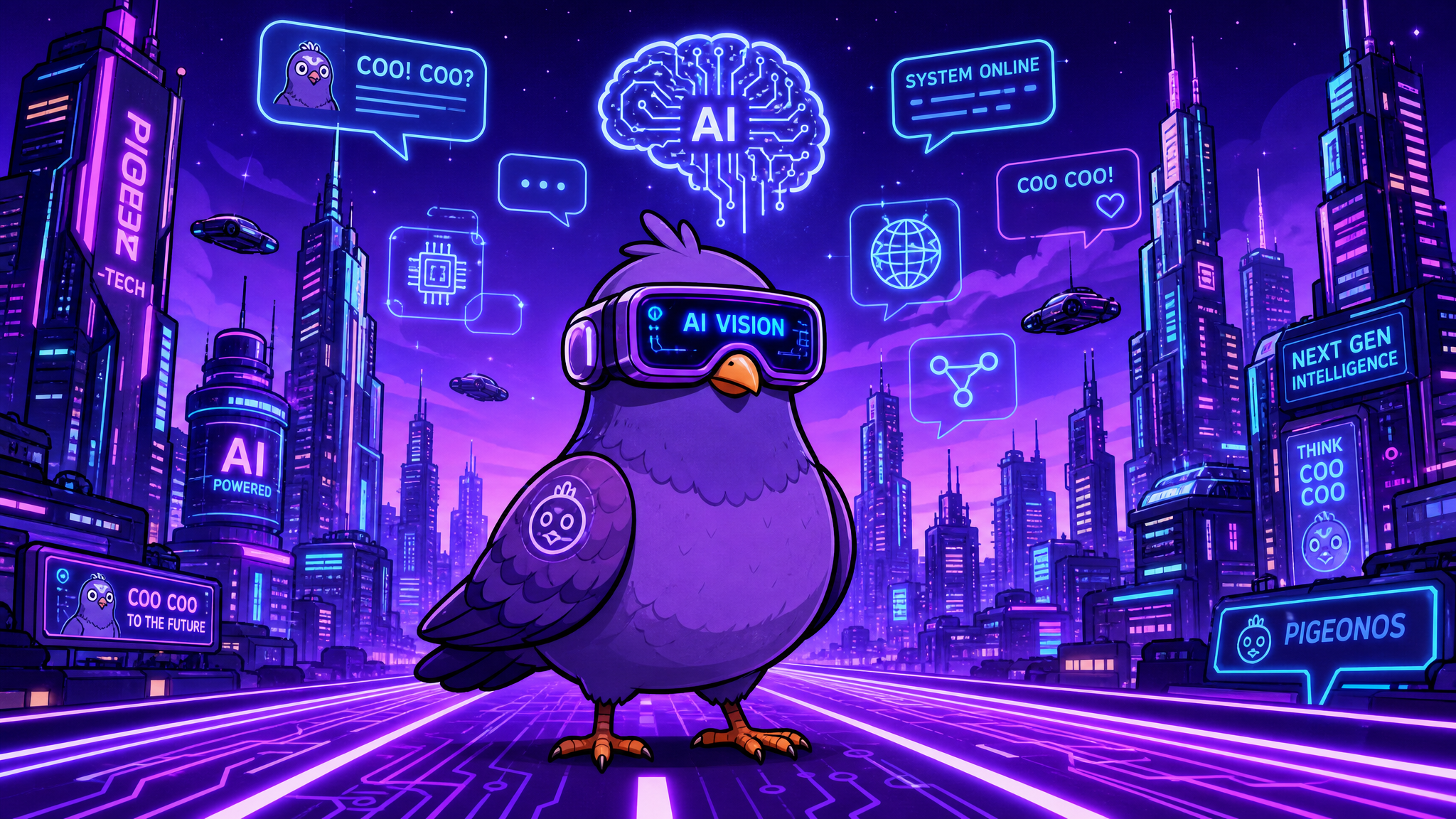
The Future of Messaging: 10 Predictions for the Next Decade
From AI-powered conversations to holographic messaging, explore 10 bold predictions that will reshape how we communicate over the next ten years.
Ten Years From Now, Your Messaging App Won't Look Anything Like Today
If you could travel back to 2016 and show someone today's messaging landscape, they'd barely recognize it. Group video calls with virtual backgrounds. AI-powered message suggestions. Channels with live streaming. Stories that disappear after 24 hours. Crypto payments. Read receipts that create relationship anxiety. Custom sticker empires worth billions.
Now imagine jumping forward another decade to 2036. The messaging apps we use daily will undergo transformations just as dramatic as the last ten years, if not more so. Based on current technology trajectories, research developments, and emerging user behaviors, here are ten predictions for the future of messaging that will reshape how billions of people communicate.
Prediction 1: AI Will Write Most of Your Routine Messages
By 2030, the majority of routine messages — acknowledgments, scheduling responses, information queries — will be drafted by AI and sent with a single tap of approval. Your messaging app will learn your communication style, understand your relationships, and generate contextually appropriate responses that sound like you.
"Running 10 minutes late" when your calendar shows a meeting starting and your GPS shows you're still at home. "Happy birthday! Hope you have an amazing day" personalized with specific references to the recipient. "Thanks for the update, I'll review the document by EOD" generated from scanning an incoming work message. These mundane but necessary communications will be handled by AI, freeing human creativity for conversations that actually require it.
The implications are profound. If AI handles the logistical layer of communication, human messaging will increasingly focus on emotional, creative, and relational content. Messaging will become less about information exchange and more about genuine connection.
Prediction 2: Real-Time Translation Will Eliminate Language Barriers
Real-time translation in messaging already exists in basic forms, but by 2028, it will be seamless, nuanced, and culturally aware. You'll message in English, your recipient will read in Japanese, and neither of you will experience friction or awkwardness. Idioms, humor, and cultural references will be adapted rather than literally translated, maintaining the spirit of communication across languages.
This technology will fundamentally change global communication patterns. International friendships, cross-border business relationships, and multicultural communities will flourish in messaging spaces where language is no longer a barrier. The group chat of the future might include members speaking ten different languages, all communicating fluently through real-time translation.
Prediction 3: Holographic and Spatial Messaging Will Replace Video Calls
As augmented reality (AR) glasses become mainstream consumer devices (likely by 2030-2032), messaging will extend into three-dimensional space. Rather than video calling on a flat screen, you'll project a holographic representation of yourself into someone else's living room, or they'll appear sitting across from you at your kitchen table.
Spatial messaging will also change how we share content. Instead of sending a photo of a vacation sunset, you'll send a spatial capture that the recipient can "step into" and experience in 360 degrees. Product recommendations will include 3D models that appear on the recipient's desk at actual size. Messaging will evolve from a screen-based activity to an ambient, spatial experience woven into physical reality.
Prediction 4: Emotional AI Will Detect and Respond to Mental Health Signals
Future messaging apps will incorporate emotional AI that analyzes messaging patterns to detect signs of mental health distress — changes in response time, language patterns, communication frequency, and sentiment that correlate with depression, anxiety, or crisis states.
When concerning patterns are detected, the app might gently suggest resources, prompt trusted contacts to check in, or offer coping tools directly within the messaging interface. This isn't surveillance — it's a digital safety net, similar to how a close friend might notice you've been unusually quiet and reach out to ask if you're okay.
The ethical dimensions are significant and will require careful navigation. Consent, privacy, accuracy, and the risk of over-reliance on AI for emotional assessment all need thoughtful solutions. But the potential to identify and support people in mental health crises through the platform they use most frequently is too significant to ignore.
Prediction 5: Messaging Will Become the Primary Interface for Commerce
The line between messaging and shopping will dissolve entirely. By 2030, conversational commerce — discovering, evaluating, and purchasing products through chat — will account for a significant portion of online retail. You'll message a brand, describe what you're looking for, receive personalized recommendations with AR previews, and complete the purchase without ever leaving the conversation.
This isn't speculation — it's already happening in Asian markets. WeChat in China, LINE in Japan, and KakaoTalk in Korea have already integrated shopping, payments, reservations, and services into their messaging platforms. Western messaging apps are following this trajectory, and by the end of the decade, your messaging app will be your mall, your bank, your travel agent, and your personal shopper.
Prediction 6: Decentralized Messaging Will Challenge Platform Monopolies
Blockchain technology and decentralized protocols will give rise to messaging platforms that no single company controls. In decentralized messaging, your data lives on distributed networks rather than corporate servers. No company can shut down your account, sell your data, or change the rules of engagement.
The Matrix protocol and similar decentralized messaging standards are already gaining traction among technical users. As user-friendly interfaces make these protocols accessible to mainstream audiences, the appeal of truly user-owned communication will challenge the dominance of centralized platforms. Messaging will become more like email — an open standard that anyone can build on, rather than a walled garden controlled by a single corporation.
Prediction 7: Voice and Gesture Will Replace Typing for Many Users
The keyboard's dominance in messaging is already being challenged by voice input, and within a decade, it will share the stage with gesture-based input from AR/VR devices. Imagine composing a message by speaking naturally while walking, or by making hand gestures in the air that your AR glasses translate into formatted text, stickers, and multimedia messages.
Neural interface technology, while still early, may also enter the messaging space by the mid-2030s. Brain-computer interfaces that translate thought into text are in clinical trials today. While mass adoption is further out, the trajectory toward thought-based messaging input is real and progressing faster than most people realize.
Prediction 8: Privacy Will Become a Premium Feature
As data collection becomes more sophisticated and valuable, the messaging market will stratify along privacy lines. Free messaging apps will offer basic functionality subsidized by data collection, while premium platforms will offer enhanced privacy features — zero-knowledge encryption, metadata stripping, decentralized storage, and verified deletion — for a subscription fee.
This mirrors what's happening in email and cloud storage. Privacy-conscious consumers are already willing to pay for services that respect their data. In messaging, where the content is even more personal than email, the willingness to pay for privacy will be even stronger.
Prediction 9: Digital Twins Will Message on Your Behalf
AI digital twins — personalized AI models trained on your communication history, personality, and preferences — will handle routine messaging interactions on your behalf. Your digital twin will respond to invitations, coordinate schedules, make small talk, and handle low-stakes social obligations while you focus on high-value interactions.
The social implications are fascinating and slightly unsettling. When your digital twin is chatting with someone else's digital twin, is that a real conversation? Where do we draw the line between AI assistance and AI replacement in our social lives? These questions will define the social norms of the 2030s.
Prediction 10: Messaging Will Merge with Everything
The most fundamental prediction is that messaging won't be a separate app — it will be a layer embedded in everything. Your car's dashboard, your kitchen appliances, your work tools, your fitness equipment, and your entertainment systems will all have messaging capabilities built in. Communication will be ambient and contextual, appearing exactly where and when you need it.
Your refrigerator might message your family group: "Running low on milk." Your running shoes might message your workout buddy: "Beat my personal best this morning!" Your calendar might message your team: "Available for a call in 15 minutes." Messaging will transition from something you do on a device to something that happens automatically across your entire connected life.
The Only Constant Is Connection
Technology predictions are inherently uncertain — some of these will arrive sooner than expected, others may never materialize, and the most transformative changes will likely be ones nobody predicted at all. But one thing is certain: the human need for connection that drives messaging will only grow stronger.
Whether we're tapping screens, speaking to thin air, or eventually thinking messages into existence, the core impulse remains the same: we want to reach the people who matter to us, share our experiences, and feel less alone in an enormous world.
Platforms like PigeonChat are building toward this future — not by chasing every technological trend, but by staying focused on what messaging is fundamentally about: connecting people in ways that feel natural, secure, and genuinely human. Whatever the future holds, that mission will remain at the heart of everything messaging becomes.

Writer & Editor at PigeonChat
Related Articles

Why people search for the best chat app UAE option

Why users search for a best chat app UAE option

Why users search for a best chat app UAE option

What makes a pigeon chat app different online
Why chat folders matter for busy group conversations