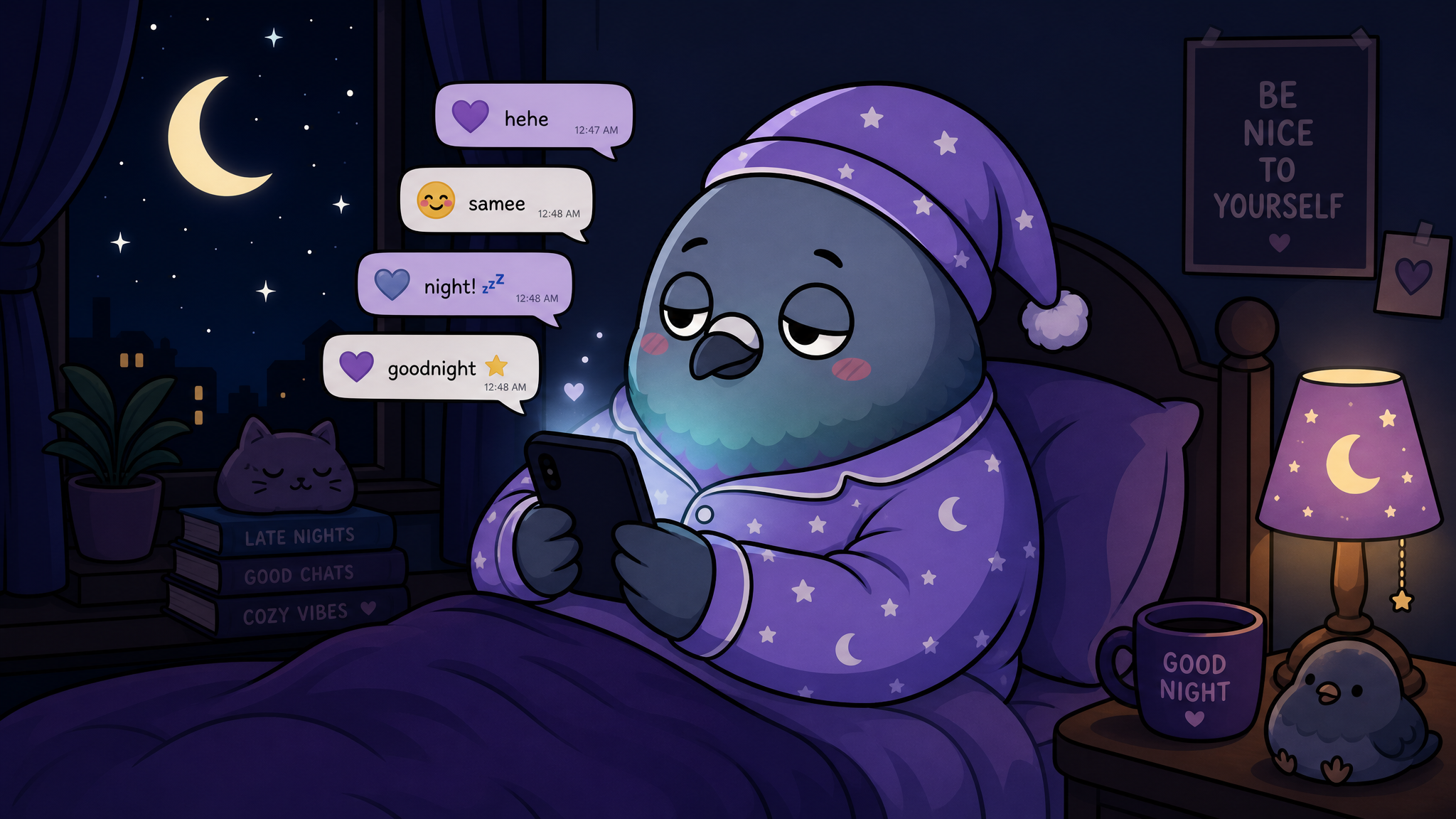
Sleep Hygiene and Messaging: Why Late-Night Texts Are Ruining Your Rest
That 'one last message' before bed is costing you more than a few minutes of sleep. Explore the science of how late-night messaging disrupts your sleep cycle and what to do about it.
The Bedtime Scroll That Steals Your Sleep
It starts innocently. You're in bed, lights off, ready to sleep. Your phone buzzes — a message from a friend. You reply. They reply. Twenty minutes later, you're deep in a conversation about whether a hot dog is a sandwich, and your brain is wide awake. Sound familiar? You're not alone: 71% of adults admit to messaging in bed, and sleep researchers are increasingly alarmed about what this habit is doing to our rest.
The Triple Threat to Your Sleep
1. Blue Light Suppresses Melatonin
Your phone's screen emits blue-spectrum light that directly suppresses melatonin production — the hormone that tells your body it's time to sleep. Even 30 minutes of screen exposure before bed can delay melatonin release by 90 minutes, shifting your entire sleep cycle. Night mode and blue light filters help, but they don't eliminate the effect.
2. Cognitive Arousal Prevents Sleep Onset
This is the bigger problem. Messaging is cognitively stimulating — you're reading, interpreting, composing, and anticipating responses. Each message activates your prefrontal cortex and triggers micro-doses of dopamine. Your brain enters an engaged, alert state that's the exact opposite of the relaxation required for sleep onset. Research shows that active phone use (messaging, social media) before bed increases sleep latency by an average of 32 minutes compared to passive consumption (reading).
3. Emotional Activation Disrupts Sleep Quality
Not all messages are neutral. An exciting message triggers anticipation. A stressful message triggers anxiety. Even a positive exchange triggers social dopamine that keeps your reward centers active. Any emotional activation within 30 minutes of sleep has been shown to reduce deep sleep phases and increase nighttime awakenings.
The Cascade Effect
Poor sleep from late-night messaging creates a vicious cycle. Tiredness reduces impulse control the next day, making you more likely to mindlessly scroll in bed again. Accumulated sleep debt impairs concentration, mood regulation, and decision-making — making you more reactive in your messages, which creates more emotional exchanges, which further disrupts sleep. It's a spiral that compounds over weeks and months.
Science-Backed Solutions That Actually Work
The 60-Minute Buffer
Stop all messaging at least 60 minutes before your intended sleep time. This gives your melatonin levels time to rise and your cognitive arousal time to wind down. Replace messaging with activities that promote sleep: reading a physical book, gentle stretching, or listening to calm music.
The Phone Bedroom Ban
The nuclear option — and the most effective one. Charge your phone in another room. Use a traditional alarm clock. Researchers at the National Sleep Foundation found that people who keep phones outside the bedroom fall asleep 22 minutes faster and sleep 47 minutes longer on average.
The Wind-Down Ritual
Create a consistent pre-sleep routine that doesn't involve screens. Your brain learns to associate these activities with sleep. Over time, the ritual itself becomes a sleep trigger, making it easier to resist the pull of late-night messaging.
Scheduled Do Not Disturb
Set automatic Do Not Disturb from 10 PM to 7 AM. Allow calls from favorites for genuine emergencies. Messages will be there in the morning — and morning-you, well-rested and sharp, will handle them better than 1 AM zombie-you ever could.
The Message Can Wait. Your Sleep Can't.
Every message feels urgent in the moment. Almost none of them actually are. That conversation will still be there tomorrow morning. Your sleep quality, once lost, doesn't come back — sleep debt accumulates with real cognitive and health consequences. Tonight, try this: send your last message one hour before bed. Put the phone down. And give your brain the darkness, silence, and rest it desperately needs.

Writer & Editor at PigeonChat
Related Articles

What browser chat changes for people who hate installs

How digital wellbeing changes the way people chat
Why digital wellbeing matters in chat app design

Why digital wellbeing is becoming a chat app feature
Why chat folders matter for busy group conversations