The Right to Stay Connected: Why Digital Communication Is a Fundamental Human Right in 2026
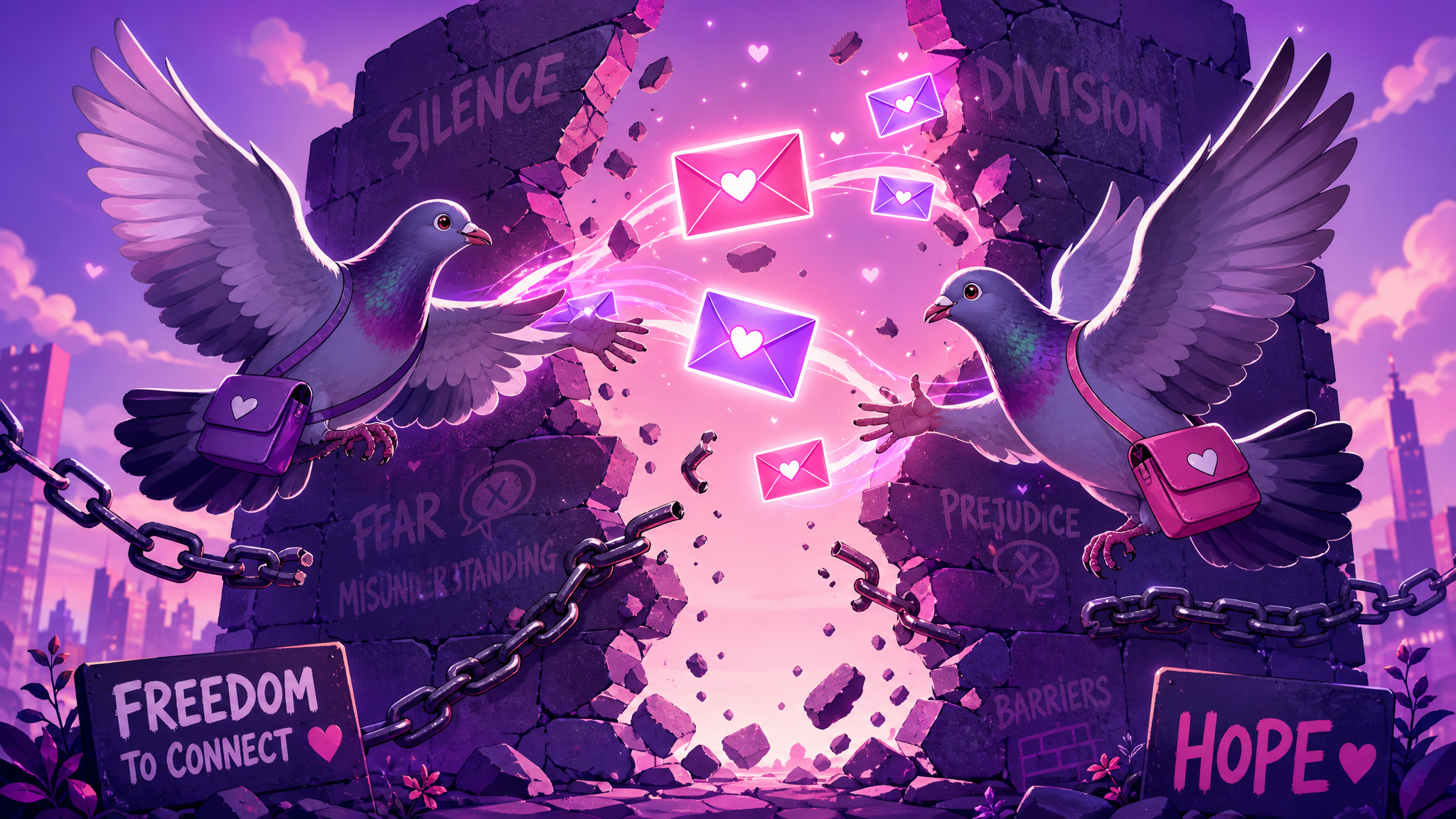
Communication is not a privilege — it's a right. This deep dive explores the legal, ethical, and social dimensions of connectivity as a human right, and how PigeonChat is building technology that upholds it for everyone.
In 2026, we carry entire worlds in our pockets. A messaging app isn't just a tool for sending "running late" texts — it's how we maintain relationships, access services, receive emergency information, participate in democracy, and express who we are. Strip away someone's ability to communicate digitally, and you strip away their ability to function in modern society.
Yet billions of people face barriers to digital communication every day. Internet shutdowns. Surveillance. Platform bans. Censorship. Economic exclusion. Device obsolescence. These aren't abstract policy concerns — they're lived realities that affect real people, right now.
This article makes a case that few tech companies are willing to articulate clearly: the right to stay connected is a fundamental human right. And it explores what that means for how messaging platforms like PigeonChat should be designed, governed, and used.
The Legal Foundation: Communication as a Recognised Right
The right to communicate isn't a new concept. It's enshrined in international law, though the digital dimension has been slow to catch up with technological reality.
Article 19 of the Universal Declaration of Human Rights
Adopted by the United Nations in 1948, Article 19 states:
"Everyone has the right to freedom of opinion and expression; this right includes freedom to hold opinions without interference and to seek, receive and impart information and ideas through any media and regardless of frontiers."
The phrase "through any media" is crucial. In 1948, "media" meant newspapers, radio, and post. In 2026, it unambiguously includes messaging apps, social media, email, and encrypted communications. The right to communicate doesn't expire when the medium changes.
The UN's 2016 Resolution on Internet Access
In June 2016, the United Nations Human Rights Council passed a landmark non-binding resolution declaring that internet access is a human right. The resolution condemned countries that intentionally disrupted internet access and affirmed that the same rights people have offline must also be protected online.
This resolution specifically called out internet shutdowns — a practice that has accelerated dramatically since then. According to Access Now, governments imposed at least 283 internet shutdowns in 2023 alone, affecting hundreds of millions of people across 39 countries.
GDPR and the European Charter
The European Charter of Fundamental Rights (Article 11) guarantees freedom of expression and information, including through digital media. The General Data Protection Regulation (GDPR) further strengthens this by ensuring that communication platforms cannot weaponise personal data — a critical safeguard for the right to communicate freely without fear of profiling or retaliation.
The Threats: How the Right to Stay Connected Is Being Violated
Despite legal frameworks, the right to digital communication is under attack from multiple directions. Understanding these threats is essential to defending against them.
1. Government Internet Shutdowns
Internet shutdowns are the bluntest instrument of digital repression. Governments shut down internet access — partially or completely — during elections, protests, exams, and social unrest. The cost is staggering: the Internet Society estimates that internet shutdowns cost the global economy over $24 billion between 2019 and 2023.
But the human cost is even higher. During shutdowns, people can't:
- Contact family members during crises
- Access emergency services
- Report human rights abuses
- Coordinate humanitarian aid
- Conduct business or access banking
- Continue education
Countries with the most frequent shutdowns include India, Myanmar, Iran, Ethiopia, Pakistan, and Russia. But the practice is spreading — even democracies are increasingly comfortable with targeted platform blocks.
2. Platform Bans and App Store Censorship
When governments can't shut down the entire internet, they target specific platforms. Russia blocked Telegram in 2018 (later reversed). China blocks WhatsApp, Signal, Telegram, and virtually every non-domestic messaging app. Iran periodically blocks WhatsApp and Instagram.
App store removals are another vector. When Apple or Google remove an app from their stores in a specific country at government request, millions of people lose access to their communication platform overnight.
This is why PigeonChat's Progressive Web App (PWA) approach is more than a convenience feature — it's a censorship resistance strategy. Because PigeonChat runs in the browser, it can't be removed from an app store. As long as someone can access a web browser, they can access PigeonChat.
3. Economic Exclusion
Even where the internet is available and uncensored, cost remains a massive barrier. Mobile data prices vary wildly across the world — in some African countries, 1GB of data costs more than 10% of average monthly income. When messaging apps are data-hungry, they become tools of economic exclusion.
PigeonChat's lightweight PWA design and text-first architecture mean it consumes significantly less data than bloated alternatives, making it more accessible to people on limited data plans.
4. Surveillance and Self-Censorship
Perhaps the most insidious threat to the right to communicate isn't external blocking — it's the chilling effect of surveillance. When people know or suspect their communications are being monitored, they self-censor. They don't say what they really think. They don't organise. They don't report abuses. They don't seek help.
Research from the MIT Media Lab has shown that awareness of surveillance reduces online expression by as much as 30% — even among people who have "nothing to hide." The mere possibility of being watched changes behaviour fundamentally.
End-to-end encryption is the most effective technical countermeasure against surveillance-driven self-censorship. When you know that only you and your intended recipient can read your messages, you communicate more freely. That's not a bug — it's a feature of a healthy democracy.
5. Platform Dependency and Digital Colonialism
When entire countries depend on a single platform for communication — as many nations depend on WhatsApp — they become vulnerable to the decisions of a foreign corporation. Meta can change terms of service, modify algorithms, increase data collection, or even shut down the service with no democratic input from the communities that depend on it.
This dynamic has been described by scholars as "digital colonialism" — the extraction of data and dependency from the Global South by Northern tech corporations. The right to stay connected must include the right to connect using platforms that aren't controlled by entities with misaligned incentives.
What the Right to Stay Connected Actually Requires
If we accept that digital communication is a fundamental right, what does that require from the platforms that enable it? We believe it requires at minimum:
1. Privacy by Default
A communication platform that harvests your data is not respecting your right to communicate freely. PigeonChat implements privacy by default: end-to-end encryption, no phone number required, no metadata monetisation, no profiling for advertising.
2. Accessibility Without Barriers
The right to communicate means nothing if the tools are inaccessible. This means:
- No mandatory app store downloads — PigeonChat works in any browser
- No phone number requirements — sign up with email
- Free core features — messaging, groups, channels, stories, voice messages
- Low bandwidth consumption — works on slow connections
- Works on older devices — no need for the latest hardware
3. Resistance to Censorship
Communication platforms have a moral obligation to resist censorship wherever legally possible. PigeonChat's PWA architecture, web-based access, and encryption are deliberate design choices that make censorship harder — not as an afterthought, but as a core value.
4. User Control Over Data
The right to communicate includes the right to control what happens to your communication data. Who sees it? Who stores it? Who profits from it? PigeonChat gives users control: your data belongs to you, not to advertisers, governments, or data brokers.
5. Transparency
Users have the right to understand how their communication platform works. What data is collected? How is it processed? Who has access? PigeonChat is transparent about its practices — because trust is the foundation of communication.
The Role of Messaging Apps in Democratic Participation
The connection between communication and democracy is as old as democracy itself. From the agora of ancient Athens to the printing press to broadcast radio, every expansion of communication capability has expanded democratic participation.
Messaging apps are the latest chapter in this story. They enable:
- Political organising — coordinating protests, campaigns, and civic action
- Citizen journalism — documenting events in real-time, bypassing censored media
- Voter education — sharing information about candidates, policies, and voting procedures
- Government accountability — whistleblowing, exposing corruption, demanding transparency
- Community governance — local decision-making through group discussions and polls
When governments restrict access to messaging platforms, they're not just limiting communication — they're limiting democracy.
PigeonChat's Commitment to the Right to Stay Connected
We believe that building a messaging platform comes with profound responsibilities. Here's what PigeonChat commits to:
- We will never sell user data — our business model is based on optional premium features, not surveillance capitalism
- We will always offer free core messaging — communication is a right, not a product
- We will maintain end-to-end encryption — even under pressure to weaken it
- We will resist censorship — our PWA architecture and web-based access make us resilient against app store removals and platform blocks
- We will protect user anonymity — no phone numbers, no real-name policies, no forced identity verification
- We will be transparent — about what data we collect (minimal), how we process it (carefully), and who has access (only you)
What You Can Do
The right to stay connected isn't just a matter for governments and corporations. It's something every individual can defend:
- Choose privacy-respecting platforms — every download is a vote for the kind of internet you want
- Support organisations fighting for digital rights — like Access Now, EFF, and Article 19
- Speak up against internet shutdowns — silence normalises censorship
- Help others get connected — share tools, teach digital literacy, bridge the divide
- Demand transparency from your messaging platform — if they won't tell you what they do with your data, find one that will
Conclusion: Communication Is Not a Privilege
The right to stay connected is not a luxury. It's not a business proposition. It's not a marketing slogan. It is a fundamental human right — one that underpins freedom of expression, access to information, democratic participation, and basic human dignity.
At PigeonChat, we build technology that upholds this right. Not because it's profitable (though sustainable business and human rights aren't mutually exclusive), but because it's right. Every design decision, every feature, every policy we create is measured against a simple question: does this help people stay connected, freely and privately?
If the answer is yes, we build it. If the answer is no, we don't.
Because in a world where connection is life, disconnection is a sentence no one deserves. 🕊️

Writer & Editor at PigeonChat
Related Articles
What a European chat app should offer now
What an EU chat app needs beyond privacy claims
What a browser-based end to end encryption chat app needs
How PigeonChat.site fits the EU privacy app search
Why browsers are becoming the new private chat home