
The Complete Guide to Homework Help Chats: Classmate Collaboration That Actually Works
Learn how to set up effective homework help chats with classmates. Tips for productive collaboration, avoiding academic dishonesty, and building supportive learning communities.
It's 9pm on a Tuesday, you're staring at a physics problem that makes absolutely no sense, your textbook might as well be written in ancient Greek, and the assignment is due at 8am tomorrow. Sound familiar? You're not alone — 78% of students report regularly struggling with homework tasks outside school hours.
The solution isn't always a tutor or a YouTube video. Sometimes, the best help comes from the person sitting two rows ahead of you in class. Homework help chats — structured group conversations where classmates support each other through assignments — have become one of the most effective learning tools of the 2020s.
Why Homework Help Chats Work Better Than Solo Study
The Peer Teaching Advantage
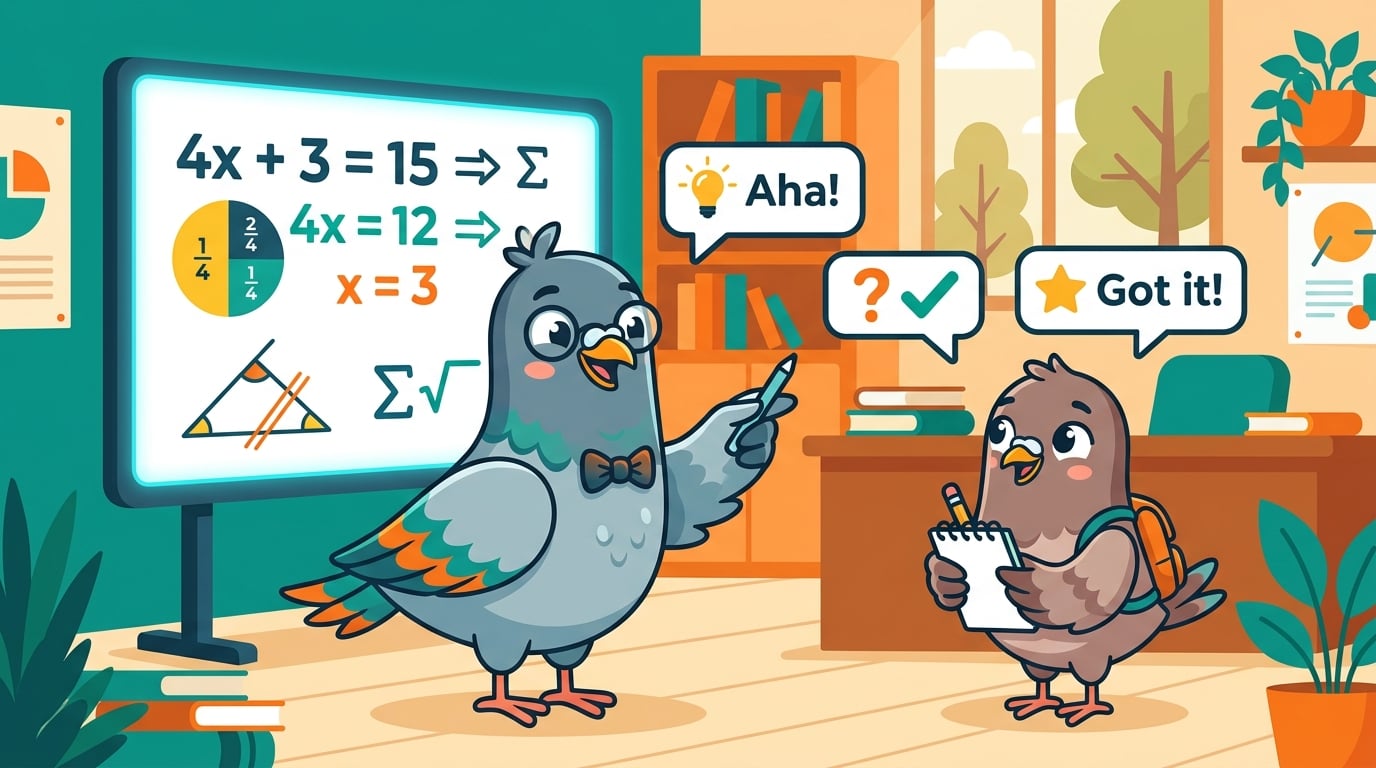
Research consistently shows that peer-to-peer learning is remarkably effective. When a classmate explains a concept, they use language, examples, and analogies that resonate with your shared experience. Your teacher might explain algebraic equations using formal mathematical language, but your classmate might say "Think of it like splitting a pizza between x people" — and suddenly it clicks.
This isn't just anecdotal. A comprehensive study from Harvard Graduate School of Education found that students who engaged in regular peer teaching scored 30% higher on assessments than those who relied solely on teacher instruction and independent study.
Immediate Feedback Loops
One of the biggest frustrations with homework is the delayed feedback cycle. You complete an assignment, submit it, and wait days or weeks to discover you misunderstood the core concept. In a homework help chat, you get real-time feedback: "Wait, I think you're confusing mitosis and meiosis" — and you can correct course immediately.
Diverse Problem-Solving Approaches
Every student approaches problems differently. In a homework help chat, you're exposed to multiple problem-solving strategies. Ahmed might solve the maths problem algebraically, while Priya uses a graphical approach, and Tom uses estimation to verify the answer. This diversity of thinking is incredibly valuable for developing flexible, adaptable problem-solving skills.
Setting Up Your Homework Help Chat on PigeonChat
Step 1: Identify Your Core Group
The ideal homework help group is 4-8 students from the same class. Too few, and you don't get enough diverse perspectives; too many, and conversations become chaotic and overwhelming. Look for classmates who:
- Are genuinely interested in understanding the material (not just copying answers)
- Bring different strengths — someone who's great at maths, another who excels at writing
- Are reliable and responsive (not necessarily fast, but consistent)
- Are respectful and encouraging, even when someone asks a basic question
Step 2: Create Subject-Specific Channels
On PigeonChat, create separate group chats for each subject. This keeps conversations focused and searchable. Label them clearly: "Year 12 Chemistry", "AP English Literature", "GCSE Maths Higher".
Step 3: Establish the Ground Rules
This is crucial. Without clear expectations, homework help chats can devolve into answer-copying networks — which helps nobody. Agree on these principles:
- Explain, don't give answers: If someone asks for help, walk them through the process rather than providing the final answer
- Show your working: Share your reasoning, not just your conclusions
- Ask before you share: If you're about to discuss an answer, warn others in case they want to try it themselves first
- Respect different paces: Some people need more time — don't make anyone feel rushed
- Flag confusion early: If you don't understand something, say so — chances are others feel the same way
Navigating the Academic Integrity Line
One of the biggest concerns about homework help chats is academic dishonesty. Where does collaboration end and cheating begin? The line isn't always clear, but here are practical guidelines:
✅ Acceptable Collaboration
- Discussing concepts and approaches to a problem
- Explaining how you arrived at an answer (after everyone has attempted it)
- Sharing study resources, revision notes, and useful links
- Working through practice problems together
- Peer-reviewing each other's essays for clarity and structure (not content)
❌ Crossing the Line
- Copying someone else's homework answers directly
- Sharing completed assignments before the submission deadline
- Dividing an individual assignment among group members
- Using the chat to coordinate cheating during exams
When in doubt, apply the "teacher test": Would you be comfortable showing your teacher exactly what was said in the chat? If yes, you're in safe territory.
Subject-Specific Strategies
Mathematics and Sciences
For problem-based subjects, try the "attempt first, discuss second" approach. Everyone attempts the problems independently, then shares their working in the chat. Compare methods, identify where you went wrong, and learn from each other's approaches. PigeonChat's image sharing feature is perfect for sharing photos of handwritten calculations.
Languages and Literature
For essay-based subjects, use the chat for brainstorming and peer review. Share thesis statement ideas, discuss themes and interpretations, and provide constructive feedback on each other's arguments. Voice messages work brilliantly for discussing nuanced literary interpretations.
History and Social Sciences
Create shared timelines and fact sheets where each group member researches and contributes different sections. This collaborative knowledge-building helps everyone while distributing the research workload fairly.
Computer Science and Technology
For coding assignments, share pseudocode and logic diagrams rather than actual code. Discuss algorithms conceptually, debug logic together, and share useful documentation links. This maintains academic integrity while still providing valuable support.
Managing Group Dynamics
The "Lurker" Problem
Every group has someone who reads all the answers but never contributes. Address this constructively by rotating a "daily helper" role — each day, a different person is responsible for answering questions first. This ensures equitable participation without shaming anyone.
The "Know-It-All" Problem
If one person dominates every conversation, gently redirect by asking others: "What does everyone else think?" Encourage the dominant member to ask questions rather than always providing answers — this helps them too, as explaining concepts strengthens understanding.
The "Last-Minute Panic" Problem
Some students only message when an assignment is due in hours. Set a group expectation that questions should be posted at least 24 hours before the deadline, giving everyone time to help. You can always make exceptions for emergencies, but establishing the norm is important.
The Bigger Picture: Building a Learning Community
Homework help chats do more than improve grades. They build communities of practice — groups of people who share a concern or passion for something they do and learn how to do it better through regular interaction. These communities develop:
- Confidence: Students who regularly explain concepts to others develop deep confidence in their knowledge
- Communication skills: Articulating complex ideas clearly is a skill that translates directly to the workplace
- Empathy: Helping struggling classmates builds emotional intelligence and compassion
- Resilience: Knowing you have a support network makes you more willing to tackle challenging material
Getting Started Today
Creating a homework help chat takes less than five minutes on PigeonChat. Find 4-6 classmates, create a group, establish your ground rules, and start collaborating. Within a week, you'll wonder how you ever managed homework alone.
The most successful students aren't the ones who work hardest in isolation — they're the ones who build effective support networks and leverage the collective intelligence of their peers. Your next homework help session is just one message away.

Writer & Editor at PigeonChat
Related Articles

How chat folders change the way busy chats stay organized

Chat features that make private apps easier to use

Why chat folders matter for busy group conversations

Why chat folders matter for busy group conversations

What a European chat app should offer now