The Psychology of Online Personas: Who Are We in Our Messages?
Explore the fascinating psychology behind our digital identities — from the editing effect and avatar culture to code-switching and disinhibition. Discover who you really are in your messages.
The Digital Mask: Understanding Who We Become Online
Have you ever noticed how different you are in messages compared to face-to-face conversations? Perhaps you're wittier in text, bolder in your opinions, more expressive with stickers and emojis, or maybe quieter and more reserved than your in-person personality suggests. This gap between our "real" selves and our digital selves isn't a flaw — it's a fascinating psychological phenomenon that reveals deep truths about identity, communication, and human nature.
In the age of messaging apps, we all carry multiple personas. The version of you in the family group chat is different from the version in your work Slack, which is different from the version that messages your best friend at midnight. Understanding these digital personas — how they form, why they differ, and what they reveal — is key to healthier, more authentic online communication.
The Psychology Behind Online Identity
Psychologists have long recognized that humans naturally adapt their behavior to different social contexts. This concept, known as "social identity theory," was first articulated by Henri Tajfel in the 1970s. We've always been different people in different rooms — professional at work, relaxed at home, performative at parties.
What messaging apps have done is multiply the number of "rooms" exponentially. Each chat, each platform, each audience creates a new context that invites a slightly different version of ourselves. And because digital communication removes many of the constraints of in-person interaction — body language, tone of voice, physical appearance — we have unprecedented freedom to shape how we present ourselves.
This freedom is both liberating and complicated. For some, messaging allows their "true" personality to shine — introverts often express themselves more fully in text than in person. For others, the distance of digital communication enables personas that diverge significantly from their authentic selves, sometimes in ways that are helpful and sometimes in ways that aren't.
The Editing Effect: Crafting the Perfect Version
One of the most significant differences between face-to-face communication and messaging is the ability to edit. In conversation, words leave our mouths and can't be recalled. In messaging, we draft, revise, delete, and recraft every sentence before sending. This "editing effect" has profound implications for online identity.
The ability to edit means we can present a more polished, articulate version of ourselves. That clever comeback you thought of three hours after a face-to-face conversation? In messaging, you can deliver it in real time. The emotional response you'd rather temper? In messaging, you can take a breath, reconsider, and send something more measured.
Research from Stanford University's Communication Lab found that people perceive themselves as 23% more articulate and 18% funnier in text-based communication than in person. Whether this perception is accurate is debatable, but the psychological comfort of the editing function is undeniable.
However, the editing effect can also create pressure. When every message can be crafted and perfected, the stakes of each individual message feel higher. Some people spend minutes agonizing over a single text, terrified that an imperfect message will shatter the carefully constructed persona they've built.
Avatar Culture: Visual Identity in the Messaging Age
Our digital personas aren't just about words — they're about the visual cues we use to represent ourselves. Profile pictures, custom avatars, status messages, and chat wallpapers all contribute to the identity we project in messaging spaces.
Profile picture choice is particularly revealing. Research from the University of Pennsylvania found strong correlations between personality types and profile picture preferences. Extroverts tend toward social photos showing them with others. Conscientious individuals prefer professional or polished images. Creative types gravitate toward artistic or abstract visuals. And the choice to use no profile picture at all — or a non-human image — often signals either extreme privacy consciousness or a desire to let words speak louder than appearance.
Custom stickers and emoji usage also function as identity markers. Regular users of specific sticker packs develop a recognizable "visual voice" — friends can identify their messages even before reading the sender's name, based solely on their characteristic use of particular stickers or emoji combinations.
The Disinhibition Effect: Freedom and Its Consequences
Psychologist John Suler coined the term "online disinhibition effect" to describe the tendency for people to behave differently online than they would in person. Suler identified two forms: benign disinhibition (increased kindness, openness, and generosity) and toxic disinhibition (increased aggression, rudeness, and cruelty).
In messaging, both forms are evident. The same person might share deeply personal feelings with a friend over text that they'd never voice face-to-face (benign disinhibition), while also sending a harsh message in a group chat that they'd never say to someone's face (toxic disinhibition).
Several factors contribute to disinhibition in messaging: invisibility (you can't see the other person's immediate reaction), asynchronicity (there's a time gap between sending and receiving), and the perceived anonymity of the digital environment (even when using your real name, the screen creates psychological distance).
Understanding disinhibition is crucial for navigating messaging relationships. When someone says something unexpectedly vulnerable or unexpectedly harsh in a message, recognizing that the digital context itself is influencing their behavior helps us respond with empathy rather than judgment.
Code-Switching in Digital Spaces
"Code-switching" — adapting your communication style to different audiences — takes on new dimensions in messaging. Most of us maintain distinctly different personas across our various chats:
The professional persona: Proper grammar, measured tone, strategic emoji use (if any), careful word choice. This is the version of you that exists in work chats, professional networking messages, and emails.
The casual friend persona: Abbreviations, inside jokes, memes, rapid-fire responses, typos left uncorrected. This version feels most natural for many people.
The family persona: Patient, warm, slightly more formal than friends but less so than work. Adapts significantly based on whether you're messaging parents, siblings, or cousins.
The romantic persona: The most carefully crafted of all. Messages to romantic interests or partners often undergo the most editing, the most second-guessing, and carry the most emotional weight.
Each of these personas is authentically "you" — they're just different facets of a complex identity, adapted for different audiences and contexts. Problems arise only when the gap between personas becomes so large that switching between them feels disorienting or dishonest.
When Digital Personas Become Problematic
While adapting to context is natural and healthy, there are warning signs that a digital persona has become problematic:
Impersonation: Presenting a fundamentally false version of yourself — fabricating achievements, using misleading photos, or pretending to be someone you're not. This crosses the line from adaptation to deception.
Persona exhaustion: Feeling drained by the effort of maintaining a particular online image. If managing your digital persona feels like a full-time job, it's a sign that your online self has diverged too far from your authentic self.
Comparison spiraling: Using other people's curated digital personas as benchmarks for your own self-worth. Remember: everyone is presenting their edited highlight reel, not their behind-the-scenes reality.
Communication inconsistency: If someone who knows you both online and in person would describe two fundamentally different people, it may be worth examining why the gap exists and whether it serves you well.
Building an Authentic Digital Self
The goal isn't to have one identical persona across all contexts — that would be socially awkward and contextually inappropriate. The goal is to ensure that all your digital personas share a common core of authenticity.
Start by identifying your values — the non-negotiables that should show up regardless of context. Honesty, kindness, respect, humor — whatever matters most to you should be visible in every chat, every message, every interaction.
Practice vulnerability in small doses. Share genuine feelings, admit when you don't know something, and resist the urge to craft a perfect image. The paradox of digital communication is that imperfection is what makes people relatable and trustworthy.
Be intentional about your digital habits. Choose a profile picture that genuinely represents you. Write status messages that reflect your real mood rather than performing one. Use stickers and emojis that express your actual emotions, not just the ones you think others want to see.
The Future of Digital Identity
As messaging technology evolves, our digital personas will too. AI-generated avatars, voice synthesis, and virtual reality messaging will create even more complex layers of digital identity. The ability to present ourselves as entirely different beings — different ages, genders, species — raises fascinating questions about the nature of identity itself.
Messaging platforms like PigeonChat are beginning to grapple with these questions, designing features that encourage authentic connection while respecting users' right to privacy and self-expression. The best platforms will be those that help users explore their digital identities in healthy ways rather than losing themselves in curated personas.
Understanding Ourselves Through Our Messages
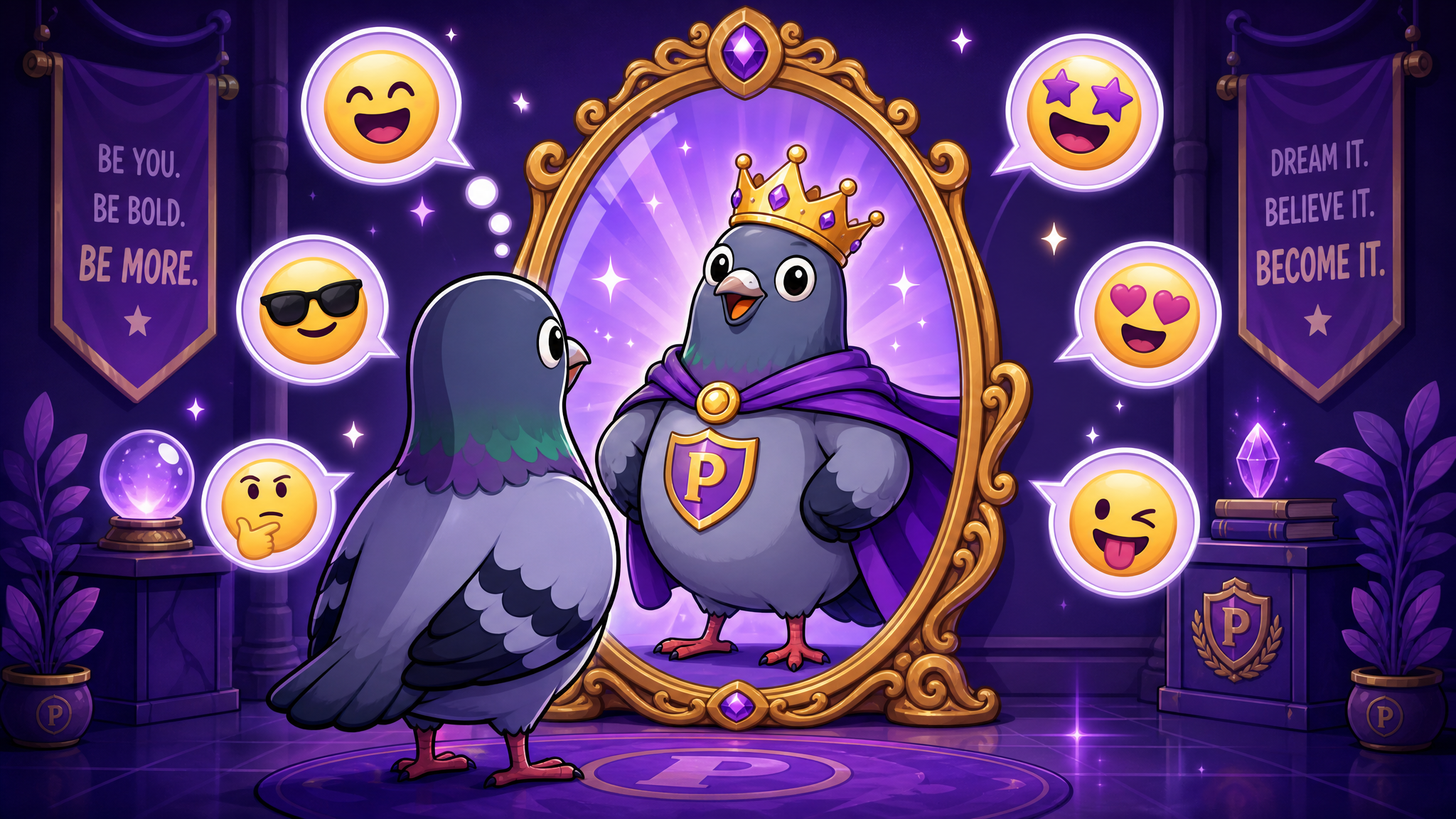
Ultimately, our digital personas are mirrors — imperfect, sometimes distorted, but revealing. The way we communicate in messages tells us something about who we are, who we want to be, and who we're afraid to be. By examining our messaging habits with curiosity rather than judgment, we can learn to integrate our various digital selves into a more coherent, authentic whole.
The next time you catch yourself crafting the perfect reply, choosing between fifteen emoji options, or switching communication styles as you move between chats, pause and smile. You're not being fake — you're being human, navigating the beautiful complexity of identity in a digital world. And that's something worth understanding.

Writer & Editor at PigeonChat
Related Articles
Why people search for a pigeon chat app online

Why users search for a pigeon chat app online

Why people call pigeons a messaging app joke
Dating, Community & Making Money on PigeonChat.site
Why chat folders matter for busy group conversations