Async Communication: Why Not Every Message Needs an Instant Reply
The pressure to reply instantly kills deep work and raises stress levels. Discover how asynchronous messaging habits boost productivity without sacrificing connection.
The Tyranny of the Instant Reply
Somewhere along the way, messaging apps created an unspoken rule: if you've seen a message, you should reply immediately. Read receipts, online status indicators, and typing notifications all reinforce this expectation. The result? A culture where people interrupt deep work dozens of times per day to respond to non-urgent messages, fragmenting their attention and spiking cortisol levels.
What Async Communication Actually Means
Asynchronous communication is simply communication that doesn't require both parties to be present simultaneously. Email is inherently async. A letter is async. But messaging apps blur the line — they're built for real-time exchange but used for everything from urgent alerts to casual planning. The key insight is that most messages don't actually require an immediate response.
Studies from the University of California, Irvine found that it takes an average of 23 minutes to return to focused work after an interruption. If you receive 30 non-urgent messages during a workday and respond to each immediately, you've potentially lost over 11 hours of productive focus. That's more than a full workday.
Building an Async-Friendly Messaging Culture
For Individuals
- Batch your message checking — designate 3-4 times per day to read and respond to non-urgent messages
- Use status messages wisely — "Deep work until 2 PM" sets expectations without rudeness
- Write complete messages — instead of "Hey" followed by "Are you free?" followed by the actual question, send one comprehensive message so the recipient can respond fully on their own time
- Separate urgent from non-urgent — reserve calls or specific channels for truly time-sensitive matters
For Teams
- Agree on response time expectations — "We respond within 4 hours during business hours" removes anxiety
- Create urgency tiers — use different channels or tags for different priority levels
- Document decisions — if something is decided in a chat, record it somewhere searchable so people don't need to interrupt colleagues for information
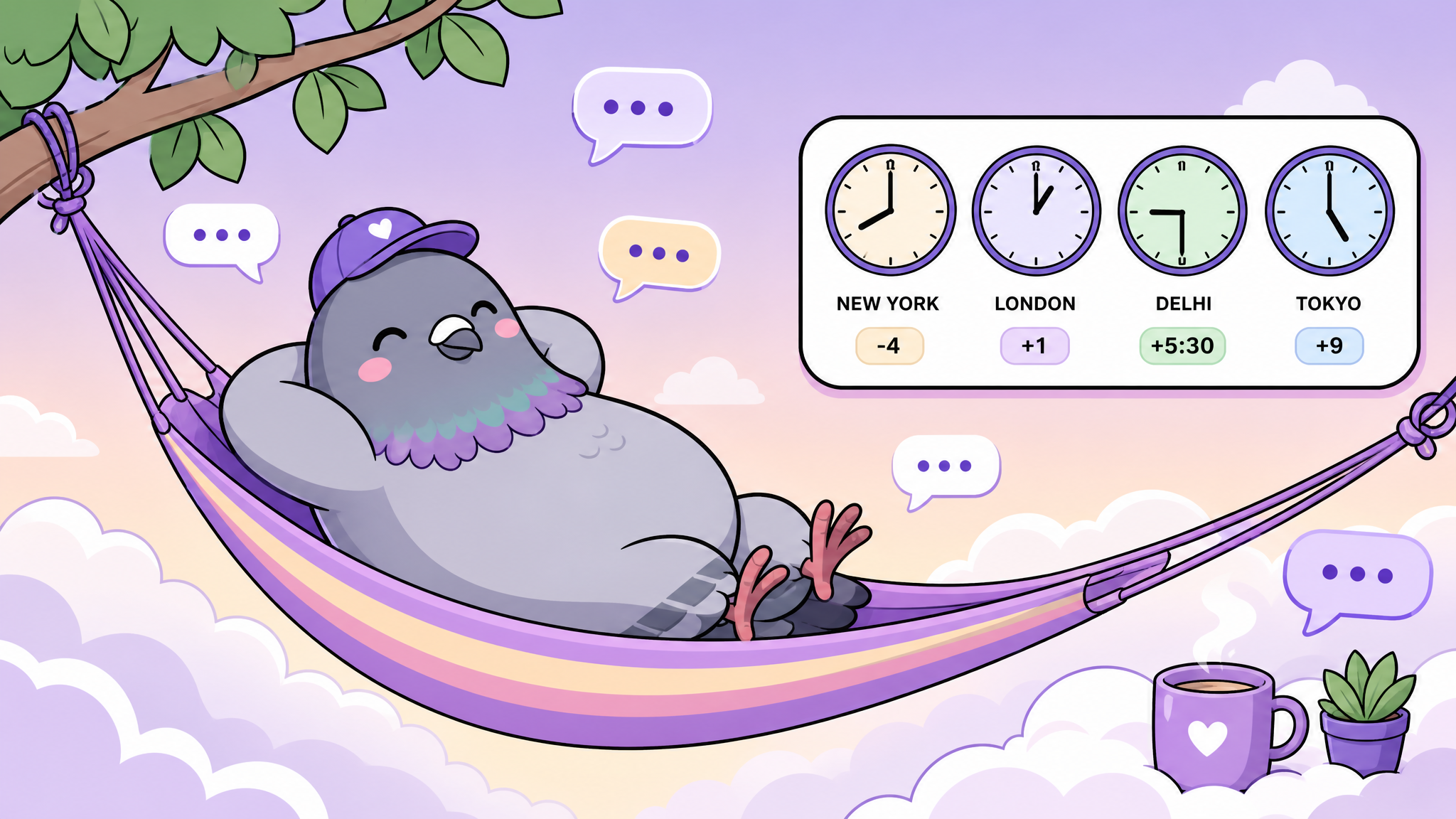
- Respect time zones — schedule messages to arrive during recipients' working hours
The Productivity Payoff
Teams that adopt async-first communication consistently report higher productivity, lower stress, and better quality work. GitLab, Automattic, and other async-native companies have documented 30-40% productivity improvements compared to synchronous-first cultures. The quality of decisions improves too, because people have time to think before responding instead of firing off reactive takes.
It's Not About Being Unresponsive
Async communication isn't about ignoring people. It's about being intentional with your attention. When you do respond, you respond thoughtfully. When you do focus, you focus deeply. The result is better for everyone: higher quality communication and higher quality work, coexisting peacefully.

Writer & Editor at PigeonChat
Related Articles
Best Free Team Chat App for Small Businesses and Remote Teams in 2026

Best Free Team Chat Apps for Small Businesses in 2026

The Best Slack Alternatives in 2026: Free Team Chat Apps
Best Business Group Chat Apps in 2026: How Teams Actually Communicate
Why chat folders matter for busy group conversations