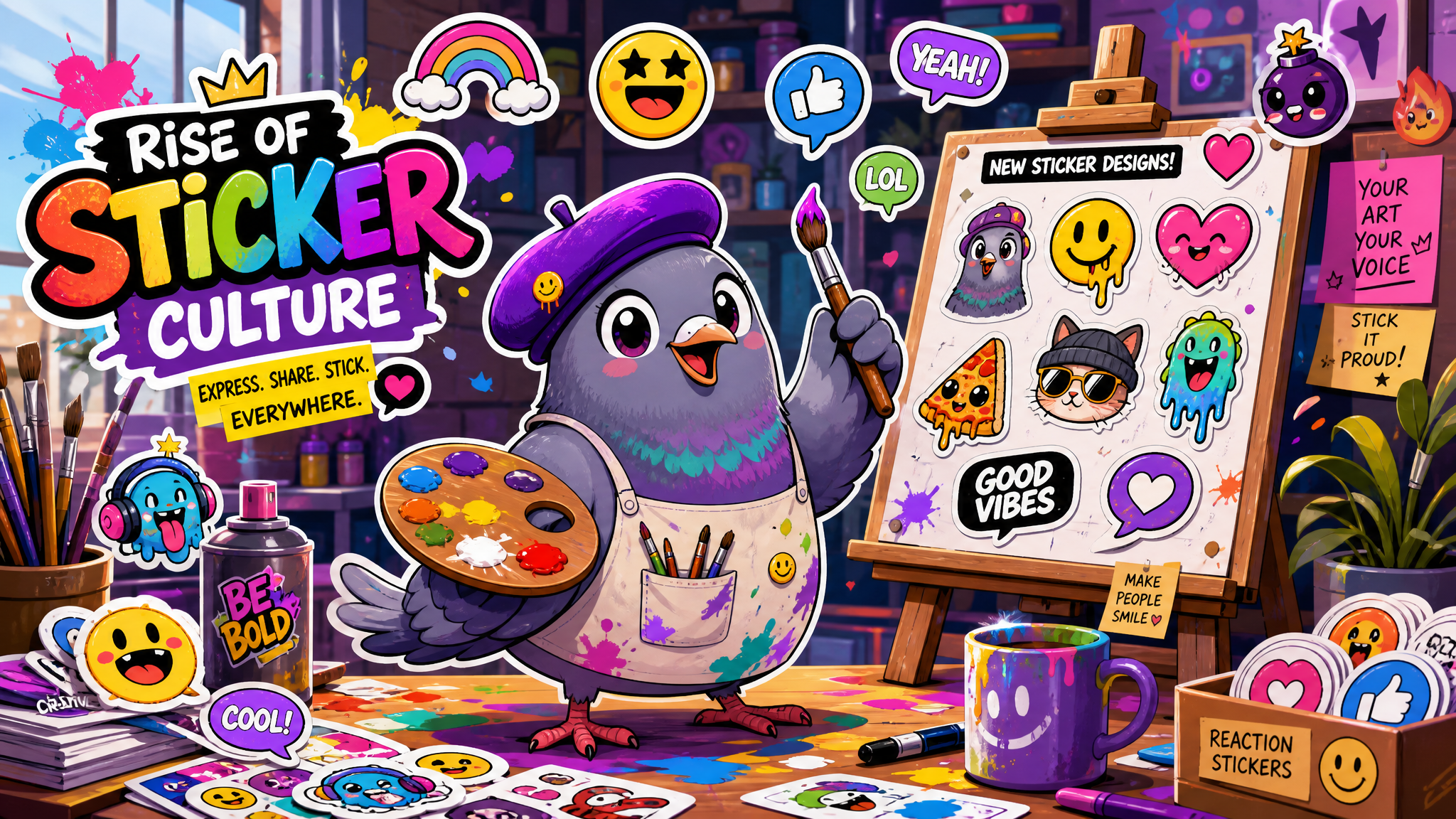
The Rise of Sticker Culture: How Digital Stickers Became a Billion-Dollar Industry
From LINE's first sticker shop to today's massive marketplace — explore how digital stickers grew from novelty to a global phenomenon worth billions.
In 2011, Japanese messaging app LINE launched something that seemed trivial at the time: digital stickers. Nobody predicted that within a decade, stickers would become a multi-billion dollar industry that fundamentally changed how humans communicate digitally.
The Numbers Are Staggering
LINE alone generates over $270 million annually from sticker sales. Globally, the digital sticker market is projected to exceed $4.7 billion by 2027. These aren't just cute pictures — they're a massive economic force.
Why Stickers Took Off
Stickers filled a gap that emojis couldn't. While emojis are standardized and limited, stickers offer infinite creative expression. They can be culturally specific, brand-aligned, celebrity-endorsed, or deeply personal.
The Creator Economy
Platforms now allow independent artists to create and sell their own sticker packs. This has spawned an entire creator economy where illustrators earn full-time incomes from their sticker designs.
Cultural Phenomena
In Asian markets, stickers aren't just a feature — they're a cultural institution. In South Korea, Japan, and Thailand, people choose messaging apps partly based on their sticker selection. Stickers have become status symbols, conversation starters, and even relationship indicators.
The Future of Stickers
AI-generated personalized stickers, AR stickers that react to your facial expressions, and cross-platform sticker standards are all on the horizon.
Explore Pigeon's growing sticker collection at pigeonchat.site — express yourself like never before.

Writer & Editor at PigeonChat
Related Articles
Cute Stickers, Anime & Emojis: The Most Fun Messaging App in 2026
Free Cute Stickers & Anime Chat Community: Why PigeonChat Is the Fun Messaging App of 2026

Stickers vs Emojis in 2026: Which One Actually Says It Better?
Sticker Culture in 2026: How Digital Stickers Changed the Way We Communicate

Why chat folders matter for busy group conversations