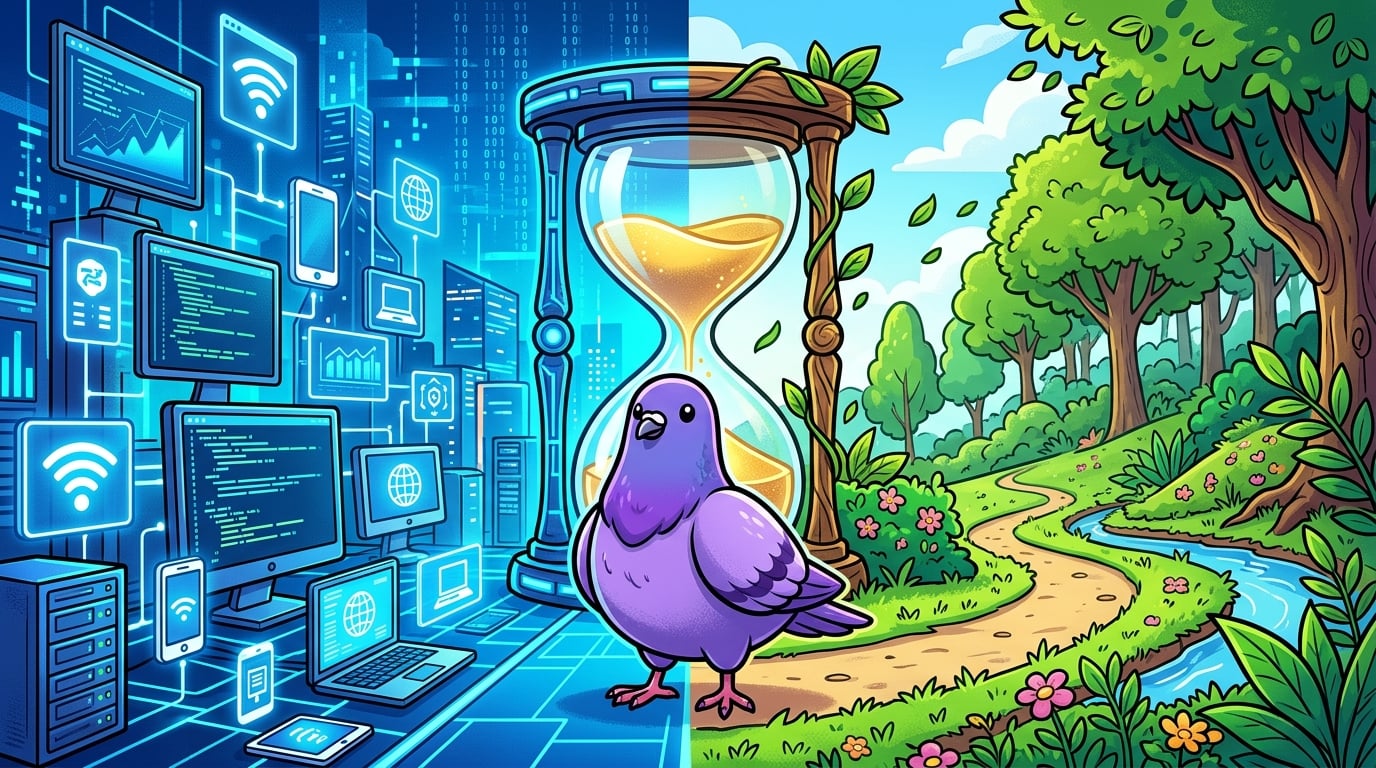
Screen Time Balance: How to Stay Connected Without Being Consumed
Find the sweet spot between staying digitally connected and living your real life. Practical strategies for a healthier relationship with your messaging apps.
The average adult spends over 7 hours per day looking at screens. While much of this time is productive or enjoyable, there's a tipping point where screen time starts working against us.
The Screen Time Sweet Spot
Research suggests that 2-3 hours of recreational screen time is the sweet spot for mental well-being. Beyond that, diminishing returns set in — more scrolling doesn't mean more satisfaction.
Audit Your Usage
Most phones now have built-in screen time tracking. Spend a week observing your habits without changing them. The numbers often surprise people — especially when they see how much time goes to passive scrolling versus meaningful interaction.
Active vs. Passive Screen Time
Not all screen time is equal. Active engagement (having conversations, creating content, learning) is far healthier than passive consumption (endless scrolling, watching without purpose).
Create Phone-Free Zones
- Bedroom: Better sleep starts with no screens in bed
- Dining table: Meals are for connection, not scrolling
- First/last hour of day: Protect your morning and evening headspace
Replace, Don't Just Remove
Cutting screen time works best when you replace it with something enjoyable — reading, exercise, crafts, or face-to-face conversation.
Pigeon is designed for meaningful communication, not mindless scrolling. Chat with purpose.

Writer & Editor at PigeonChat
Related Articles
What browser chat changes for people who hate installs
How digital wellbeing changes the way people chat
Why digital wellbeing matters in chat app design

Why digital wellbeing is becoming a chat app feature
Why chat folders matter for busy group conversations