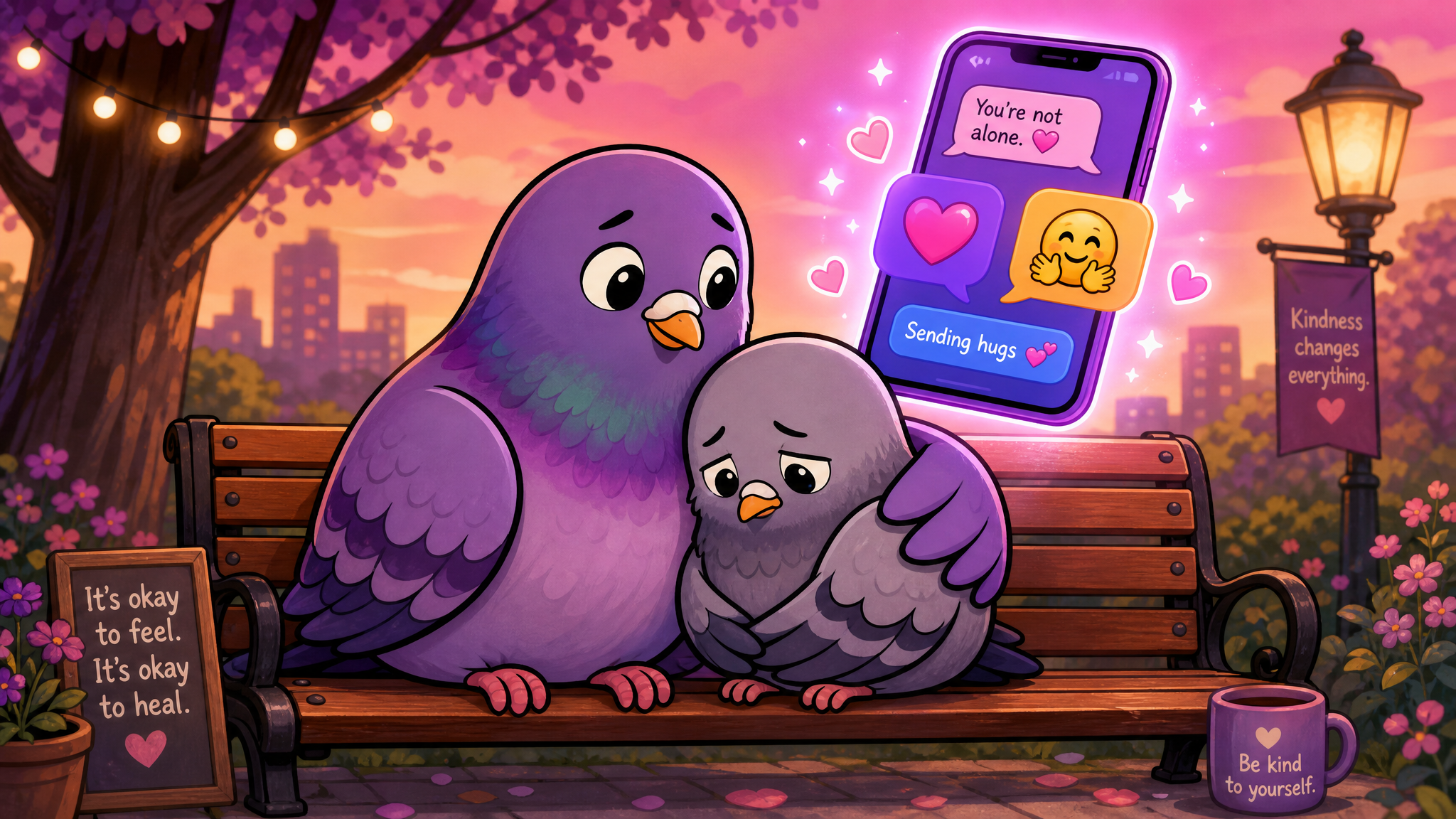
How Messaging Apps Are Changing the Way We Grieve and Support Each Other
Discover how messaging apps are transforming grief support and emotional connections, offering new ways to comfort loved ones during difficult times.
When Words Fail, Messages Hold Us Together
Grief is one of the most universal human experiences, yet it remains one of the hardest to navigate — for both the person grieving and those who want to help. For generations, sympathy cards, funeral flowers, and in-person visits were the primary channels for expressing condolences. Today, a quiet revolution is taking place: messaging apps are becoming essential spaces for mourning, memorializing, and supporting each other through loss.
This shift isn't trivializing grief — it's making support more accessible, more sustained, and more honest. Let's explore how messaging is changing the way we grieve and the profound role digital communication plays in our most difficult moments.
The Immediacy of Digital Condolences
When someone experiences a loss, the clock starts immediately. In the hours and days after a death, diagnosis, or tragedy, the bereaved person is simultaneously overwhelmed with grief and burdened with practical demands — funeral arrangements, notifications, logistics. Traditional condolences — cards that take days to arrive, visits that require hosting — add to this burden even when well-intentioned.
Messaging offers something fundamentally different: immediate, low-burden acknowledgment. A message that says "I just heard. I'm so sorry. I'm here whenever you need me" arrives in seconds, requires nothing from the recipient, and creates an open channel for whenever they're ready to respond — whether that's five minutes or five weeks later.
Research from Columbia University's Center for Complicated Grief found that early expressions of support significantly impact long-term grief outcomes. People who receive immediate acknowledgment of their loss report feeling less isolated and more supported than those who experience delays in condolence. Messaging makes that immediate acknowledgment possible regardless of geographic distance.
The Group Chat Memorial
One of the most touching developments in digital grief culture is the memorial group chat. When a community loses a member — a friend group, a family, a team, a class — someone often creates a group chat dedicated to sharing memories, coordinating support, and processing the loss collectively.
These digital memorials serve functions that no physical gathering can replicate. They're available 24/7, accommodating grief that doesn't follow business hours. They preserve memories in writing — stories, photos, videos, and inside jokes that might otherwise be lost. They provide a space where saying "I'm having a really hard day" at 2 AM is met with understanding rather than the awkwardness of calling someone at that hour.
Memorial group chats also serve practical purposes. Coordinating meal deliveries for a grieving family, organizing memorial event logistics, sharing information about grief counseling resources — these practical supports flow naturally through the same channel as emotional ones.
Asynchronous Grief: Mourning on Your Own Timeline
One of messaging's most significant contributions to grief support is its asynchronous nature. In-person condolences require both people to be emotionally present simultaneously. Phone calls demand immediate verbal responses. But a message sits patiently, waiting until the grieving person has the energy and desire to engage.
This asynchronous quality is profoundly important for grief, which doesn't follow a linear timeline. A bereaved person might feel numb for weeks, then suddenly need to talk at midnight when a wave of grief hits. Messaging accommodates this unpredictable rhythm perfectly — the channel is always open, and there's no pressure to respond on anyone else's schedule.
Grief counselors increasingly recognize the value of this asynchronous support. Dr. Patricia Thornton, a bereavement specialist, notes: "Many of my clients tell me that their messaging conversations are where they feel safest expressing their grief. There's something about the ability to take your time, choose your words, and respond when you're ready that traditional conversations don't provide."
The Language of Digital Comfort
Messaging has developed its own language of comfort — ways of expressing sympathy that are unique to the digital medium and surprisingly effective.
Emoji as emotional shorthand: When words feel inadequate, a simple ❤️ or 🦗 conveys "I care about you" without requiring the eloquence that grief often steals from us. Heart emojis have become one of the most common and most appreciated forms of digital condolence.
Shared media as connection: Sending a photo of a shared memory with the person who died, a song that reminds you of them, or a sunset that captures how you're feeling — these multimedia expressions of grief can communicate what words alone cannot.
Voice messages for warmth: When text feels too cold but a phone call feels too demanding, voice messages offer a beautiful middle ground. Hearing a friend's voice say "I love you and I'm thinking about you" carries warmth and authenticity that even the most carefully written text can't match.
The "thinking of you" check-in: Perhaps the most valuable form of digital grief support is the ongoing check-in. Not just in the first week after a loss, but weeks, months, and years later. A simple "I was thinking about your mom today" message sent on an anniversary can be profoundly healing for someone who fears their loved one is being forgotten.
Supporting Without Intruding
One of the most common fears around grief support is saying the wrong thing. This fear paralyzes many people into silence — the very worst response to someone who is grieving. Messaging lowers the barrier to reaching out because it provides time to compose thoughts and the ability to communicate without the real-time pressure of face-to-face conversation.
Messaging also allows the grieving person to set boundaries without confrontation. If they're not ready to talk, they simply don't respond — no awkward door-closing or call-ending required. If they want to talk but only about certain things, they can steer the conversation naturally through text. This control is empowering during a time when so much feels out of control.
The ability to support without intruding extends to the type of support offered. A message saying "I'm dropping groceries at your door — no need to come out or respond" is perfect messaging-era support: practical, caring, and pressure-free.
Digital Grief Rituals
New rituals are emerging around digital grief that would have been impossible in previous generations.
Anniversary messaging: Group chats often come alive on birthdays and death anniversaries of lost loved ones. Members share memories, photos, and feelings, creating a collective ritual of remembrance that spans distances and time zones.
Continuing conversations: Some people continue messaging a deceased loved one's number or account as a form of journaling or spiritual connection. "I still message my dad sometimes," one user shared. "I know he can't read them, but writing to him helps me feel close to him. And I have the whole history of our conversations right there."
Digital candle lighting: On platforms that support it, sharing a candle emoji or image on specific dates has become a recognized gesture of remembrance. Like physical candle lighting in religious traditions, this digital equivalent creates a shared moment of honoring the deceased.
Legacy preservation: Family group chats often become repositories of stories about deceased family members, preserving memories and anecdotes that might otherwise be lost. These conversations create a living memorial that grows richer over time.
When Digital Grief Goes Wrong
Not all aspects of messaging and grief are positive. There are pitfalls worth acknowledging and navigating carefully.
Notification insensitivity: Receiving a cheerful notification sound for a message containing devastating news creates a jarring disconnect. The medium's casual associations can clash with the gravity of the content. Some messaging apps are beginning to address this with content-sensitive notification options.
Public grief pressure: Social media has created an expectation that grief should be publicly performed — memorial posts, tribute updates, grief milestones shared with audiences. This pressure can feel invasive to people who prefer to grieve privately. Messaging offers a more private alternative, but the line between private messaging and public posting isn't always clear.
Misread tone: The absence of vocal tone in text messages can lead to misunderstandings, particularly during emotionally charged conversations about loss. A well-meaning message can be read as insensitive, and a carefully chosen emoji can land differently than intended. Being aware of this limitation and defaulting to warmth and simplicity helps mitigate the risk.
Support fatigue: While ongoing check-ins are valuable, there's a fine line between supportive persistence and unwelcome pressure. Not everyone grieves on the same timeline, and some people need more space than others. Reading signals and respecting boundaries remains important even in digital grief support.
Supporting Specific Types of Loss
Different types of loss benefit from different messaging approaches.
Death of a loved one: Focus on acknowledging the loss, sharing specific memories, and offering practical help. Avoid clichés like "everything happens for a reason." Instead, try: "There are no words, but I want you to know I'm here. Your mom's laugh was one of my favorite sounds in the world."
Serious illness or diagnosis: Respect the person's autonomy in sharing information. Follow their lead on tone — some people want to talk about their illness; others want distraction and normalcy. A message like "I'm here for whatever you need — whether that's talking about this or pretending it doesn't exist for an hour" gives them permission to choose.
Miscarriage or pregnancy loss: This type of grief is often disenfranchised — minimized or unacknowledged by society. A simple "I'm so sorry for your loss. Your grief is real and valid" can be extraordinarily meaningful when so many other voices are saying "at least" or "you can try again."
Pet loss: Another often-dismissed grief. Acknowledging the bond and the pain — "She was family, and losing her is devastating" — validates feelings that others might minimize.
How to Be a Better Digital Grief Supporter
Based on research and the experiences of bereaved individuals, here are practical guidelines for supporting someone through messaging:
Send the message. An imperfect message is infinitely better than silence. Don't let fear of saying the wrong thing prevent you from saying anything.
Be specific. Instead of "Let me know if you need anything" (which puts the burden on the grieving person), try "I'm bringing dinner Tuesday — chicken or pasta?" Specific offers get accepted; vague ones don't.
Follow up. The first week is flooded with support. Month two, three, six — that's when the isolation sets in and check-in messages become most valuable.
Don't compare. "I know how you feel" is rarely true and almost never helpful. "I can't imagine what you're going through, but I'm here" is honest and compassionate.
Use their loved one's name. Bereaved people often fear their loved one will be forgotten. Mentioning the deceased by name — "I was thinking about David today" — is one of the most meaningful things you can do.
Respect the response. If they don't reply, don't take it personally. If they reply briefly, match their energy. If they open up, be present and listen without rushing to fix or silver-lining.
The Comfort in Connection
Messaging doesn't replace the physical embrace of a friend, the shared tears at a funeral, or the quiet comfort of sitting together in silence. But it does something no previous communication technology has done: it makes grief support continuous, accessible, and infinitely patient.
In our most painful moments, knowing that support is literally at our fingertips — that a community of love exists in our pocket, available whenever we need it — is a profound comfort. And that comfort, delivered through the simplest of technologies, might be one of the most deeply human uses of messaging we've ever discovered.

Writer & Editor at PigeonChat
Related Articles

Why people search for a pigeon chat app online

Why users search for a pigeon chat app online

Why people call pigeons a messaging app joke
Dating, Community & Making Money on PigeonChat.site

Why chat folders matter for busy group conversations