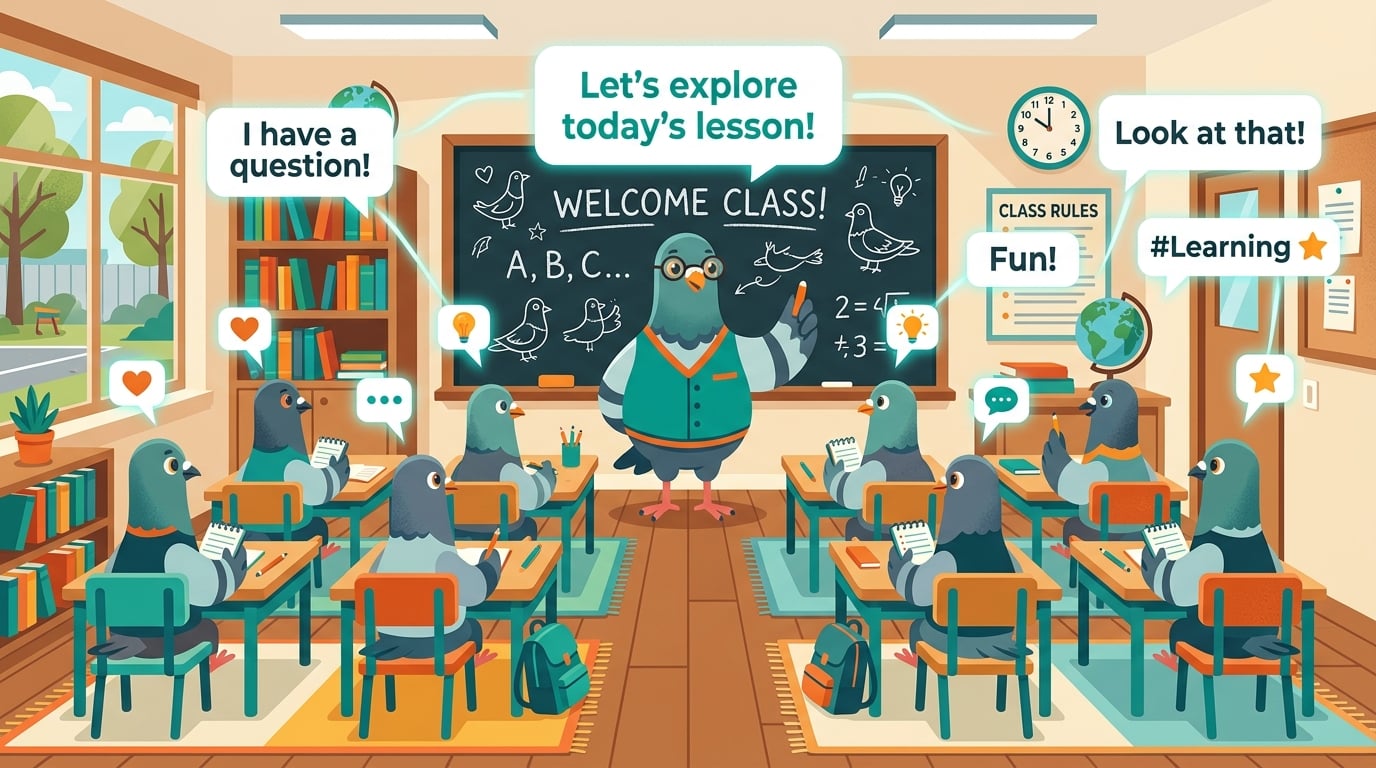
Why Every School Needs a Secure Messaging Platform: A Guide for Educators and Parents
Discover why secure school messaging platforms are essential in 2026. Learn how apps like PigeonChat protect students while enabling effective classroom communication.
In 2026, the question is no longer whether schools should embrace digital communication — it's how to do it safely. With students as young as 11 using messaging apps daily, and with cyberbullying, data privacy concerns, and online safety incidents making headlines regularly, the need for secure, purpose-built school messaging platforms has never been more urgent.
Yet many schools still rely on a patchwork of consumer messaging apps that were never designed with student safety in mind. This comprehensive guide explores why that needs to change — and what educators and parents should look for in a school messaging solution.
The Current State of Student Messaging
The Numbers Tell the Story
According to Ofcom's 2026 Children and Media report:
- 94% of 12-15 year-olds use messaging apps regularly
- 76% of primary school children (aged 8-11) have access to messaging platforms
- 41% of students report receiving unwanted or harmful messages
- 28% of parents feel they have inadequate oversight of their children's messaging activity
- 63% of teachers use personal messaging apps for school-related communication with students
These statistics reveal a significant gap between how students communicate and how schools manage that communication.
The Risks of Unmanaged Student Messaging
Cyberbullying
When student messaging happens on platforms without adequate moderation tools, cyberbullying can flourish unchecked. Unlike face-to-face bullying, digital harassment follows students home, operates 24/7, and can escalate rapidly through group dynamics. A 2025 study found that cyberbullying incidents have a 40% higher impact on mental health than traditional bullying because of the persistence and public nature of digital messages.
Data Privacy Violations
Many popular messaging apps collect extensive user data — location, contact lists, device information, usage patterns, and message metadata. When minors use these platforms, schools have a legal and ethical obligation to ensure student data is protected. Under GDPR and COPPA regulations, the consequences of mishandling children's data can be severe.
Inappropriate Content Exposure
Open messaging platforms expose students to risks including unsolicited contact from strangers, exposure to harmful content, and sharing of inappropriate material among peers. Without proper safeguards, group chats can quickly become spaces where harmful content circulates.
Safeguarding Concerns
When teachers use personal messaging apps to communicate with students, it creates safeguarding blind spots. There's no institutional record of communications, no oversight mechanism, and significant liability risk. Professional boundaries become blurred, and schools lose visibility into student-teacher digital interactions.
What Secure School Messaging Looks Like
Privacy by Design
A secure school messaging platform should be built on privacy-first principles:
- Minimal data collection: Collect only what's necessary for the service to function
- No data selling: Student data should never be monetised or shared with advertisers
- GDPR compliance: Full compliance with data protection regulations, including children's data provisions
- Transparent privacy policies: Clear, jargon-free explanations of how data is handled
- Data deletion rights: Easy mechanisms for students and parents to request data removal
PigeonChat exemplifies these principles. Our platform was built with GDPR compliance at its foundation, including consent logging, minimal data collection, and transparent privacy practices.
Anti-Bullying Features
Effective school messaging platforms include:
- Report and block functionality: Simple, accessible tools for reporting harmful behaviour
- Message moderation: Options for group administrators to review and remove harmful content
- User restrictions: Ability to restrict users from posting without fully banning them
- Evidence preservation: Maintaining records that can support investigations if needed
Age-Appropriate Design
The messaging experience should be appropriate for the age group:
- Clean, distraction-free interface without advertising
- No algorithmic content recommendations that could lead to harmful rabbit holes
- Appropriate default privacy settings (e.g., limiting who can initiate contact)
- Clear community guidelines prominently displayed
Benefits for Educators
Enhanced Classroom Communication
A secure messaging platform gives teachers a professional, institutional tool for communicating with students about:
- Homework assignments and deadlines
- Class announcements and schedule changes
- Resource sharing and supplementary materials
- Absence follow-ups and catch-up work
Student Engagement
Research shows that students are more likely to ask questions and participate in digital environments than in traditional classroom settings. Quiet students who rarely speak up in class often become active, valuable contributors in messaging-based discussions.
Parent Communication
Messaging platforms can facilitate teacher-parent communication — providing updates on student progress, sharing important school information, and enabling quick, informal check-ins that are more efficient than formal parent-teacher meetings.
Benefits for Parents
- Visibility: Know which platforms your child is using for school communication
- Safety assurance: Trust that the platform has appropriate safeguards in place
- Engagement: Stay informed about school activities and your child's academic life
- Peace of mind: Know that student data is protected and not being exploited commercially
Implementation Best Practices
For Schools
- Develop a digital communication policy that covers messaging platform use, expectations, and consequences
- Train staff on appropriate digital communication with students
- Educate students about digital citizenship, online safety, and responsible messaging
- Involve parents in the selection and implementation process
- Regularly review the platform's effectiveness and safety measures
For Parents
- Discuss online safety with your children regularly and openly
- Understand the platforms your children use and their safety features
- Set age-appropriate boundaries around messaging use and screen time
- Encourage reporting: Make sure your child knows how to report harmful behaviour
- Model good digital behaviour: Children learn from what they observe
The Future of School Messaging
As education continues to evolve, secure messaging platforms will become as fundamental to schools as textbooks and whiteboards. The schools that get this right — choosing platforms that balance safety with functionality, privacy with transparency — will create better learning environments for everyone.
PigeonChat is committed to being part of this future: a private, safe, and purposeful messaging platform that serves the genuine communication needs of students, educators, and families — without the data exploitation, advertising, and algorithmic manipulation that plague consumer messaging apps.
Because every student deserves to communicate safely. And every parent deserves peace of mind.

Writer & Editor at PigeonChat
Related Articles
What a European chat app should offer now

What an EU chat app needs beyond privacy claims
What a browser-based end to end encryption chat app needs
How PigeonChat.site fits the EU privacy app search
Why browsers are becoming the new private chat home