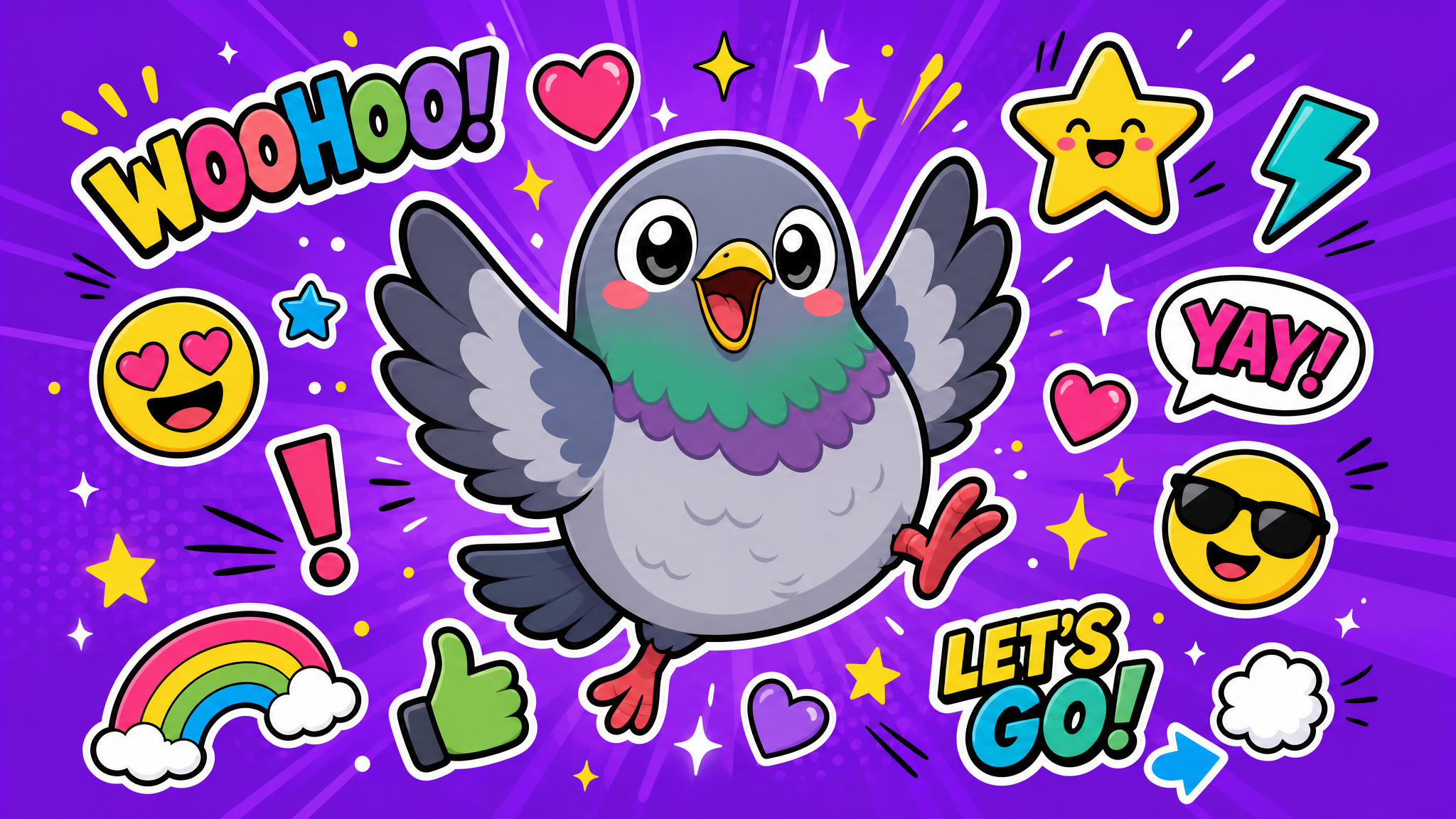
Animated Stickers vs. Static Stickers: Why Motion Wins Every Time
Explore the psychology behind why animated stickers outperform static ones in engagement, expression, and emotional connection in digital conversations.
The Sticker Revolution Has a New Champion
Static stickers changed messaging. Animated stickers are now changing it again. What started as simple illustrations you could drop into a chat has evolved into expressive, motion-rich mini-animations that convey emotions text simply cannot. But why exactly do animated stickers resonate so strongly? The answer lies at the intersection of psychology, design, and how our brains process visual information.
Our Brains Are Wired for Motion
Humans have evolved to pay attention to movement. It's a survival instinct — motion signals something happening in our environment that might require our attention. This same instinct activates when we see an animated sticker bounce, wiggle, or dance across our screen.
Research in visual cognition shows that moving images capture attention 5 times faster than static ones. In a messaging context, this means an animated sticker doesn't just convey your emotion — it demands the recipient's attention in a way that a static image simply cannot. Your laughing pigeon bouncing with joy hits differently than a still frame of the same pigeon.
The Emotional Bandwidth of Animation
Static stickers capture a single emotional moment. Animated stickers tell a tiny emotional story. Consider the difference:
- Static happy sticker — Shows a character smiling. You understand they're happy.
- Animated happy sticker — Shows a character's face light up, their eyes widen, a smile spread, and confetti burst around them. You don't just understand happiness — you feel it.
This emotional bandwidth is what makes animated stickers so powerful. They compress a full emotional arc into 1-3 seconds of motion, creating a micro-narrative that static images can't replicate.
Engagement Numbers Don't Lie
Messaging platforms that track sticker usage consistently report that animated stickers are shared 3-4 times more frequently than static alternatives. On PigeonChat, our animated pigeon sticker pack sees 280% higher send rates compared to the static equivalents.
Users also report feeling more emotionally satisfied after sending an animated sticker. There's a small but measurable dopamine hit from watching a cute animation play out — a reward that keeps users coming back to stickers as their preferred mode of expression.
The Design Challenge: Movement With Purpose
Not all animation is created equal. The best animated stickers follow key design principles that make them effective communicators:
Timing and rhythm — Great sticker animations have a natural rhythm. The movement should feel organic, not mechanical. A character's laugh should build and release, not just vibrate.
Looping gracefully — Since most animated stickers loop, the transition from end to beginning must be seamless. Jarring loops break the illusion and feel cheap.
Exaggeration — Animation thrives on exaggeration. A character doesn't just nod — they nod enthusiastically. They don't just cry — tears fountain comically. This amplification of emotion is what makes stickers more expressive than real human faces in text-based conversation.
Restraint in complexity — The best animated stickers convey one clear emotion through one clear action. Overloading an animation with too many movements creates confusion instead of clarity.
When Static Still Works
This isn't to say static stickers are obsolete. They excel in specific contexts. Quick acknowledgments (a thumbs up, a simple smile) don't need animation. In low-bandwidth environments, static stickers load faster. And some artistic styles — like watercolor or hand-drawn illustrations — lose their charm when animated.
The ideal sticker library includes both static and animated options, giving users the choice to match the weight of the moment. A quick "got it" might warrant a static nod. An ecstatic celebration calls for the full animated treatment.
The Technology Behind the Magic
Modern animated stickers use formats like Lottie (vector-based animations), WebP (animated images), or APNG (animated PNG) instead of traditional GIFs. These formats offer several advantages: smaller file sizes, smoother playback, transparent backgrounds, and higher color fidelity.
Lottie animations in particular have revolutionized sticker creation. Because they're vector-based, they scale to any screen size without losing quality and can be dynamically colored — meaning a single animation can be recolored to match different themes or moods.
Creating Your Own Animated Stickers
The barrier to creating animated stickers has dropped dramatically. Tools like Rive, LottieFiles, and even Procreate's animation feature let artists create professional-quality animated stickers without a background in traditional animation. The key is starting simple: pick one emotion, design one character, and animate one action. Master the basics before attempting complex sequences.
The Future: Interactive and Reactive Stickers
The next evolution beyond animated stickers is reactive stickers — animations that respond to context. Imagine a sticker that changes its animation based on the time of day, the weather in your location, or even the sentiment of your conversation. Some platforms are already experimenting with AI-powered stickers that adapt their expressions in real-time.
Motion Is Emotion
At its core, the superiority of animated stickers comes down to a simple truth: motion is emotion. Movement adds depth, nuance, and life to digital expression in ways that static images cannot match. As messaging continues to evolve from text-heavy communication to rich, multimedia exchanges, animated stickers will remain at the forefront — tiny windows into how we really feel, brought to life one frame at a time.

Writer & Editor at PigeonChat
Related Articles
Cute Stickers, Anime & Emojis: The Most Fun Messaging App in 2026
Free Cute Stickers & Anime Chat Community: Why PigeonChat Is the Fun Messaging App of 2026
Stickers vs Emojis in 2026: Which One Actually Says It Better?
Sticker Culture in 2026: How Digital Stickers Changed the Way We Communicate
Why chat folders matter for busy group conversations