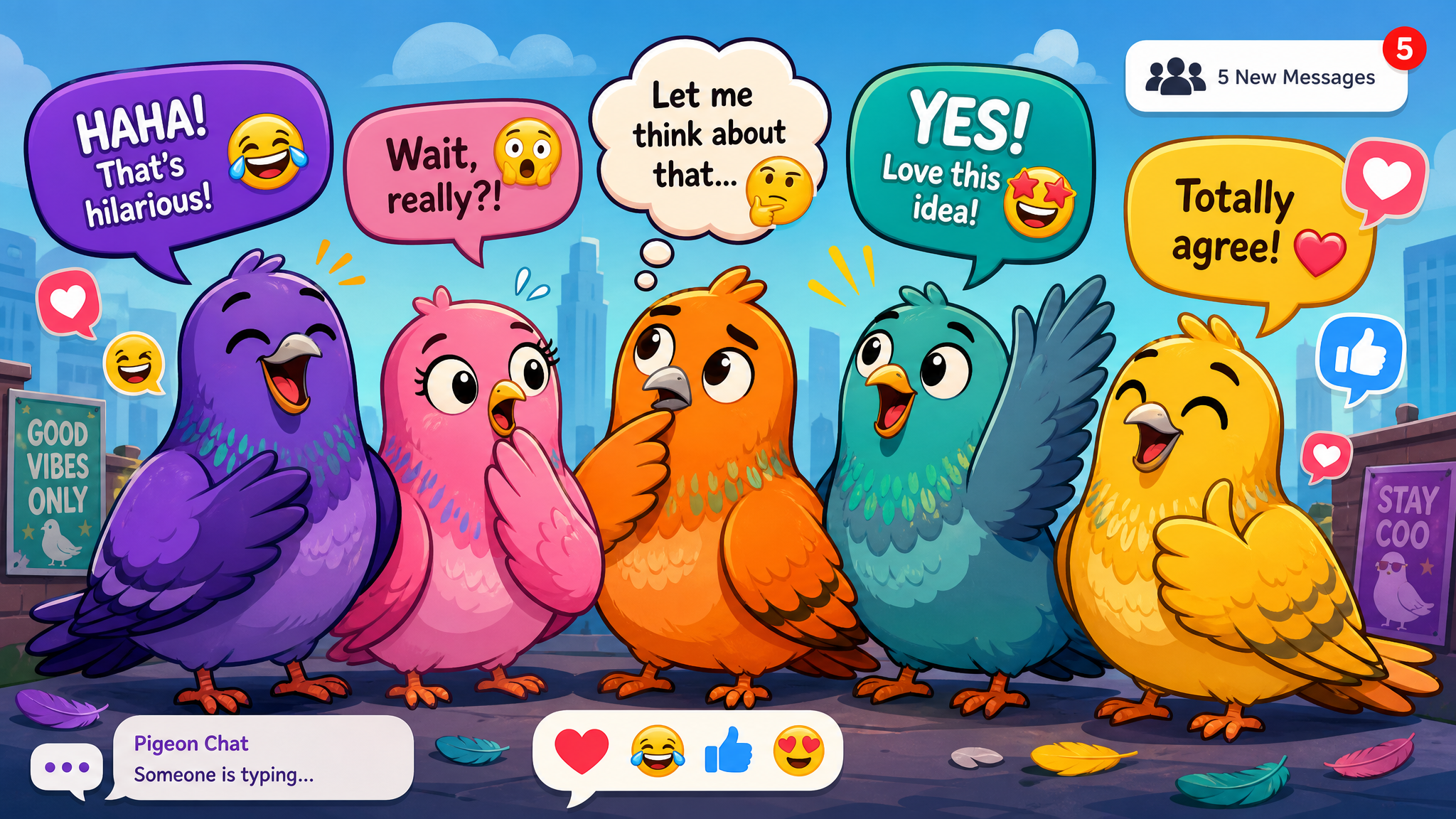
The Ultimate Guide to Group Chat Dynamics: Why Some Groups Thrive and Others Die
What makes some group chats buzzing communities while others go silent? Discover the psychology and practical tips behind thriving group conversations.
We've all been there — you're added to a group chat that starts with enthusiastic introductions and within a week, it's a ghost town. Meanwhile, other groups remain active and engaging for years. What's the difference?
The Magic Number: Group Size Matters
Research shows that groups of 5-8 people tend to be the most active and cohesive. Too few members and conversations dry up; too many and people feel lost in the noise. The sweet spot allows everyone to participate without feeling overwhelmed.
The Role of the "Conversation Starter"
Every thriving group has at least one person who consistently initiates discussions. These aren't necessarily the most talkative — they're the ones who ask questions, share interesting content, and pull others into the conversation.
Shared Purpose Creates Engagement
Groups built around a specific purpose (book clubs, project teams, hobby groups) outperform random social groups. When everyone shares a common interest, there's always something relevant to discuss.
The Power of Norms
Successful groups develop unwritten rules: when to use stickers vs. text, how to handle disagreements, what's on-topic vs. off-topic. These norms create psychological safety and keep conversations productive.
Keep It Fresh
The best groups evolve over time. Share polls, challenges, memes, and stickers to keep energy high. Platforms like Pigeon offer rich media features that make group interactions more dynamic and fun.
Ready to build a group chat that actually lasts? Start your first group on Pigeon today.

Writer & Editor at PigeonChat
Related Articles

How chat groups help schools and universities stay organized

How chat groups support schools and universities

Why chat folders help busy groups stay organized

How chat groups support schools and universities
Why chat folders matter for busy group conversations