Meme Culture and Messaging: How Humor Became Our Default Language
From reaction GIFs to viral image macros, explore how meme sharing in messaging apps has evolved into a genuine form of emotional expression and cultural communication.
When a Meme Says What Words Cannot
It's 2026, and a friend texts you that they just got a promotion. You could type "Congratulations! That's amazing, I'm so happy for you!" Or you could send a perfectly chosen celebration meme — a cat in a party hat, a dancing pigeon, or that classic "Champagne popping" GIF. Both convey happiness, but the meme does something extra: it adds humor, personality, and a shared cultural reference that text alone cannot capture.
Memes have evolved from internet humor into a legitimate communication system. In messaging apps, they've become the default way millions of people express emotions, react to news, and strengthen bonds. But how did we get here, and what does this shift mean for how we connect?
The Evolution of Memes in Messaging
Early internet memes lived on forums and social media. They were content you consumed, not tools you used to communicate. The shift happened when messaging apps integrated GIF search, sticker stores, and image sharing into the conversation flow. Suddenly, finding and sending a meme was as easy as typing a word.
This integration transformed memes from passive entertainment to active communication. By 2024, over 70% of messaging app users reported sending at least one meme or GIF per day. Among users under 30, that number exceeds 90%. Memes are no longer supplementary to conversation — for many people, they are the conversation.
Why Memes Work as Communication
Memes succeed as a communication tool for several psychological reasons:
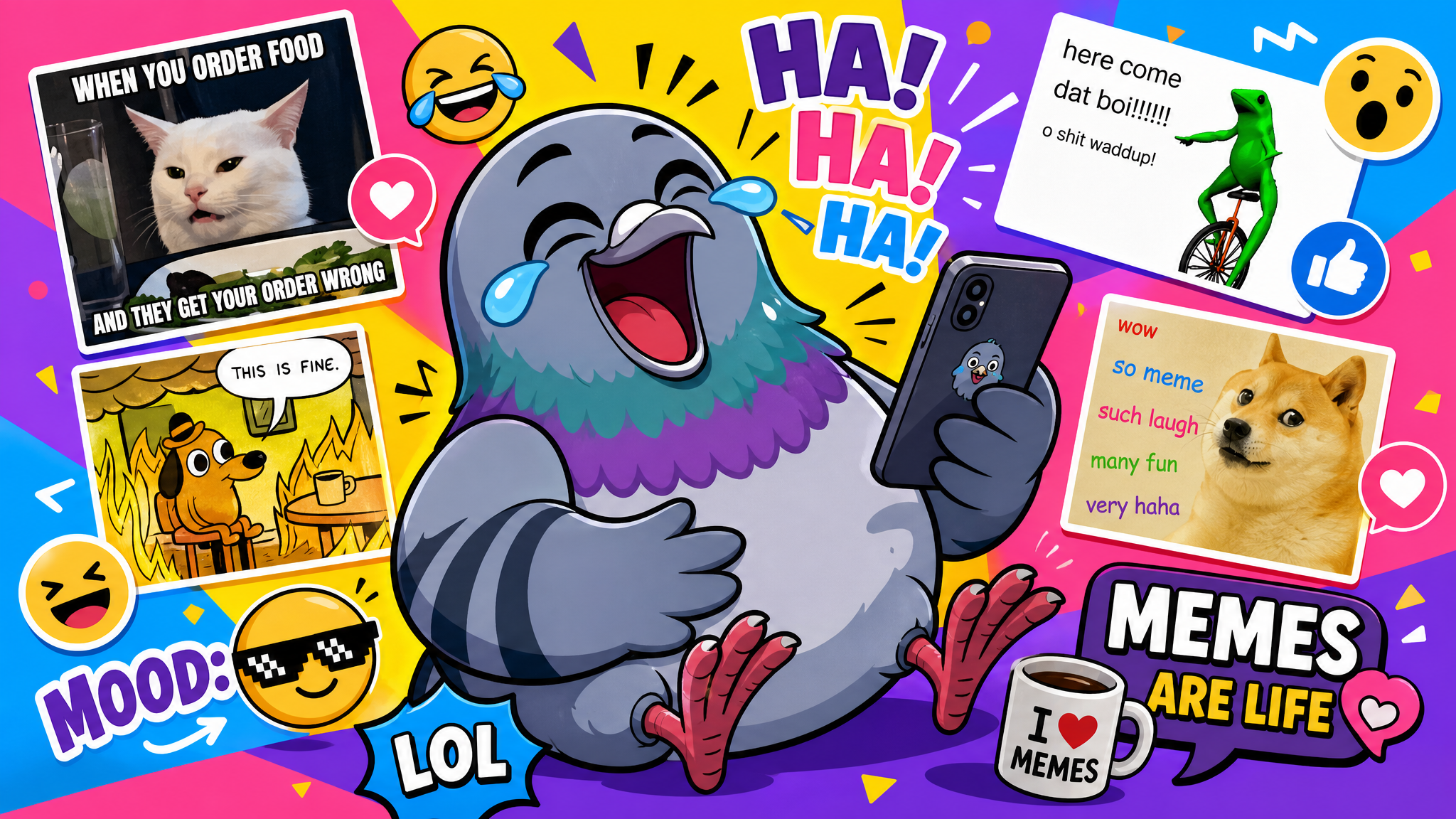
Emotional compression. A single meme can convey a complex emotional state that would require a paragraph to describe in text. The "This is fine" dog sitting in a burning room communicates ironic acceptance of chaos more efficiently than any sentence could.
Shared cultural context. Sending a meme that your friend understands creates an in-group bond. The mutual recognition of the reference — "I know this, and I know you know this" — reinforces social connection. It's the digital equivalent of an inside joke.
Emotional safety. Humor creates emotional distance that can make vulnerable communication easier. Sending a meme about being stressed is less emotionally exposed than typing "I'm really struggling right now." The humor provides a protective layer that makes the message easier to send and receive.
Tone setting. Text messages are notoriously bad at conveying tone. A meme instantly establishes whether a conversation is playful, sarcastic, sympathetic, or celebratory — solving the tone ambiguity problem that plagues plain text.
The Meme as Emotional Shorthand
Regular messaging friends develop meme vocabularies — collections of images and GIFs they repeatedly use to express specific feelings. One friend might always send the "surprised Pikachu" face when something predictable happens. Another might have a go-to crying cat for moments of dramatic despair. These recurring memes become character traits — part of how that person communicates.
This meme-based emotional shorthand is remarkably efficient. Over time, friends can communicate entire emotional states with a single image that would confuse outsiders but is immediately understood within the relationship.
Memes and Generational Communication
Different generations have different meme dialects. Baby Boomers favor motivational quotes overlaid on sunset photos. Gen X loves sarcastic text-based memes. Millennials perfected the reaction GIF. Gen Z communicates through absurdist, contextless humor that previous generations find incomprehensible.
These generational differences can create communication friction in cross-generational messaging (looking at you, family group chats). But they can also be bridges — sharing a meme with a parent or grandparent and explaining the humor is itself a bonding activity.
The Dark Side of Meme Communication
Meme-heavy communication isn't without drawbacks. Relying too heavily on memes can become a way to avoid genuine emotional expression. If every serious topic gets deflected with humor, important conversations never happen. Some people use constant meme-sending as a shield — keeping interactions entertaining but superficial.
There's also the risk of miscommunication. Memes depend on shared context. Send a meme your recipient doesn't recognize, and instead of a moment of connection, you get confusion. Send a meme with unintended connotations, and you might offend without meaning to.
Memes as Cultural Commentary
Beyond individual messaging, memes in group chats and channels serve as real-time cultural commentary. Major news events, celebrity moments, and cultural phenomena are immediately processed and reinterpreted through memes. Sharing these memes in messaging groups is how many people collectively process and make sense of the world around them.
This communal meme-making is a modern form of folk culture — people creating and sharing cultural artifacts that reflect their shared experience, one group chat at a time.
Building Your Meme Communication Skills
Want to be a better meme communicator? Here's the key: relevance over recency. The best meme response isn't the newest viral image — it's the one that most precisely matches the emotional moment. Build a personal meme library (saved images, favorite GIFs) organized by emotion, and you'll always have the perfect response ready.
Also, know your audience. The meme that kills in your friend group might fall completely flat with your coworkers. Read the room — or in this case, read the chat.
The Language of Tomorrow
Memes in messaging represent something profound: the evolution of written language from pure text to a rich multimedia system that combines words, images, humor, and cultural references into a uniquely expressive communication tool. We're not replacing language with memes — we're expanding language through them. And in the messaging apps where most of our daily communication happens, that expansion is already the norm.

Writer & Editor at PigeonChat
Related Articles

Why people search for a pigeon chat app online

Why users search for a pigeon chat app online

Why people call pigeons a messaging app joke
Dating, Community & Making Money on PigeonChat.site
Why chat folders matter for busy group conversations