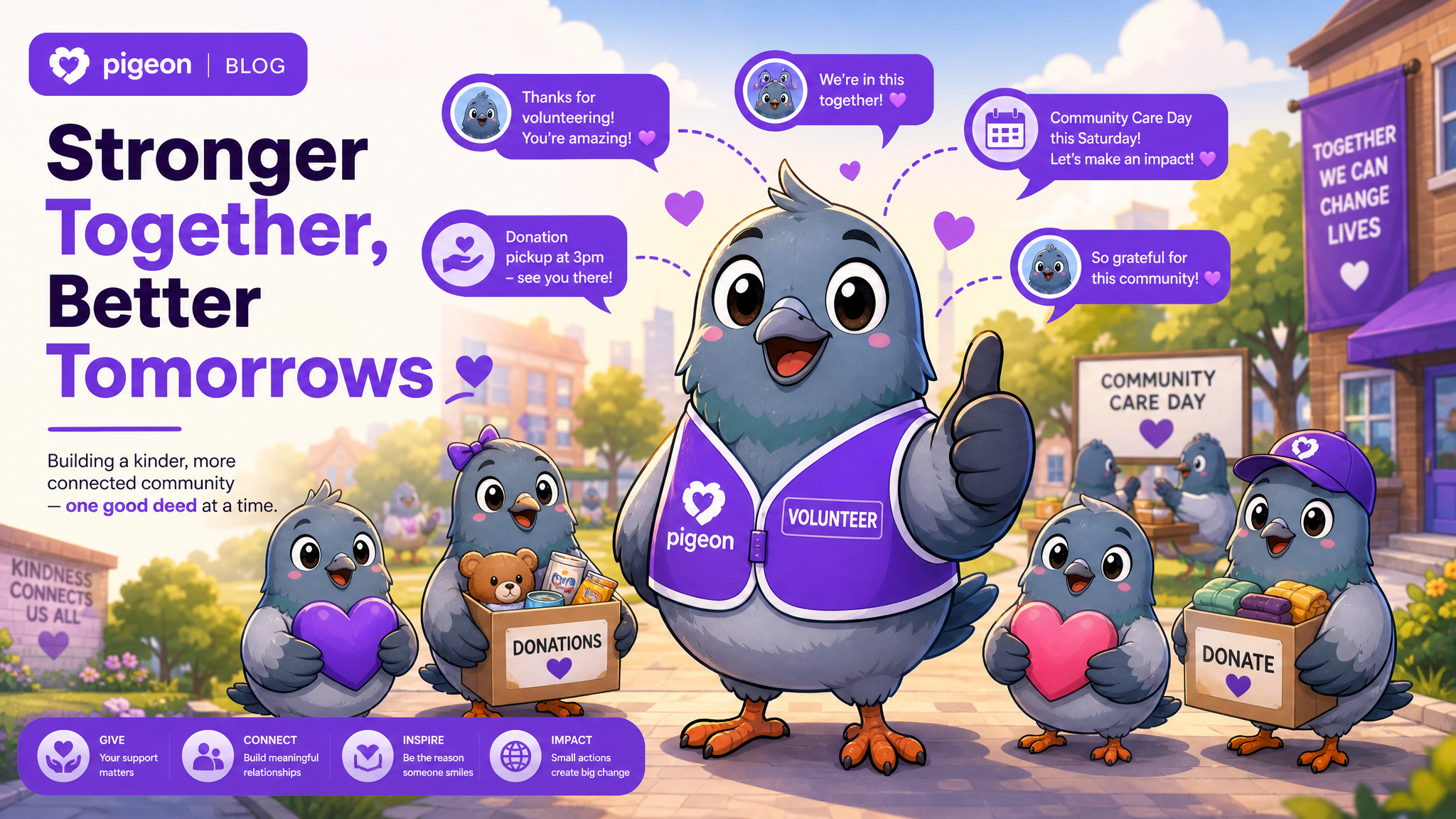
How Messaging Is Revolutionizing Volunteer and Charity Coordination
Explore how messaging apps have become the backbone of modern volunteer coordination, transforming disaster relief, community drives, and nonprofit fundraising.
How Messaging Is Revolutionizing Volunteer and Charity Coordination
In a world where every second counts during a crisis, the tools we use to communicate can mean the difference between chaos and coordination. Messaging apps have quietly become the backbone of modern volunteer and charity work, transforming how organizations mobilize people, distribute resources, and create lasting social impact. From disaster relief to local food drives, the humble group chat has evolved into a powerful engine for social good.
If you've ever wondered how nonprofits manage to rally hundreds of volunteers in record time, the answer increasingly lies in the messaging apps on their phones. Let's explore how this digital revolution is reshaping the charitable landscape and what it means for the future of giving back.
The Old Way: Phone Trees and Paper Sign-Up Sheets
Not long ago, organizing volunteers meant hours of phone calls, printed flyers, and hoping that word-of-mouth would reach enough people. Volunteer coordinators maintained spreadsheets of contact information, sent mass emails that often went unread, and relied on physical meetings to assign tasks and share updates.
The problems were obvious. Communication was slow, unreliable, and one-directional. Volunteers often showed up at the wrong time or place. Critical updates got lost in email inboxes. And tracking who was available, where, and when required an almost superhuman level of organizational skill.
Email improved things slightly, but response rates for nonprofit emails typically hover around 15-25%, meaning the majority of your volunteer base might miss critical information. The rise of messaging apps changed everything.
Why Messaging Apps Are Perfect for Volunteer Coordination
Messaging apps offer several unique advantages that make them ideal for organizing charitable efforts:
Instant reach and high engagement. While emails might sit unread for days, messages are typically seen within minutes. Studies show that messaging app notifications have a 98% open rate, compared to email's average of 20%. For time-sensitive volunteer coordination, this immediacy is invaluable.
Two-way communication. Unlike newsletters or bulletin boards, messaging enables real-time dialogue. Volunteers can ask questions, confirm attendance, share photos from the field, and provide status updates — all in one thread.
Low barrier to entry. Almost everyone already has a messaging app on their phone. There's no need to download special software, create new accounts, or learn complex project management tools. Volunteers can join a group with a single tap.
Multimedia sharing. Coordinators can share maps, photos, videos, voice notes, and documents instantly. Need to show volunteers where to park? Share a pin. Want to demonstrate how to set up equipment? Send a quick video tutorial.
Real-World Impact: Messaging in Disaster Relief
Some of the most compelling examples of messaging-driven volunteer coordination come from disaster relief efforts. When natural disasters strike, traditional communication infrastructure often fails — phone lines go down, power grids collapse, and internet connectivity becomes spotty. Yet messaging apps, with their low bandwidth requirements, often continue to function.
During recent hurricane seasons, volunteer networks organized entirely through messaging groups have become first responders of a new kind. These "digital volunteer armies" use group chats to coordinate search and rescue efforts, identify families in need, track supply distribution, and share real-time weather and safety updates.
One remarkable trend is the use of location-sharing features in messaging apps to coordinate rescue operations. Volunteers can share their real-time location, making it easy for coordinators to dispatch the nearest available person to someone in need.
In flood-affected regions, community members have created neighborhood-specific messaging groups where residents report water levels, share evacuation routes, and request help — turning every phone into a potential lifeline.
Community Food Banks and Local Drives
It's not just large-scale disasters where messaging makes a difference. Local charities and community organizations are discovering that messaging groups can transform their day-to-day operations.
Community food banks use group chats to alert volunteers about incoming donations, coordinate pickup schedules, and manage distribution events. Instead of relying on a handful of dedicated organizers, these groups enable a distributed model where anyone can step up when they're available.
Animal rescue organizations coordinate foster networks through messaging, sharing photos and information about animals in need, arranging transport chains across cities, and providing real-time veterinary advice.
Environmental cleanup groups use messaging to organize weekend events, share before-and-after photos that motivate ongoing participation, and celebrate milestones like the number of bags collected or miles of coastline cleaned.
The Rise of Broadcast Channels for Nonprofits
One of the most powerful features for charitable organizations is the broadcast channel — a one-to-many communication tool that lets organizations share updates with large audiences while keeping the conversation organized.
Unlike group chats where every member can post (which can become chaotic with hundreds of participants), broadcast channels allow the organization to share announcements while followers can react and engage without drowning out important information.
PigeonChat's channel system is particularly well-suited for this use case. Nonprofits can create dedicated channels for different programs, share multimedia updates, and build engaged communities of supporters who stay informed without being overwhelmed.
Some innovative uses of broadcast channels by nonprofits include sharing impact stories with donors, sending volunteer shift reminders, broadcasting urgent requests during emergencies, providing educational content about their cause, and sharing financial transparency reports.
Fundraising Through Messaging
Messaging apps are also transforming how charities raise funds. Peer-to-peer fundraising through messaging leverages the trust inherent in personal relationships. When a friend sends you a message about a cause they care about, it carries far more weight than an anonymous email from an organization.
The numbers back this up. Fundraising messages shared through personal messaging apps see conversion rates of 30-40%, compared to single-digit percentages for traditional digital fundraising methods. People are simply more likely to donate when asked by someone they know through a channel they trust.
Some organizations have created innovative "relay" campaigns where supporters share fundraising messages through their personal networks, each adding their own personal endorsement. This chain-letter effect, powered by messaging, can reach thousands of potential donors within hours.
Building Volunteer Communities That Last
Perhaps the most significant impact of messaging on volunteer coordination is the creation of lasting communities. Traditional volunteer programs often struggle with retention — people show up for one event and then drift away. Messaging groups solve this by maintaining an ongoing connection between events.
In these digital communities, volunteers share experiences, celebrate achievements, support each other, and organically plan future activities. The casual, always-on nature of messaging makes volunteering feel less like a formal commitment and more like being part of a community.
Research shows that volunteers who are part of active messaging groups are 3x more likely to participate in subsequent events compared to those contacted only through email. The sense of belonging and real-time engagement creates emotional investment that keeps people coming back.
Privacy and Safety Considerations
While messaging offers tremendous benefits for volunteer coordination, organizations must be thoughtful about privacy and safety. Sharing personal phone numbers in large groups can create security concerns, particularly for vulnerable populations.
Best practices include using platforms that don't require phone number sharing, creating clear group guidelines about information sharing, appointing moderators to maintain safe spaces, providing opt-out mechanisms for volunteers who prefer limited communication, and being mindful of the digital divide — not everyone has reliable smartphone access.
Modern messaging platforms like PigeonChat address many of these concerns with privacy-first features, allowing volunteers to participate without exposing personal contact information.
Tips for Nonprofits Getting Started
If your organization is looking to leverage messaging for volunteer coordination, here are some practical steps to get started:
Start small. Begin with a core team channel before expanding to larger volunteer groups. Iron out your communication norms with a small group first.
Establish clear guidelines. Define what the group is for, when messages should be sent, and what types of content are appropriate. This prevents groups from becoming cluttered with off-topic conversation.
Use multimedia wisely. Share photos and videos to build excitement and show impact, but avoid overwhelming the group with too many files.
Respect people's time. Use features like scheduled messages to send updates during reasonable hours. Avoid late-night messages unless it's truly urgent.
Celebrate wins. Share success stories, thank volunteers publicly in the group, and use reactions and stickers to create a positive atmosphere.
The Future of Messaging-Powered Volunteering
Looking ahead, the integration of AI and messaging will take volunteer coordination to new heights. Imagine chatbots that can automatically match volunteers to opportunities based on their skills, location, and availability. Or AI assistants that can translate messages in real-time for multilingual volunteer groups.
PigeonChat is at the forefront of this evolution, building tools that make it easier than ever for people to connect around causes they care about. From group chats to channels to AI-powered coordination, the future of volunteering is digital, connected, and more impactful than ever.
Whether you're organizing a neighborhood cleanup or coordinating international disaster relief, the messaging app in your pocket is your most powerful tool for making a difference. The question isn't whether to use messaging for volunteer coordination — it's how to use it most effectively.

Writer & Editor at PigeonChat
Related Articles
The Best Chat App for Students, Communities, and Groups in 2026
School Messaging Platforms in 2026: Secure Communication for Education
Phonathon and Messaging: How Chat Apps Are Transforming Fundraising Outreach in 2026
PigeonChat Forum: Building Community Through Private, Meaningful Conversations
Why chat folders matter for busy group conversations