The Science of Emoji Misinterpretation: Why Your Messages Get Lost in Translation
Why do emojis cause so many misunderstandings? Explore the science behind generational emoji dialects, platform rendering differences, and the tone interpretation gap in digital communication.
When 😊 Doesn't Mean What You Think It Means
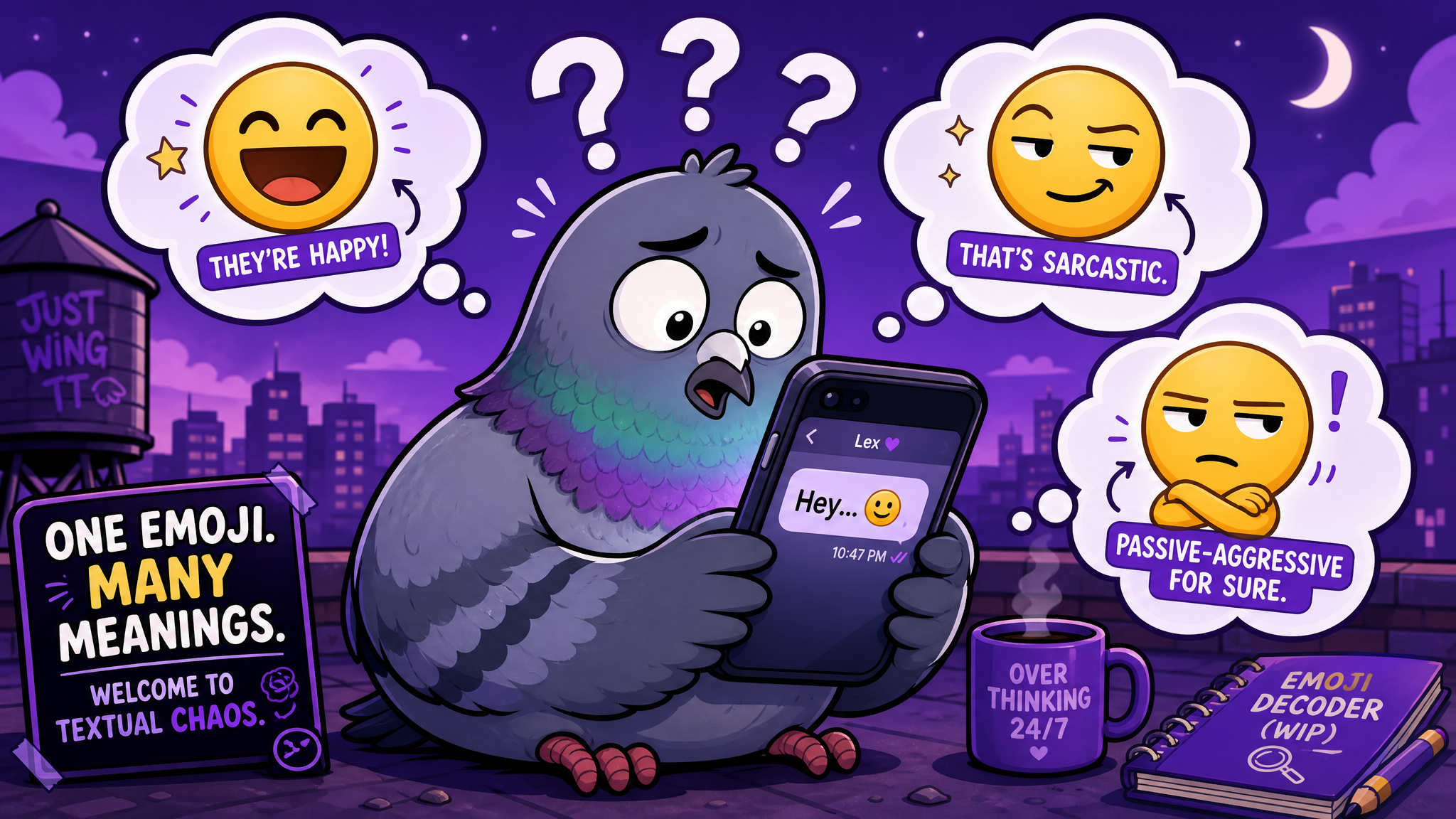
You send a friendly "Sounds good 😊" to your colleague and think nothing of it. They read it as passive-aggressive sarcasm and spend the next hour wondering what they did wrong. Welcome to the fascinating and frustrating world of emoji misinterpretation — where a single small image can derail a conversation, damage a relationship, or start a conflict that never needed to exist.
Emojis were created to solve a fundamental problem with text-based communication: the absence of tone. But decades into the emoji experiment, research shows that these tiny icons create nearly as many misunderstandings as they prevent. The science behind why this happens reveals deep truths about human communication, perception, and the limits of visual language.
The Scope of the Problem
Just how often are emojis misinterpreted? More than you'd think. A landmark study by the GroupLens Research Lab at the University of Minnesota found that for 9 out of 10 commonly used emojis, there was no consensus on whether the emoji conveyed positive, negative, or neutral sentiment. Even more remarkably, 25% of the time, participants couldn't even agree on whether a given emoji was positive or negative.
This means that roughly one in four emoji-containing messages has a significant probability of being interpreted differently than intended. When you consider that billions of emoji-containing messages are sent daily, the scale of potential miscommunication is staggering.
The problem isn't that emojis are broken — it's that they're being asked to do something no visual symbol can reliably do: convey the full nuance of human emotion across diverse contexts, relationships, and cultures.
Why the Same Emoji Looks Different on Different Phones
One major source of misinterpretation is purely technical: the same emoji code renders differently on different platforms. The Unicode Consortium defines emoji characters by description, but each platform — Apple, Google, Samsung, Microsoft — designs its own visual interpretation.
The most famous example is the "grinning face with smiling eyes" emoji. On Apple devices, it appears warm and genuinely happy. On older Samsung devices, it displayed a grimace-like expression that many users read as uncomfortable or pained. A message sent with joyful intent from an iPhone could arrive looking anxious on a Samsung device.
While platforms have worked to harmonize their emoji designs in recent years, significant differences persist. The "pistol" emoji ranges from a realistic weapon on some platforms to a bright green water gun on others. The "person bowing" emoji is sometimes interpreted as a push-up. The "information desk person" emoji — originally depicting someone helpfully gesturing toward information — is widely used as a sassy hair flip.
These rendering differences mean that even when two people agree on an emoji's meaning, they might not be seeing the same visual. You're essentially speaking the same word in two different accents — close enough to communicate most of the time, but occasionally different enough to cause confusion.
Generational Emoji Dialects
Perhaps the most significant source of emoji misinterpretation is generational. Different age groups have developed distinct emoji "dialects" — using the same symbols to mean very different things.
The laughing-crying emoji (😂): For Millennials and older users, this remains the go-to expression of humor. For Gen Z, it's considered outdated — even cringeworthy. Gen Z humor is expressed through 💀 ("I'm dead") or simply repeated letters ("LMAOOO"). A Millennial boss using 😂 in a team chat might be trying to seem approachable, while their Gen Z employees read it as try-hard or out of touch.
The thumbs-up (👍): Older users generally interpret this as a simple, positive acknowledgment — the digital equivalent of a nod. Many younger users read it as dismissive, passive-aggressive, or indicating that the sender couldn't be bothered to type an actual response. A 2023 survey found that 44% of Gen Z users consider the thumbs-up emoji rude in certain contexts.
The slightly smiling face (🙂): This is ground zero of the generational emoji war. For older users, it's a simple, pleasant smile. For younger users, it's one of the most passive-aggressive symbols in the emoji keyboard — conveying thinly veiled irritation, forced politeness, or sarcastic acceptance. Sending 🙂 to a Gen Z colleague might read as "I'm furious but maintaining composure."
The red heart (❤️): Older users tend to reserve hearts for romantic contexts or very close relationships. Younger users deploy hearts liberally — among friends, to acquaintances, even to brands they like. This can create awkward moments when a casual ❤️ from a Gen Z friend is interpreted as a romantic signal by an older recipient.
The Context Collapse Problem
Context collapse — a term coined by media scholar danah boyd — describes what happens when messages intended for one audience reach a different one. Emojis are particularly vulnerable to context collapse because their meaning is so heavily dependent on the relationship and situation in which they're used.
The 🔥 (fire) emoji means "that's hot/attractive" among friends commenting on selfies, "excellent work" in a professional context, "controversial take" in political discussions, and could literally mean "there's a fire" in an emergency. Strip away the context, and the same symbol communicates four completely different things.
This is why the same emoji can cause delight in one conversation and offense in another. A 😈 between romantic partners is playfully flirtatious. The same emoji from a stranger is creepy. A 💀 in a Gen Z friend group means something is hilarious. In a conversation about a serious illness, it would be horrifyingly inappropriate.
Our brains are remarkably good at processing context in face-to-face communication — we unconsciously factor in relationship, setting, tone, body language, and social norms to interpret meaning. In messaging, much of this contextual information is stripped away, leaving emojis to carry emotional weight they're not always equipped to bear.
The Tone Interpretation Gap
Researchers at Binghamton University conducted a fascinating study on how punctuation and emojis affect the perceived sincerity of text messages. They found that messages ending with a period were perceived as less sincere than those without, and that emojis could either amplify or undermine sincerity depending on the combination.
"Thanks." reads differently than "Thanks!" which reads differently than "Thanks 😊" which reads differently than "Thanks 🙂" — and each reader will interpret these variations through their own cultural, generational, and relational lens.
The tone interpretation gap is particularly wide in professional settings. A manager who adds 😅 to a message about a deadline ("We need this by Friday 😅") might intend to soften the request. Some team members will read it as a lighthearted acknowledgment that the timeline is tight. Others will interpret it as the manager being stressed and upset. The emoji that was meant to ease tension can actually create it.
Gender Differences in Emoji Interpretation
Research consistently shows that gender influences both emoji usage patterns and interpretation. A comprehensive study published in the journal PLOS ONE found that women tend to use more emojis overall, use more varied emojis, and interpret emojis as more emotionally intense than men do.
These differences can lead to miscommunication in cross-gender messaging. A man who rarely uses emojis might send a bare text response that a woman interprets as cold or disinterested — not because he's being cold, but because his communication style doesn't include the emotional markers she expects. Conversely, a woman's liberal emoji use might be interpreted by a man as excessive or as carrying romantic intent when none is intended.
Understanding these patterns doesn't mean we should stereotype individual communicators, but it does highlight that emoji interpretation is filtered through multiple lenses — gender being just one of several that shape how we read these small but powerful symbols.
How to Reduce Emoji Miscommunication
Completely eliminating emoji misinterpretation is impossible — context will always be king, and no visual symbol can perfectly encode human emotion. But these strategies can significantly reduce the risk:
Know your audience. The same emoji means different things to different people. Before using an emoji, consider the recipient's age, cultural background, and communication style. When in doubt, use words instead.
Don't let emojis carry critical meaning alone. If the emotional content of your message depends entirely on an emoji, you're taking a risk. Use emojis to supplement your words, not replace them. "I'm really happy about this! 😊" is clearer than "😊" alone.
Be aware of platform differences. If you're messaging someone who uses a different device or platform, be aware that your emoji might look different on their screen. Stick to simple, well-established emojis for important messages.
Calibrate within relationships. Pay attention to how the people you message regularly use emojis. Over time, you'll develop a shared emoji vocabulary that reduces ambiguity within your specific conversations.
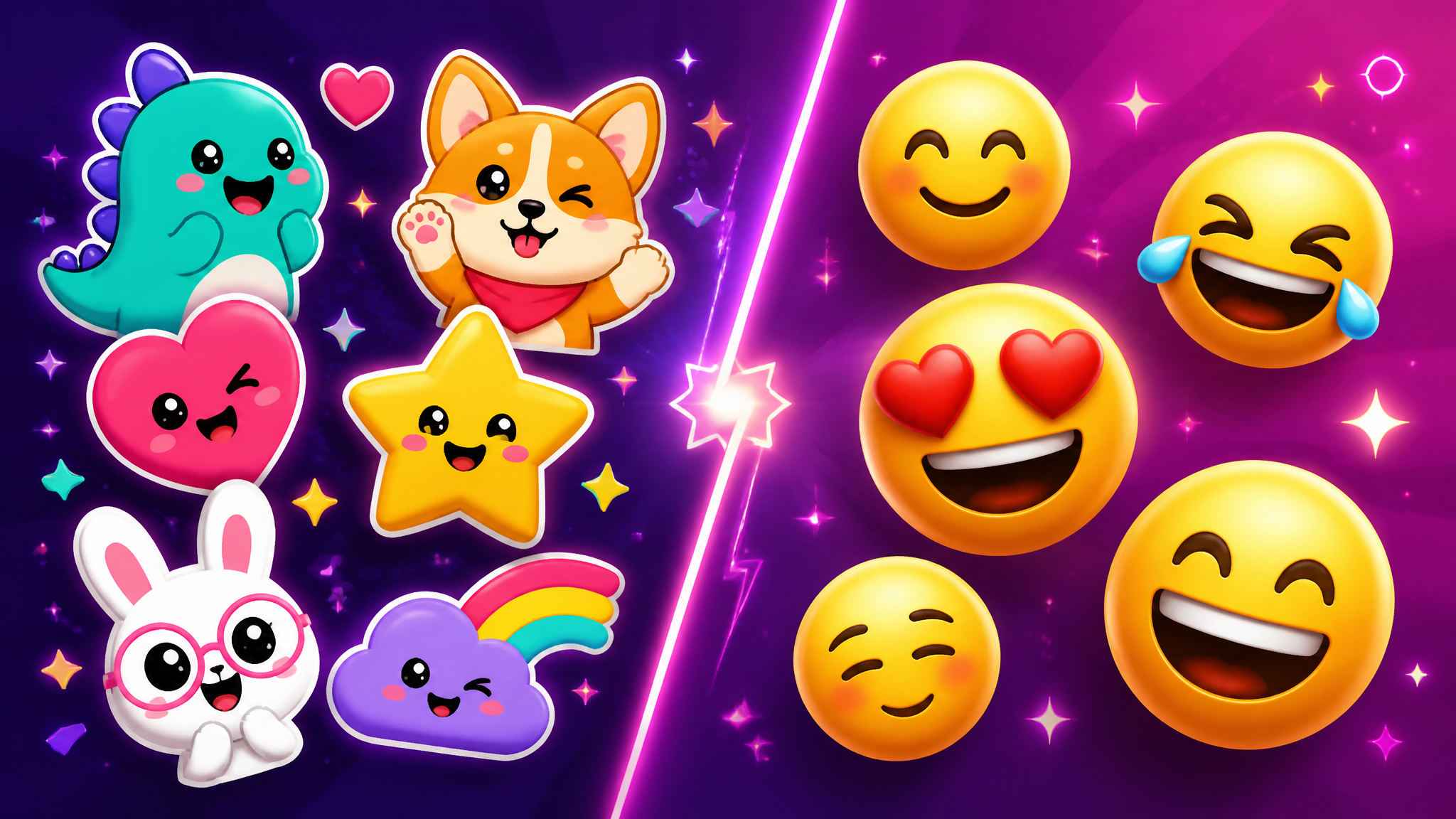
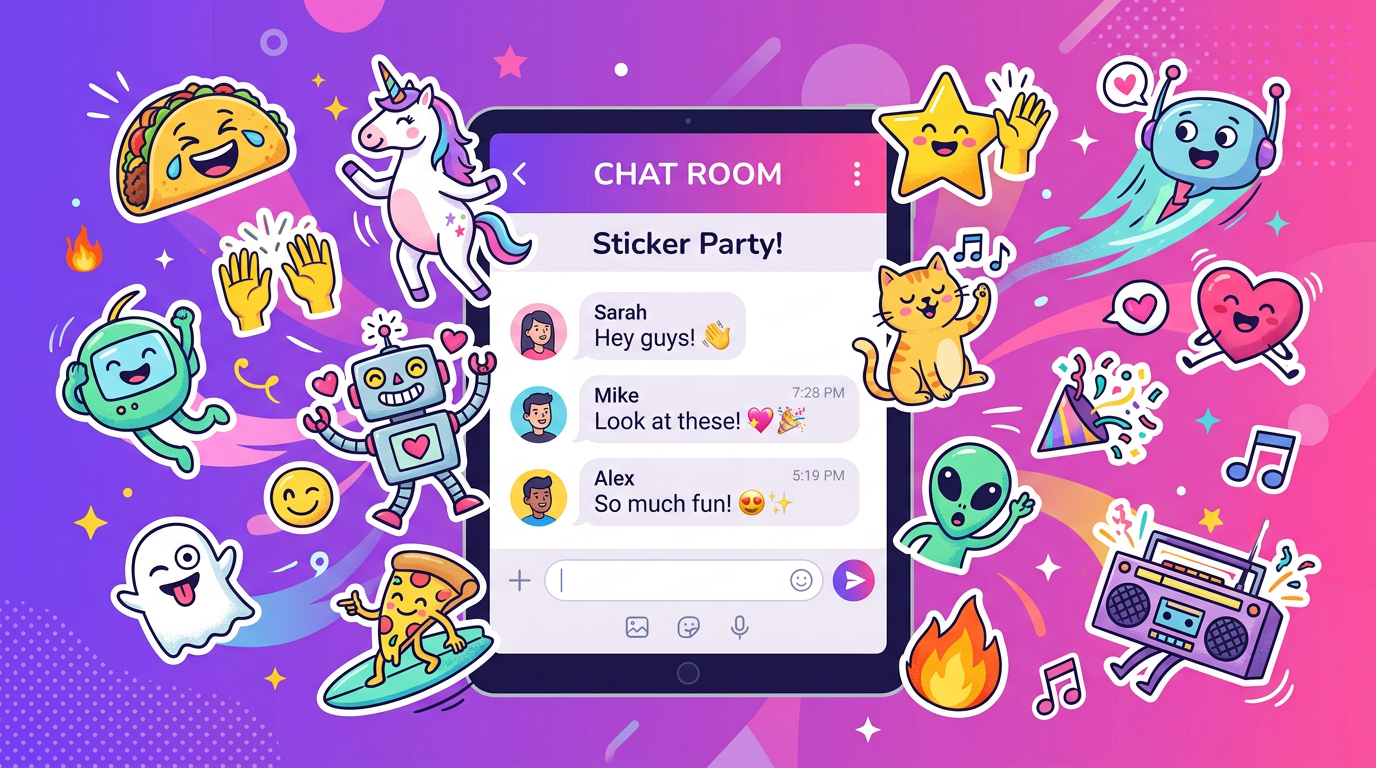
Use stickers for clarity. Stickers — like those available on PigeonChat — are often more expressive and less ambiguous than standard emojis because they combine facial expressions, body language, and context into a single image. A sticker of a happy pigeon celebrating is harder to misinterpret than a 🙂.
Ask when confused. If you receive an emoji that you're not sure how to interpret, it's better to ask than to assume. "What do you mean by that?" prevents more conflicts than it creates.
The Evolution of Visual Communication
Emoji misinterpretation isn't a failure of technology — it's evidence of how complex human communication really is. We've spent hundreds of thousands of years developing sophisticated systems for conveying meaning through tone, expression, gesture, and context. Compressing all of that into a small yellow circle was always going to be an imperfect translation.
As messaging continues to evolve, so will our visual communication tools. Animated emojis that convey more nuanced emotions, AI-assisted emoji suggestions that match your intended tone, and richer sticker ecosystems will all help bridge the interpretation gap.
But the most powerful tool will always be awareness — understanding that the emoji you send and the emoji the other person receives might carry different meanings, and communicating with the empathy and clarity to navigate those differences. In the end, the best emoji strategy is the same as the best communication strategy: think about your audience, say what you mean, and when in doubt, use more words rather than fewer.

Writer & Editor at PigeonChat
Related Articles
Cute Stickers, Anime & Emojis: The Most Fun Messaging App in 2026
Free Cute Stickers & Anime Chat Community: Why PigeonChat Is the Fun Messaging App of 2026
Stickers vs Emojis in 2026: Which One Actually Says It Better?
Sticker Culture in 2026: How Digital Stickers Changed the Way We Communicate
Why chat folders matter for busy group conversations