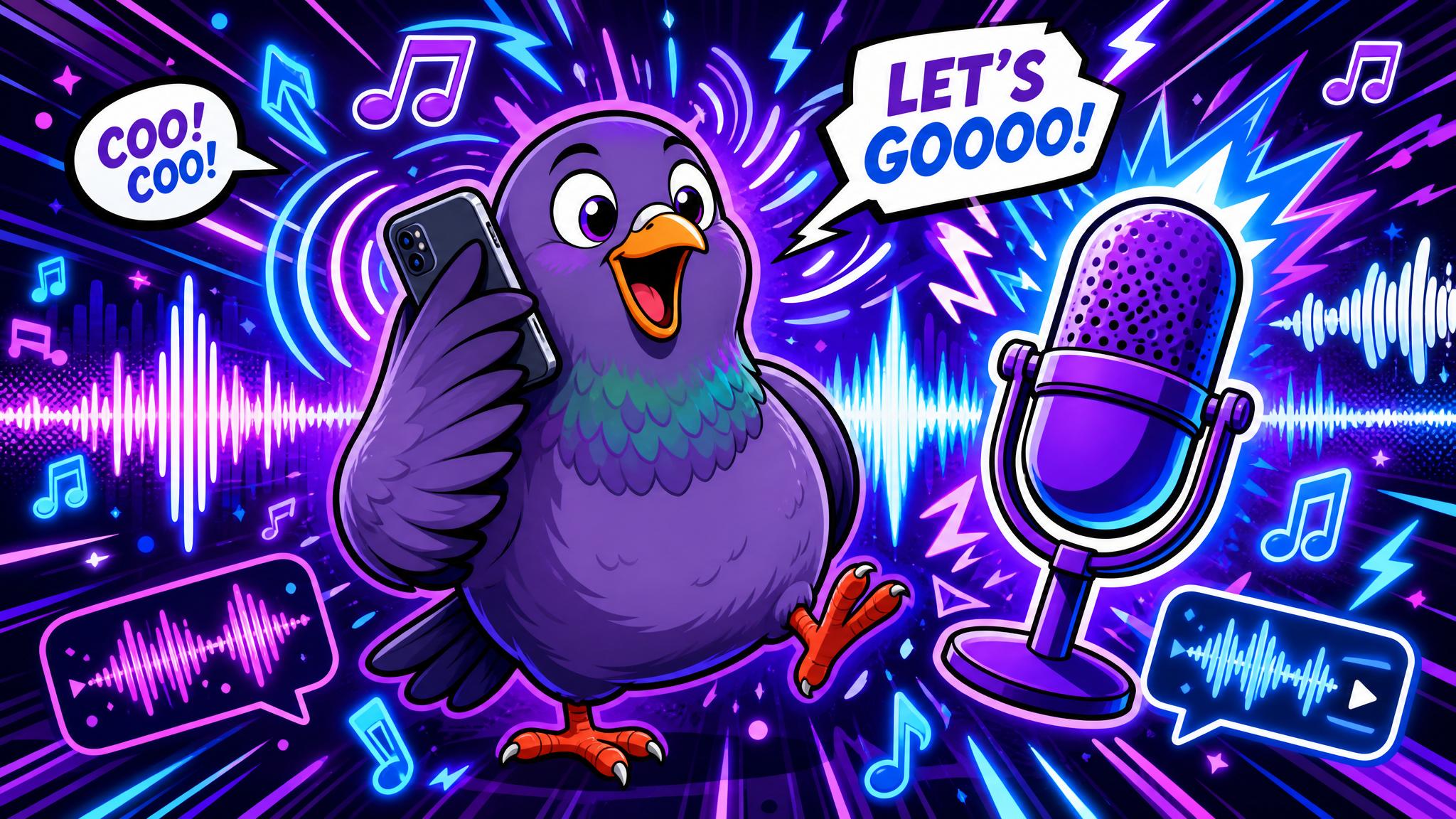
The Rise of Audio Messaging: Why Voice Notes Are Taking Over
Explore the explosive growth of audio messaging and voice notes, and why millions of users prefer speaking over typing in modern communication.
Why Millions of People Would Rather Talk to Their Phone Than Type on It
Something interesting is happening in the messaging world. After two decades of text-based dominance, voice messages — those little audio recordings you send and receive in chat — are experiencing an extraordinary surge in popularity. In 2025, WhatsApp alone reported that users send over 7 billion voice messages per day. That's not a typo. Seven billion. Every single day.
Voice notes have gone from a niche feature used mainly in certain regions to a global phenomenon embraced by all age groups and cultures. But why? What's driving millions of people to press and hold that microphone button instead of typing? The answer reveals fascinating truths about human communication, the limitations of text, and what we really want from our messaging apps.
The Efficiency Argument
The most straightforward explanation for voice messaging's rise is efficiency. The average person types at 35-40 words per minute on a smartphone keyboard. The average person speaks at 125-150 words per minute. That's a three-to-four-times speed advantage for voice — and it's even more dramatic when you factor in autocorrect battles, typo corrections, and the general clumsiness of thumb-based typing.
For conveying complex information — directions, instructions, stories, detailed updates — voice messages are dramatically faster than text. A two-minute voice note can convey what would take five to ten minutes of typing. For busy professionals, parents juggling multiple responsibilities, or anyone on the go, this efficiency gain is significant enough to change behavior.
The hands-free aspect amplifies the efficiency. Voice messages can be recorded while walking, cooking, driving (with hands-free setup), or doing anything that occupies your hands. Text demands your eyes and fingers; voice demands only your voice. In a multitasking world, that's a crucial advantage.
The Warmth Factor
Beyond efficiency, voice messages offer something text fundamentally cannot: the warmth and nuance of the human voice. Tone, inflection, emphasis, laughter, sighs, pauses — these vocal elements communicate emotion with a richness that even the most creative emoji usage can't match.
When your friend tells you about their terrible day through text, you get the information. When they tell you through a voice note, you hear the exhaustion in their voice, the slight crack when they mention what upset them, and the forced laugh when they try to make light of it. That vocal texture transforms information into empathy, understanding, and connection.
Studies in emotional communication research consistently show that vocal communication transmits emotional states more accurately than text-based communication. A 2024 study from UCLA's Communication Lab found that listeners correctly identified the sender's emotional state 78% of the time from voice messages, compared to just 56% from text messages containing the same content. Those 22 percentage points represent a massive gap in emotional fidelity.
The Regional Phenomenon Gone Global
Voice messaging's global explosion has roots in specific regional cultures where the practice was already deeply established.
Brazil is perhaps the world's voice message capital. Brazilian users send an average of 12 voice messages per day per person, more than any other country. The cultural preference for warm, expressive, conversational communication makes voice a natural fit. Walking through any Brazilian city, you'll see people holding their phones horizontally, speaking into the bottom microphone — the iconic voice message pose.
The Middle East and North Africa have similarly embraced voice messaging, driven partly by the complexity of Arabic text input on Western-designed keyboards. Voice messaging bypasses input challenges and aligns with oral communication traditions deeply rooted in the region's culture.
India's multilingual landscape makes voice messaging particularly practical. With 22 officially recognized languages and hundreds of dialects, voice messages allow communication in any language without keyboard limitations. A user can seamlessly switch between Hindi, Tamil, and English within a single voice note — something text input makes cumbersome.
What's changed recently is that voice messaging has broken out of these regional strongholds into markets where text traditionally dominated. Usage in the US, UK, Germany, and Japan has grown by 200-400% between 2023 and 2026, driven by younger users who discovered voice notes during the pandemic and never looked back.
The Gen Z Voice Note Revolution
If voice messaging's first wave was driven by cultural and practical factors in specific regions, its second wave is being driven by Gen Z worldwide. For this generation, voice notes have become the default communication mode for close friendships, replacing both text messages and phone calls.
The reasons are generational. Gen Z grew up with phone anxiety — the discomfort of real-time phone calls that previous generations didn't experience. Voice notes offer voice communication without the pressure of real-time interaction. You get the warmth and personality of voice without the obligation to respond immediately or maintain a live conversation.
"I never call my friends," explains 22-year-old Maya. "But I send maybe 30 voice notes a day. It's like having a conversation throughout the day without either of us needing to stop what we're doing." This asynchronous voice communication creates a new hybrid — somewhere between a phone call and a text, combining the best qualities of both.
The intimacy of voice notes among Gen Z users has created a new social signal: receiving a voice note from someone is considered more personal than receiving a text. In dating contexts, sending your first voice note to a new romantic interest is treated as a milestone — a sign of growing comfort and trust.
Voice Notes in Professional Settings
Voice messaging is increasingly appearing in professional contexts, though with more nuance than casual use. In fast-paced work environments where typing detailed updates is impractical, voice notes offer a way to communicate complex information quickly while maintaining a personal touch.
Sales professionals use voice messages to provide personalized follow-ups to clients. Managers send morning voice briefings to their teams. Freelancers record project updates for clients who prefer voice over lengthy written reports. The professional use case is growing rapidly, particularly in industries where relationship-building is central to success.
However, professional voice messaging requires etiquette awareness. Unsolicited long voice notes from professional contacts can be perceived as inconsiderate of the recipient's time. Best practices include keeping professional voice notes under 60 seconds, providing a text summary alongside longer recordings, and establishing mutual agreement that voice communication is welcome.
The Podcast Effect
The explosion of podcasting has primed audiences for audio content in a way that directly benefits voice messaging. People who spend hours weekly listening to conversational podcasts have developed a comfort with and appetite for audio-based communication that extends naturally into their messaging behavior.
Some friend groups have essentially created their own private podcasts through voice note exchanges — daily audio diaries shared among close friends, where each person records updates about their day, their thoughts, or their reactions to shared experiences. These voice note chains create a richer, more intimate form of connection than text-based group chats.
The podcasting influence extends to production quality expectations. Early voice messages were often recorded in noisy environments with poor audio quality. Today's users are increasingly conscious of audio quality, recording in quieter spaces and even using external microphones for important voice notes. The cultural elevation of audio content is raising the bar for voice messaging quality.
Accessibility and Inclusivity
Voice messaging dramatically improves messaging accessibility for populations that text-based communication underserves.
People with visual impairments can send voice messages without needing screen readers or specialized keyboard configurations. The input method is entirely audio-based, removing a significant barrier to digital communication.
People with dyslexia or literacy challenges can communicate fully and expressively through voice without the anxiety and frustration that written communication can cause. Voice messaging levels the playing field, ensuring that communication ability isn't limited by writing skill.
Elderly users who struggle with small smartphone keyboards often find voice messaging dramatically easier and more natural. Speaking to a phone is familiar; typing on a glass surface is not. Voice messaging allows seniors to participate fully in digital communication with minimal technological adaptation.
Multilingual users communicating in a language that isn't their primary writing language benefit enormously from voice. Speaking a second language is generally easier than writing it, and voice messaging removes the spelling and grammar anxiety that can inhibit written communication in non-native languages.
The Etiquette of Voice Messaging
As voice messaging goes mainstream, a set of social norms is crystallizing around its use:
Length matters. Short voice notes (under 90 seconds) are generally welcome in most contexts. Notes over three minutes should be reserved for very close relationships or should be preceded by a text asking if the recipient has time to listen to a longer message.
Context awareness. Sending a voice note to someone you know is in a meeting, a library, or another quiet public space shows low social awareness. A quick text confirming they can listen is a thoughtful precaution.
Don't chain short messages. Sending ten five-second voice notes instead of one cohesive message is like sending ten one-word texts — annoying and disruptive. Collect your thoughts and record one complete note when possible.
Provide text alternatives when appropriate. If the content of your voice note requires action (an address, a phone number, specific instructions), follow up with a text containing the key information so the recipient doesn't have to replay your voice note to find it.
Respect the response medium. If someone consistently responds to your voice notes with text, they may not be comfortable with voice messaging. Don't pressure people into a communication style they haven't chosen.
Technical Evolution: Voice Notes Get Smarter
Messaging platforms are rapidly improving voice note features to make the format even more versatile and user-friendly.
Playback speed control lets recipients listen at 1.5x or 2x speed, addressing the time-consumption concern that's the biggest barrier to voice note adoption. A three-minute voice note takes only 90 seconds at double speed.
Voice-to-text transcription automatically converts voice notes to readable text, giving recipients the choice between listening and reading. This feature addresses the context problem — in a quiet office, you can read the transcription instead of putting in earbuds.
Waveform previews show the audio pattern of a voice note before playing, giving visual cues about the message's length, pauses, and energy level. Some users report being able to "read" voice notes visually from their waveforms with surprising accuracy.
Draft and edit capabilities let users review and re-record voice notes before sending — addressing the anxiety of committing to an unedited, irreversible audio message. Platforms like PigeonChat are making voice messaging more forgiving and user-friendly.
The Future Is Vocal
Voice messaging isn't replacing text — it's complementing it, creating a richer, more nuanced communication palette. The messaging app of the future will seamlessly blend text, voice, video, and emerging formats like spatial audio and AI-enhanced voice, giving users the freedom to communicate in whatever mode best fits the moment.
The rise of voice messaging is ultimately a return to our roots. Humans evolved to communicate through voice. For hundreds of thousands of years, every meaningful conversation happened through spoken words. Text-based messaging was a remarkable innovation, but it was always a compression of human communication — stripping away the vocal richness that carries so much of our meaning and emotion.
Voice notes are restoring what text took away, one recording at a time. And the seven billion voice messages sent every day suggest that people aren't just using this feature — they're loving it.

Writer & Editor at PigeonChat
Related Articles
Why chat folders matter for busy group conversations
How image sharing works in private chat apps
What chat features users expect in modern private apps
Why chat folders help busy groups stay organized

How chat groups help schools and universities stay organized