The Evolution of Typing Indicators: Why Those Three Dots Drive Us Crazy
Dive into the neuroscience, psychology, and social dynamics behind the typing indicator — why three bouncing dots control our emotions and what they reveal about human communication.
The Three Dots That Control Your Emotions
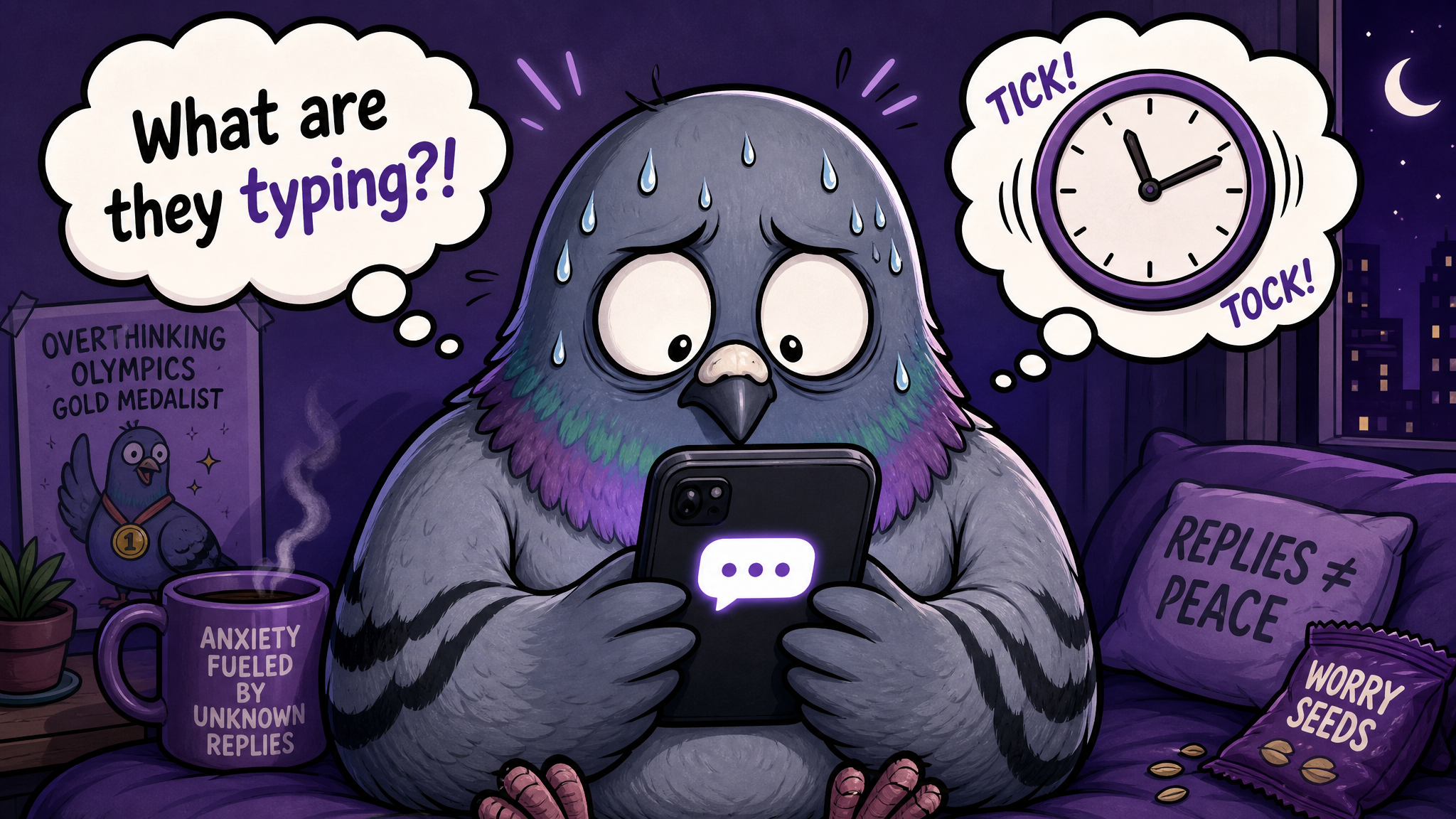
You send a message. Within seconds, those three little dots appear — bouncing, pulsing, alive with potential. Someone is typing. Your heart rate subtly increases. Your eyes lock onto those dots like a cat tracking a laser pointer. What are they writing? Is it good news? Bad news? A novel-length response or a devastating one-word reply?
Then the dots disappear. No message arrives. And you're left in a uniquely modern state of emotional limbo that didn't exist before messaging apps put those three bouncing dots on our screens.
The typing indicator — one of the simplest features in any messaging app — has become one of the most psychologically potent elements of digital communication. Let's explore why those three dots have such power over our emotions and what they reveal about human psychology.
A Brief History of the Typing Indicator
The typing indicator's origins trace back to the early 2000s and instant messaging platforms like ICQ, AIM, and MSN Messenger. These early implementations showed a simple text notification: "John is typing..." It was a practical feature designed to prevent conversational collisions — both people typing simultaneously and sending messages that crossed paths awkwardly.
As messaging moved to mobile, the feature evolved aesthetically but retained its core function. Apple's iMessage introduced the now-iconic "three bouncing dots" animation in 2011, creating a visual shorthand that has since been adopted (with variations) by virtually every messaging platform on earth.
What the designers of these early implementations probably didn't anticipate was the profound psychological impact their creation would have. The typing indicator was engineered as a utility. It became an emotional experience.
The Neuroscience of Anticipation
To understand why typing indicators affect us so deeply, we need to look at what happens in our brains when we see those dots appear.
Neuroscience research shows that anticipation activates the brain's reward system — specifically the ventral striatum and the neurotransmitter dopamine. Importantly, dopamine isn't just released when we receive a reward; it surges during the anticipation of a reward. This is why the moments before opening a gift are often more exciting than the moment after.
The typing indicator creates a state of continuous anticipation. Someone is composing a message for you — a small social reward is incoming — and your brain responds with a dopamine spike that keeps you attentive and emotionally engaged. The longer the typing lasts, the more anticipation builds, and the more emotional investment you have in whatever eventually arrives.
This neurological response explains why we can't look away from typing indicators. Our brains are literally wired to pay attention to signals that predict incoming social rewards. The three dots hijack this ancient reward circuitry, applying caveman brain chemistry to a thoroughly modern digital context.
The Anxiety Amplifier
While anticipation can be pleasurable, the typing indicator's dark side is anxiety amplification. The same mechanism that makes the dots exciting in positive contexts makes them agonizing in uncertain or negative ones.
Imagine you've just sent an important message — maybe confessing feelings to someone, asking your boss for a raise, or apologizing for a mistake. The typing indicator appears, and suddenly those three innocent dots are loaded with the weight of your vulnerability. Every second of typing feels like an hour. When the dots pause, your stomach drops. When they resume, hope and dread fight for dominance.
A study published in the journal Computers in Human Behavior found that typing indicators significantly increase anxiety during conversations with high emotional stakes. Participants reported elevated stress levels when they could see that someone was typing a response to a sensitive message, compared to conditions where no typing indicator was present.
The researchers concluded that typing indicators create what they call "anticipatory anxiety" — anxiety driven not by what's happening but by what might happen. In the gap between seeing the dots and receiving the message, our minds generate dozens of possible responses, often defaulting to worst-case scenarios as a protective mechanism.
The Disappearing Dots Phenomenon
If typing indicators are anxiety-inducing, their sudden disappearance is something worse. The "typing then not typing" phenomenon — when someone starts composing a message but never sends it — has become one of the most discussed micro-events in digital communication.
What actually happens in most cases is mundane: the person got distracted, decided to rephrase their message, accidentally opened the wrong conversation, or simply changed their mind about what they wanted to say. Auto-correct might have mangled their message beyond repair. Their phone might have locked mid-type.
But what the recipient's brain processes is something far more dramatic: "They started to say something and decided not to. What were they going to say? Why did they stop? Did they write something and delete it? Was it too harsh? Too emotional? Too honest?"
This interpretation gap — between the mundane reality and the dramatic narrative our brains construct — is the typing indicator's most psychologically interesting feature. It transforms a non-event (someone started typing and stopped) into a loaded social signal (someone chose not to communicate something they were thinking).
Typing Speed as Social Signal
Beyond the binary of typing/not typing, the perceived speed and duration of typing also communicate social meaning.
Quick typing: When someone responds almost immediately and the typing indicator appears within seconds of your message, it signals engagement and priority. "They were waiting for my message" or "I'm important enough to get an immediate response" are the implicit messages received.
Extended typing: When the typing indicator remains active for a long time, multiple interpretations emerge. Positive: "They're composing a thoughtful, detailed response." Negative: "They're struggling to find the right words for bad news." Neutral: "They type slowly." The extended typing indicator is a Rorschach test — people see in it whatever their emotional state predisposes them to see.
Intermittent typing: Start, stop, start, stop — the on-and-off pattern suggests someone rewriting their message, which implies the conversation is important enough to warrant careful word choice. In romantic contexts, intermittent typing is often interpreted as a sign of strong emotions being carefully managed.
The Social Dance of Simultaneous Typing
One of the more delightful aspects of typing indicators is the moment when both people in a conversation are typing simultaneously. This creates a unique micro-moment of shared awareness — each person knows the other is composing a thought at the same time, creating a real-time intellectual connection that feels immediate and alive.
When simultaneous typing results in messages that arrive at nearly the same moment, especially when they express similar sentiments, it creates a burst of connection — "We were thinking the same thing at the same time." This synchronicity is one of messaging's most satisfying experiences and is entirely enabled by the typing indicator's real-time feedback.
Conversely, seeing the other person start typing can cause you to stop and wait for their message — a digital version of the "no, you go first" dance that happens in doorways and at four-way stops. This deference, a tiny act of digital courtesy, is a fascinating example of how technology creates new forms of social etiquette.
Cultural and Contextual Variations
The emotional impact of typing indicators varies significantly across different types of relationships and cultural contexts.
In romantic relationships, typing indicators carry the most emotional weight. The early stages of dating, when every message feels significant, turn the typing indicator into an emotional roller coaster. "They're typing" becomes the most exciting notification in the world. "They stopped typing" becomes a mini-crisis.
In friendships, typing indicators are generally lower stakes. Seeing a friend type is pleasant without being overwhelming. The exception is during emotionally charged conversations — supporting a friend through a breakup, for instance, where the typing indicator signals that comfort is on its way.
In professional settings, typing indicators serve their original practical purpose most effectively. Knowing a colleague is composing a response prevents you from sending additional messages that might disrupt their thought process. It's functional without being emotional.
In group chats, typing indicators create a different dynamic entirely. Seeing multiple people typing simultaneously builds excitement and energy, suggesting a lively conversation is about to unfold. The group chat typing indicator transforms individual anticipation into collective anticipation.
Design Choices and Their Psychological Impact
Different messaging platforms have made different design choices about typing indicators, each with distinct psychological implications.
Animation style: Apple's bouncing dots feel active and alive, creating a sense of something happening. WhatsApp's static "typing..." text is more neutral, conveying information without the same emotional engagement. The choice between animated and static indicators isn't trivial — animation inherently draws more attention and emotional response.
Granularity: Some platforms show only that someone is typing. Others show how long they've been typing or how many characters they've written. Greater granularity provides more information but also more fuel for interpretation and anxiety.
Opt-out options: A growing number of platforms allow users to disable typing indicators — either hiding their own or not seeing others'. This privacy option acknowledges the psychological burden the feature can create and empowers users to opt out of the anticipation cycle.
Managing Your Relationship with Typing Indicators
If typing indicators cause you significant anxiety, there are strategies for managing your response:
Recognize the interpretation gap. Remind yourself that typing indicators carry far less meaning than your brain assigns them. Someone typing and stopping usually means nothing more than a distraction or a rephrase. Train yourself to default to neutral interpretations rather than dramatic ones.
Put the phone down. If you've sent a sensitive message and find yourself staring at the screen waiting for dots to appear, physically set the phone aside. Check it in ten minutes. The response will be the same whether you watch for it or not, but your anxiety level will be dramatically different.
Disable the feature if needed. If typing indicators consistently spike your anxiety, turn them off. Your conversations will continue exactly as before, minus the anticipatory stress. This is a legitimate and healthy use of privacy settings.
Communicate openly. If you're in a relationship where typing indicator behavior has become a source of tension ("I saw you typing for five minutes and then nothing came through!"), address it directly. "Sometimes I start typing and get distracted" or "I rephrase my messages a lot" can defuse the anxiety before it becomes a pattern of conflict.
The Future of Typing Indicators
As messaging technology evolves, typing indicators will likely become more sophisticated. Some platforms are already experimenting with indicators that show the approximate length of the incoming message (giving context about whether to expect a quick reply or a lengthy response) or the sender's emotional tone (detected through typing patterns and word choice).
AI-powered indicators might eventually convey not just that someone is typing but the sentiment of what they're composing — though this raises significant privacy concerns. Do we really want others to know the emotional tone of our messages before we've decided to send them?
Messaging apps like PigeonChat continue to refine the balance between providing useful real-time feedback and protecting users' privacy and emotional well-being. The ideal typing indicator gives you just enough information to facilitate smooth conversation without creating unnecessary anxiety.
Those Three Dots Will Keep Bouncing
Love them or hate them, typing indicators aren't going anywhere. They've become so deeply embedded in our digital communication expectations that their absence would feel like talking to a wall — sending messages into a void with no indication that a human being is on the other end, processing your words and formulating a response.
The three dots are a tiny bridge between the isolation of asynchronous communication and the warmth of real-time conversation. They remind us that behind every screen is a person thinking about what to say to us. And that awareness — someone is thinking about me right now — is, despite all the anxiety it sometimes causes, a fundamentally beautiful thing about the way we communicate today.

Writer & Editor at PigeonChat
Related Articles

Why people search for the best chat app UAE option

Why users search for a best chat app UAE option

Why users search for a best chat app UAE option

What makes a pigeon chat app different online
Why chat folders matter for busy group conversations