Dark Mode vs. Light Mode: What Your Theme Choice Says About You
The eternal UI debate — is dark mode actually better for your eyes, or is it just aesthetic preference? We dive into the science, psychology, and culture.
Few tech preferences spark more passionate debate than the dark mode vs. light mode battle. What started as an accessibility feature has become a cultural identifier. Let's explore what's really behind the preference.
The Eye Health Question
Contrary to popular belief, dark mode isn't universally "better" for your eyes. Research shows that light text on dark backgrounds can actually cause more eye strain during prolonged reading. However, dark mode does reduce blue light emission and is easier on the eyes in low-light environments.
Battery Life: Dark Mode Wins
On OLED and AMOLED screens, dark mode genuinely saves battery. Black pixels on these displays are simply turned off, consuming zero power.
Readability: Light Mode Wins
For long-form reading and detail work, light mode offers better contrast and readability. Most printed books and documents use dark text on light backgrounds for a reason.
The Psychology of Preference
Dark mode users tend to prefer minimalist aesthetics and often work in creative or tech fields. Light mode users lean toward clarity and tradition. Neither is wrong — it's a matter of context and personal comfort.
The Best of Both Worlds
Auto-switching between modes based on time of day or ambient light gives you the best of both worlds. Bright environments? Light mode. Evening scrolling? Dark mode.
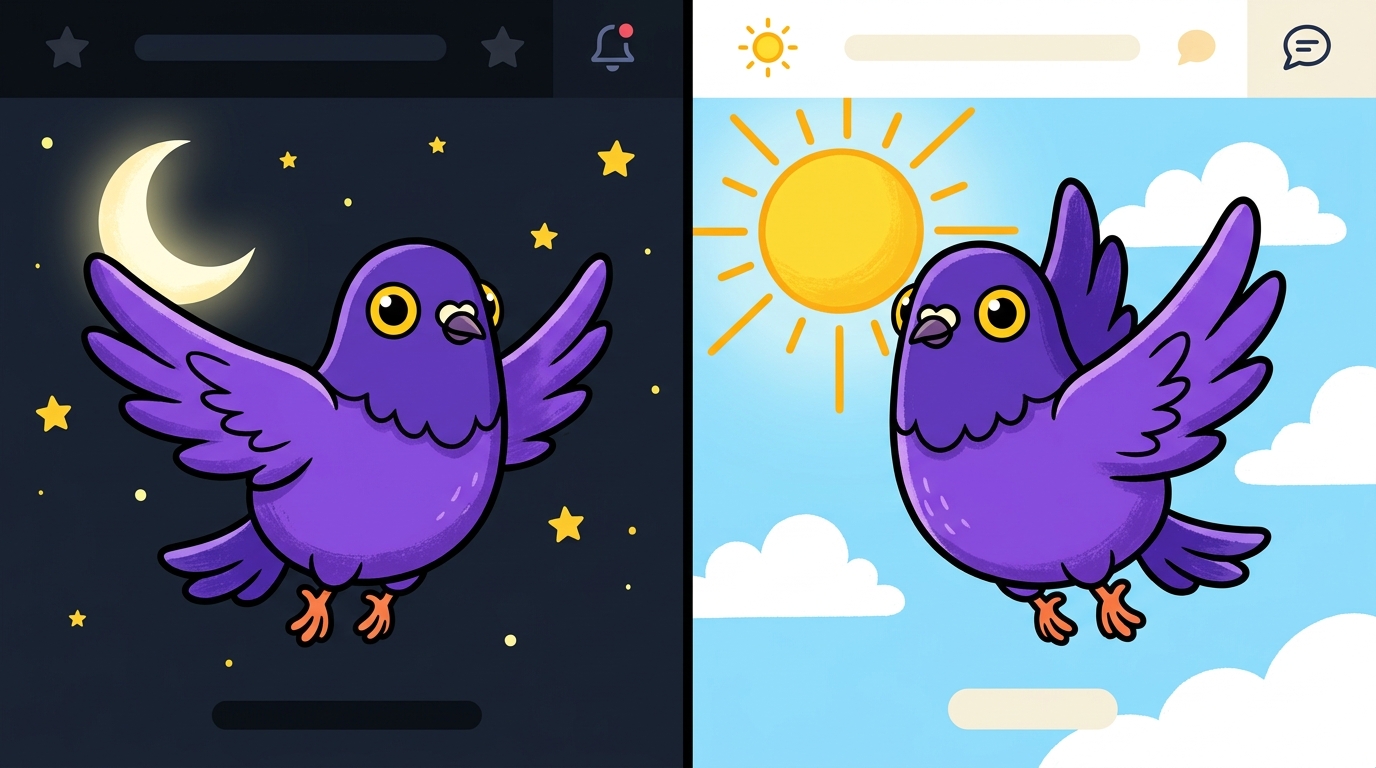
Pigeon supports both dark and light mode — switch anytime to match your mood and environment.

Writer & Editor at PigeonChat
Related Articles
Why chat folders matter for busy group conversations
How image sharing works in private chat apps
What chat features users expect in modern private apps
Why chat folders help busy groups stay organized

How chat groups help schools and universities stay organized