The Psychology Behind Stickers & Emojis: Why We Can't Stop Sending Them
Why do we instinctively reach for stickers instead of typing words? Explore the fascinating neuroscience, psychology, and social dynamics behind our love for digital stickers and emojis.
Have you ever noticed how a single sticker can say what a hundred words can't? You're not alone. Billions of stickers and emojis are sent every single day across messaging platforms worldwide. But what's really going on behind that impulse to tap a cute pigeon sticker instead of typing "I miss you"?
At Pigeon, we've built our entire messaging experience around the power of visual communication — especially stickers. So naturally, we got curious about why they work so well. Let's dive into the psychology, neuroscience, and social dynamics behind our collective obsession with stickers and emojis.
1. The Emotional Shortcut: Why a Sticker Hits Different
Text is processed by the language centers of your brain — Broca's area and Wernicke's area. But stickers and emojis? They're processed more like facial expressions, activating the fusiform face area and the emotional processing centers in your limbic system.
Research from the Journal of Nonverbal Behavior found that when people view emojis, their brains respond similarly to how they process real human faces. This means that sending a laughing pigeon sticker doesn't just represent laughter — your brain actually feels a micro-burst of joy.
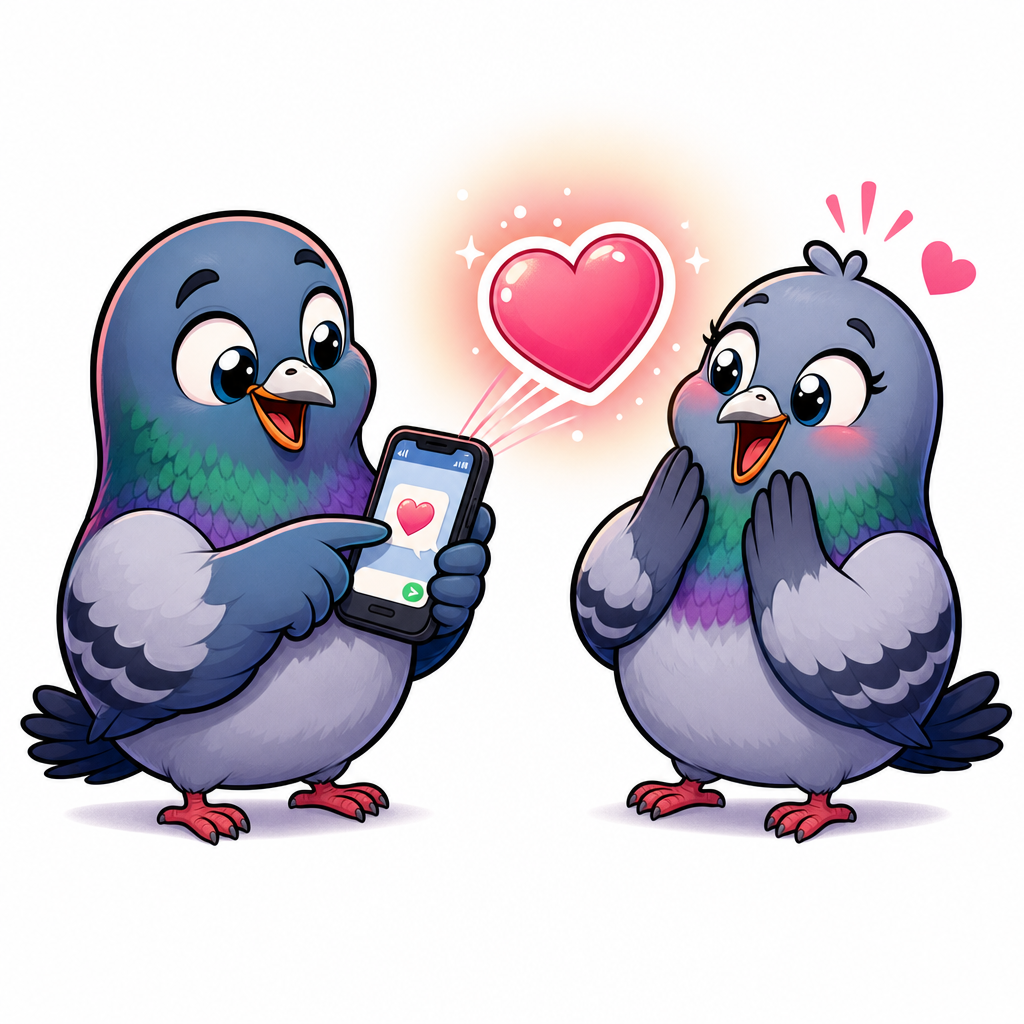
This is why stickers feel so much more personal than text. They bypass the analytical brain and speak directly to emotions. When your friend sends you a pigeon sticker with heart eyes, you don't need to decode it — you feel it instantly.
2. The Neuroscience of Visual Communication
Here's a mind-blowing fact: the human brain processes images 60,000 times faster than text. Our visual cortex is the largest system in the brain, and it evolved over millions of years to rapidly interpret visual information for survival.
Stickers tap into this ancient neural hardware. While reading "I'm so happy for you!" takes a few seconds to process, parse, and emotionally respond to, a celebratory sticker delivers that same message in under 100 milliseconds.
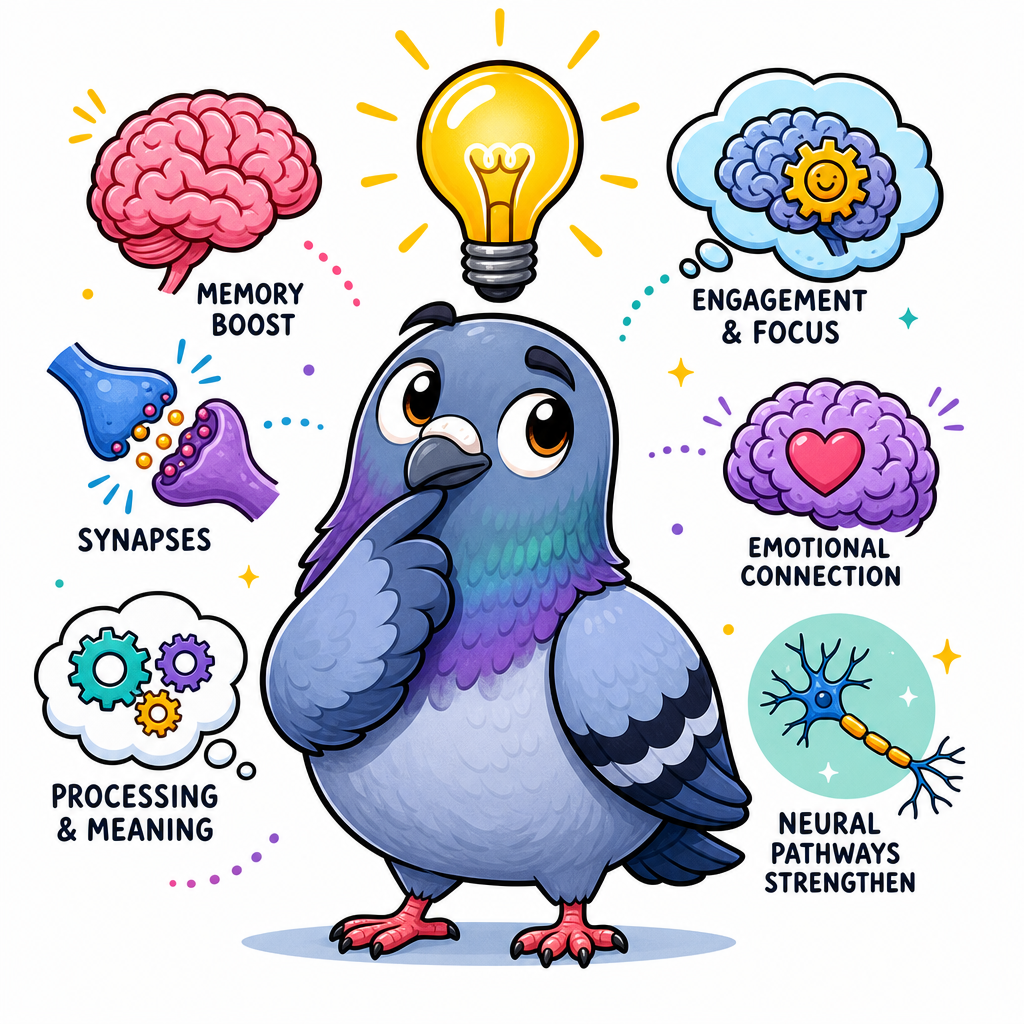
Dr. Owen Churches at Flinders University demonstrated that our brains have actually adapted to emojis — we now process them with the same neural pathways we use for human faces. This is a remarkable example of neuroplasticity: our ancient brains evolving in real-time to accommodate digital communication.
3. Social Bonding and the "In-Group" Effect
Stickers do something that plain text simply cannot: they create shared visual language between groups. Think about it — when your friend group has that one sticker pack you all use, it becomes an inside joke, a shared identity marker.
Psychologists call this in-group signaling. Using the same stickers creates a sense of belonging, much like how shared slang or inside jokes strengthen social bonds. When everyone in your group chat uses Pigeon stickers, you're not just communicating — you're reinforcing your tribe.
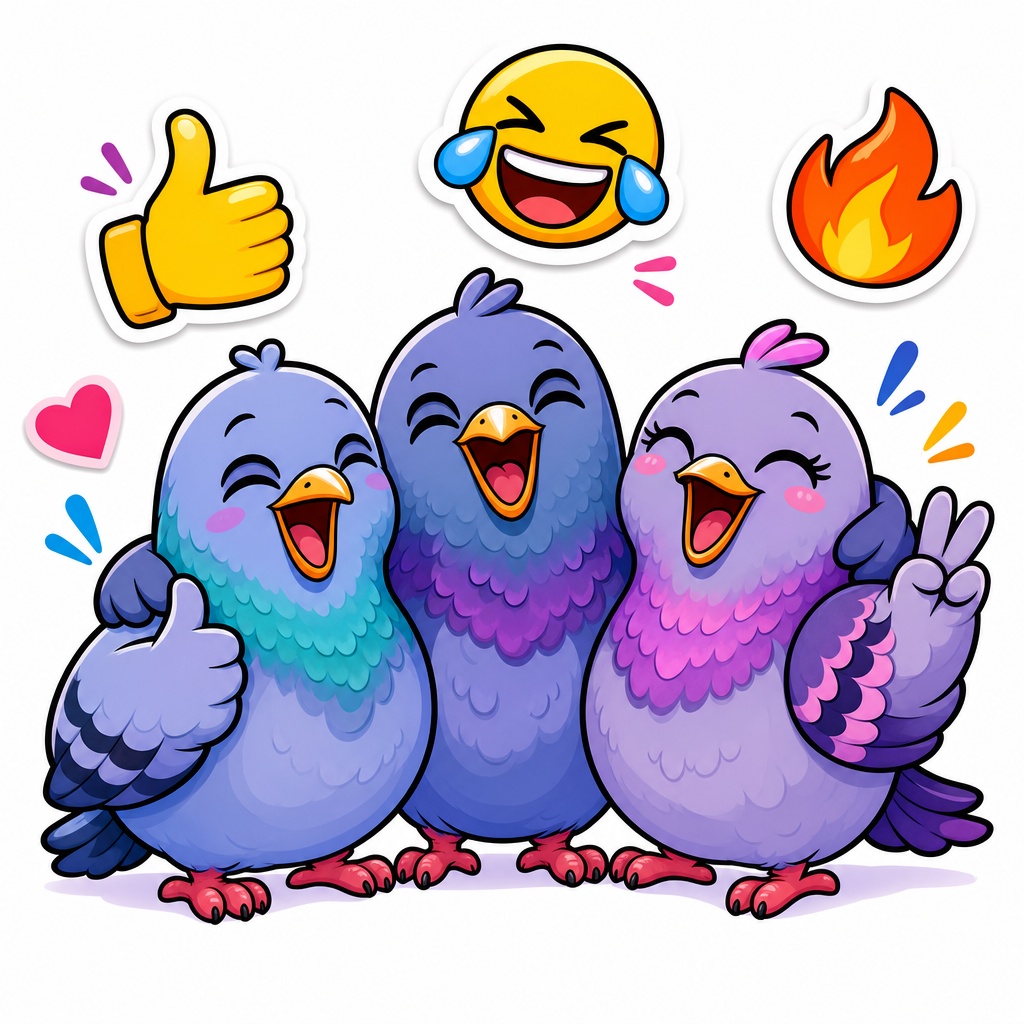
A 2023 study published in Computers in Human Behavior found that groups who frequently used stickers reported 23% higher feelings of closeness compared to text-only groups. The visual element adds warmth and personality that words alone struggle to convey.
4. Stickers vs. Emojis: The Evolution of Digital Expression
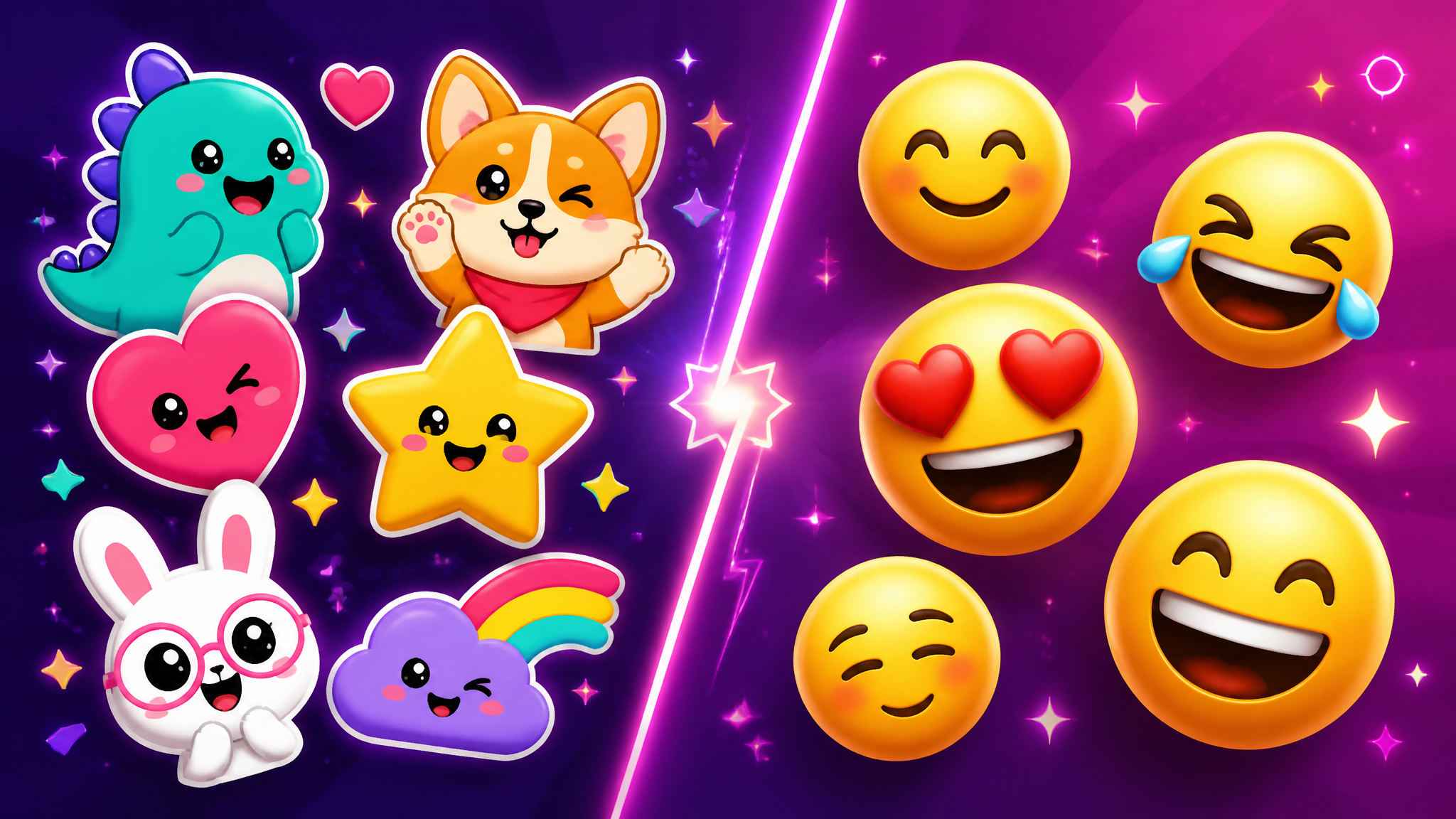
While emojis revolutionized digital communication, stickers represent the next evolution. Here's why they're fundamentally different:
| Feature | Emojis | Stickers |
|---|---|---|
| Size | Tiny, inline with text | Large, standalone visual |
| Emotional Range | Basic emotions | Complex, nuanced feelings |
| Personality | Universal, standardized | Unique, character-driven |
| Cultural Identity | Limited customization | Highly customizable packs |
| Engagement | Supplementary to text | Can replace entire messages |
Stickers allow for a level of emotional granularity that emojis simply can't match. There's a difference between 😢 and a sticker of a pigeon dramatically crying into a tiny handkerchief. The sticker conveys not just sadness, but a specific kind of sadness — one with humor, self-awareness, and personality.
5. Self-Expression and Digital Identity
In the age of digital communication, the stickers you choose say a lot about who you are. Psychologist Dr. Linda Kaye from Edge Hill University has studied how emoji and sticker choices function as extensions of our digital identity.
Choosing a specific sticker pack is like choosing your outfit for a conversation. It signals your sense of humor, your aesthetic preferences, and even your values. This is why platforms like Pigeon invest heavily in diverse, expressive sticker collections — because we understand that stickers aren't just decorations. They're identity tools.
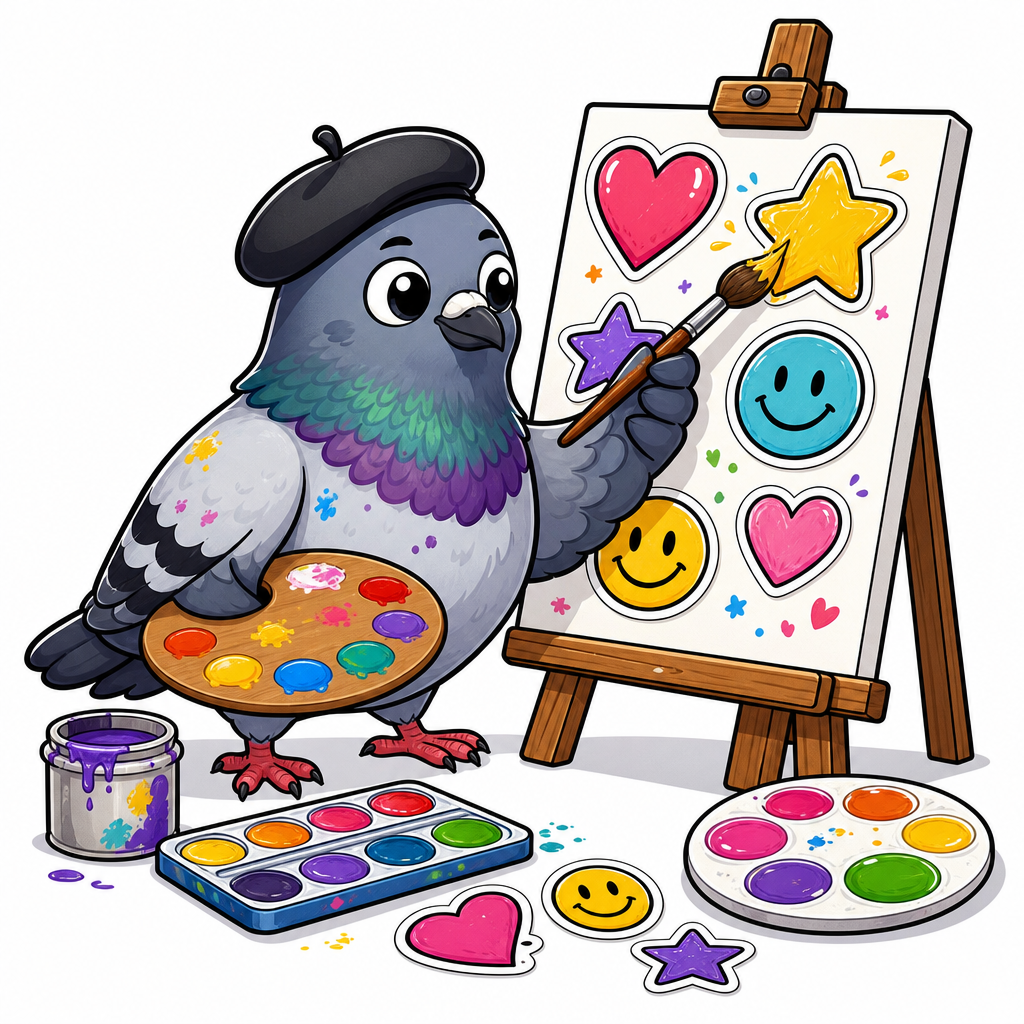
Research shows that people who use more stickers in their messages are perceived as more emotionally intelligent, more approachable, and more fun to communicate with. In professional contexts, appropriate sticker use has even been shown to increase trust and rapport between colleagues.
6. The Future of Visual Messaging
We're just scratching the surface. With advances in AI and personalization, the future of stickers is incredibly exciting:
- AI-Generated Stickers: Imagine stickers that adapt to your conversation context in real-time
- Personalized Sticker Packs: Custom stickers based on your own expressions and personality
- Animated & Interactive Stickers: Stickers that respond to touch, shake, or even your mood
- Cross-Cultural Bridges: Stickers that help bridge language barriers in global conversations
At Pigeon, we're building toward this future. Our sticker-first approach to messaging isn't just a design choice — it's rooted in the science of how humans naturally communicate. We believe the best conversations happen when technology gets out of the way and lets emotions flow freely.
The Bottom Line
The next time someone tells you stickers are "just for kids," you can hit them with the science: stickers and emojis are processed like real faces by our brains, they strengthen social bonds, they communicate faster than text, and they're powerful tools for self-expression and identity.
So go ahead — send that sticker. Your brain will thank you. 🐦
Ready to experience messaging that puts visual expression first? Try Pigeon today and discover why millions of users prefer sticker-powered conversations.

Writer & Editor at PigeonChat
Related Articles
Cute Stickers, Anime & Emojis: The Most Fun Messaging App in 2026
Free Cute Stickers & Anime Chat Community: Why PigeonChat Is the Fun Messaging App of 2026
Stickers vs Emojis in 2026: Which One Actually Says It Better?
Sticker Culture in 2026: How Digital Stickers Changed the Way We Communicate
Why chat folders matter for busy group conversations