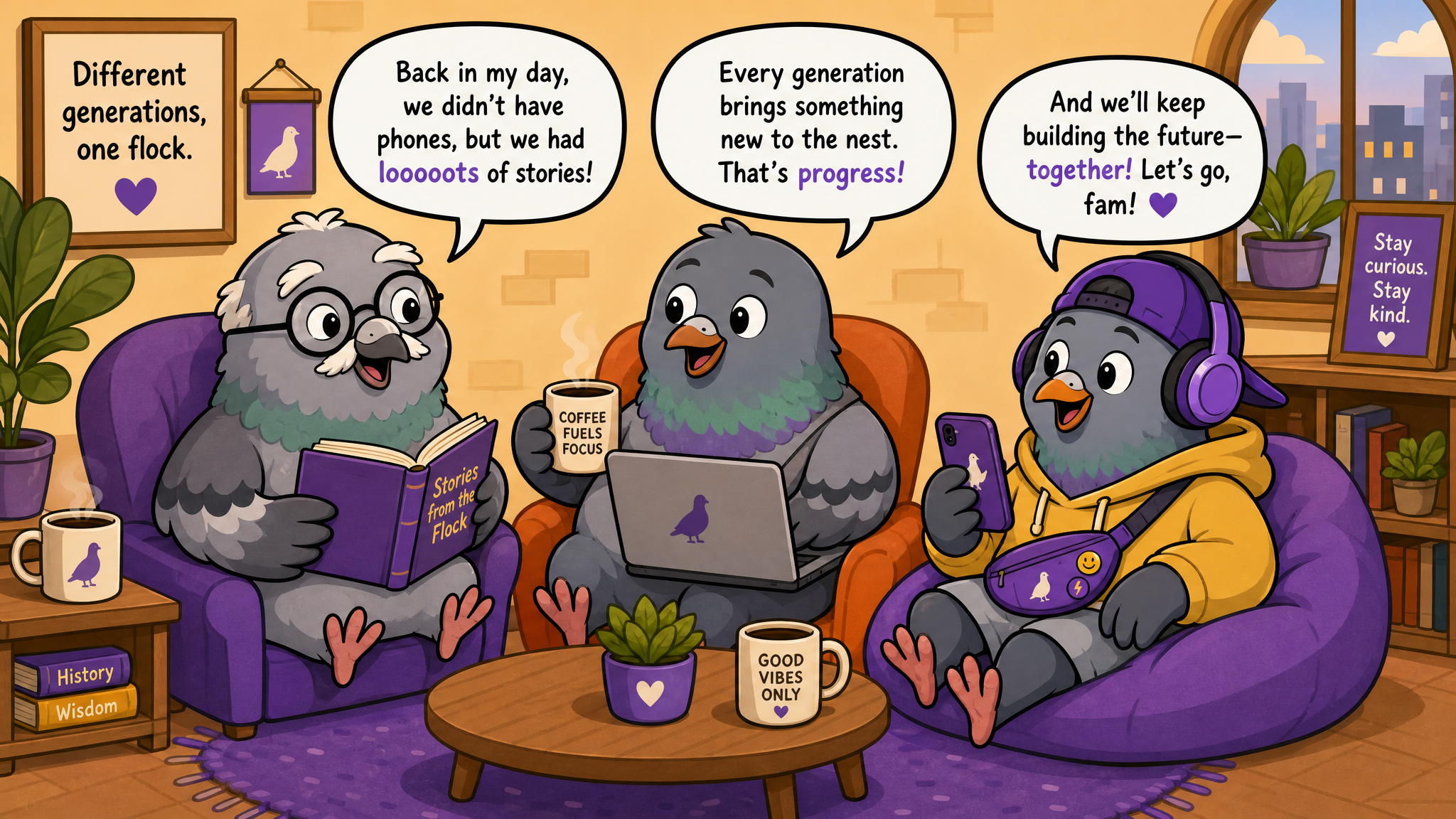
How Different Generations Use Messaging: Boomers vs. Millennials vs. Gen Z
Baby Boomers write full sentences with punctuation. Gen Z sends ten one-word messages in a row. Explore the fascinating generational differences in messaging behavior and why they exist.
Three Generations, Three Entirely Different Languages
Hand a phone to a Baby Boomer, a Millennial, and a Gen Z person. Ask them to reply "yes" to a dinner invitation. The Boomer types: "Yes, that sounds lovely! See you at 7. 😊" The Millennial writes: "yesss sounds great see you then!" Gen Z sends: "bet 🫡" — and somehow, they're all communicating perfectly within their generational context. Understanding these differences isn't just amusing — it's essential for effective cross-generational communication.
Baby Boomers (Born 1946-1964): The Formal Texters
Boomers came to messaging from email and letter-writing. Their texts read like condensed letters: complete sentences, proper punctuation, formal greetings and sign-offs. They'll write "Dear Sarah, Thank you for the lovely evening. Best regards, Tom" in a text message and see nothing unusual about it.
Key Boomer messaging traits:
- Full sentences with periods (which younger generations read as passive-aggressive)
- Formal greetings and closings
- Minimal emoji use, but when used, they commit — 😂😂😂😂😂
- One comprehensive message rather than multiple fragments
- Preference for voice calls for anything complex
Millennials (Born 1981-1996): The Bridge Generation
Millennials grew up during the AIM/MSN Messenger era and transitioned through SMS to modern apps. They're bilingual — they can code-switch between formal (work Slack) and casual (group chat with friends) effortlessly. They popularized emoji as tone indicators and developed the lowercase aesthetic that signals casual friendliness.
Key Millennial messaging traits:
- Lowercase typing to signal casual tone
- Strategic emoji use for tone clarification
- GIF responses as a communication art form
- Paragraph-length messages for serious topics
- Heavy use of exclamation marks to avoid seeming cold
Gen Z (Born 1997-2012): The Fragmented Communicators
Gen Z treats messaging like a live conversation stream. They send rapid-fire short messages — sometimes splitting a single thought across five messages. They've invented their own linguistic shortcuts, use ironic or layered humor, and communicate as much through memes, reaction images, and stickers as through words.
Key Gen Z messaging traits:
- Stream-of-consciousness messaging (many short messages in rapid succession)
- Ironic punctuation — a period means you're angry, typing in all caps means emphasis or humor
- Heavy use of slang, abbreviations, and coded language ("slay", "no cap", "fr fr")
- Voice notes over typing for personal conversations
- Memes as legitimate emotional communication
Where Generational Friction Happens
The most common miscommunication? The period. A Boomer's "OK." is simply proper punctuation. A Gen Z recipient reads it as cold, angry, or passive-aggressive. Similarly, a Gen Z "lol" doesn't mean they're laughing — it's a tone softener — but a Boomer takes it literally and wonders what was funny.
Emoji interpretation also diverges wildly. 🙂 means "friendly smile" to Boomers and "seething passive-aggression" to Gen Z. 💀 means "death/danger" to older generations and "that's hilarious" to younger ones. These aren't trivial differences — they can cause genuine misunderstandings in family chats and workplaces.
How to Communicate Across Generations
The solution isn't for everyone to adopt one generation's style — it's mutual adaptation. Mirror the other person's communication level. If someone sends formal texts, respond with a bit more structure. If someone sends fragmented messages, don't reply with a three-paragraph essay. And when in doubt, assume positive intent. That period probably isn't aggressive. That "lol" probably isn't mockery. We're all just speaking slightly different dialects of the same digital language.
Writer & Editor at PigeonChat
Related Articles

Why people search for a pigeon chat app online

Why users search for a pigeon chat app online
Why people call pigeons a messaging app joke
Dating, Community & Making Money on PigeonChat.site
Why chat folders matter for busy group conversations