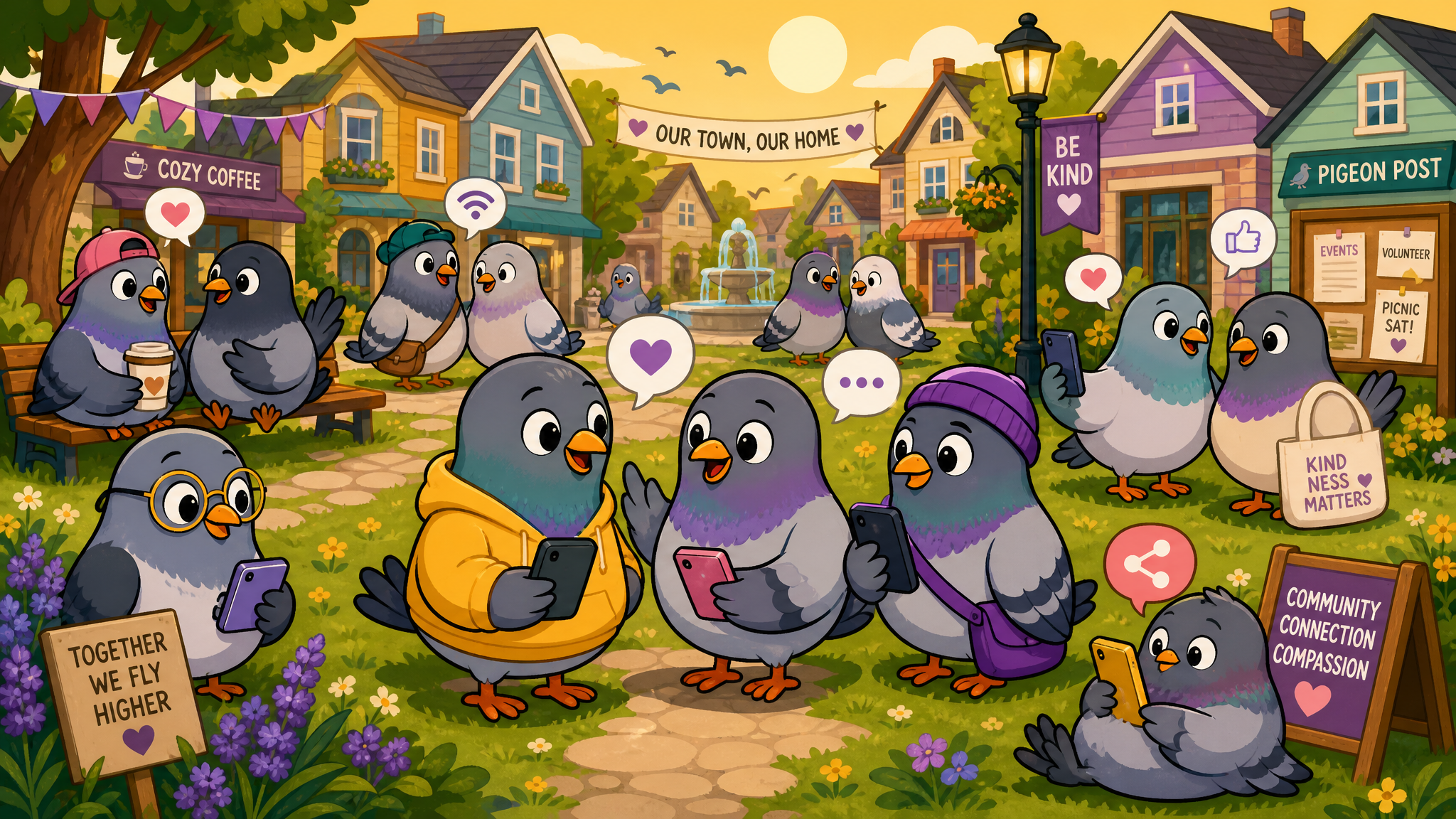
How Neighborhood Groups Are Using Messaging Apps to Build Stronger Communities
From lost pet alerts to tool lending libraries, discover how local messaging groups are reviving the sense of community that modern life has eroded.
The New Town Square Lives in Your Phone
There was a time when communities were built around physical gathering places — the town square, the church, the local pub, the corner store. People knew their neighbors, shared tools, watched each other's kids, and rallied together in emergencies. Then urbanization, suburban sprawl, and the rise of individual screen time eroded these connections. By 2020, most people couldn't name five neighbors on their street.
But something unexpected is happening. Messaging apps are reversing this trend. Local neighborhood groups on platforms like PigeonChat, WhatsApp, and Telegram are creating digital town squares that are rebuilding community connections — sometimes even more effectively than the physical ones they replaced.
What Neighborhood Groups Actually Do
The practical utility of neighborhood messaging groups is staggering. In a typical active group, you'll see:
- Safety alerts — Suspicious activity reports, break-in warnings, amber alerts shared instantly across the neighborhood
- Lost and found — Lost pets, misdelivered packages, found keys — the group becomes a collective lost-and-found office
- Recommendations — "Anyone know a good plumber?" gets 15 vetted responses in an hour
- Sharing and lending — Tool libraries, recipe exchanges, borrowing camping gear, sharing garden produce
- Emergency coordination — During storms, power outages, or natural disasters, these groups become lifelines for organizing help
- Social planning — Block parties, garage sales, community cleanups, holiday decorating competitions
The Trust Accelerator
What makes neighborhood messaging groups uniquely powerful is the combination of digital convenience with physical proximity. Unlike purely online communities where members may never meet, neighborhood group members live within walking distance of each other. This creates a trust dynamic that doesn't exist in other online spaces.
When you recommend a contractor in your neighborhood group, your reputation is on the line — they might install your neighbor's kitchen wrong and you'd hear about it at the mailbox. This accountability makes recommendations more reliable, advice more honest, and commitments more likely to be honored.
Success Stories From Around the World
Emergency response in Austin, Texas: During the 2024 winter storm, a neighborhood messaging group of 340 members coordinated food distribution, identified elderly residents who needed help, and organized generator sharing — all within hours. Local emergency services later credited the group with preventing potential tragedies.
Community gardens in Rotterdam: A neighborhood group turned an abandoned lot into a thriving community garden by coordinating volunteers, sharing seeds, and scheduling watering rotations entirely through their messaging group.
Crime reduction in São Paulo: A favela neighborhood group reduced theft by 40% over one year by sharing real-time alerts and coordinating with local police through a dedicated messaging channel.
Starting a Neighborhood Group That Actually Works
Many neighborhood groups fail within weeks because they lack structure. Here's what successful ones have in common:
Clear purpose and rules. State upfront what the group is for (local updates, mutual aid, socializing) and what it's not for (political debates, commercial advertising, gossip).
Active moderation. Assign 2-3 trusted neighbors as admins who can enforce rules, welcome new members, and keep conversations on track. Without moderation, groups devolve into chaos.
Critical mass. A neighborhood group needs at least 20-30 active members to be useful. Below that, it feels empty and people leave. Canvas your street, post flyers, and personally invite neighbors to join.
Regular engagement prompts. Post weekly questions like "What's happening this weekend?" or "Any recommendations for [local need]?" to keep the group active between organic conversations.
Navigating the Challenges
Neighborhood groups aren't without problems. The most common issues include oversharing personal information, gossip about specific residents, complaints that become toxic, and the occasional neighbor who uses the group for constant self-promotion.
Address these proactively with clear guidelines. Establish a "no naming individuals in complaints" rule. Create a separate buy/sell group for commercial posts. Remind members periodically that the group's purpose is mutual aid and connection, not a forum for grievances.
The Loneliness Antidote
Perhaps the most profound impact of neighborhood messaging groups is on loneliness. The U.S. Surgeon General declared loneliness a public health epidemic in 2023, with health risks comparable to smoking 15 cigarettes per day. Neighborhood groups directly combat this by lowering the barrier to social connection.
For new residents, a neighborhood group provides instant community access. For elderly neighbors, it offers a lifeline to help and companionship. For busy parents, it creates a support network of nearby families. These connections often translate into real-world friendships, shared meals, and the kind of spontaneous social interaction that modern life has otherwise eliminated.
Building Community One Message at a Time
The resurgence of neighborhood community through messaging apps is one of the most hopeful developments in modern technology. In a world that feels increasingly fragmented and isolated, these digital groups are proving that the desire for local connection never disappeared — it just needed a new infrastructure. Your neighborhood messaging group might start with lost cat alerts and plumber recommendations, but it might just end up being the most meaningful online community you ever join.

Writer & Editor at PigeonChat
Related Articles
The Best Chat App for Students, Communities, and Groups in 2026

School Messaging Platforms in 2026: Secure Communication for Education
Phonathon and Messaging: How Chat Apps Are Transforming Fundraising Outreach in 2026
PigeonChat Forum: Building Community Through Private, Meaningful Conversations
Why chat folders matter for busy group conversations