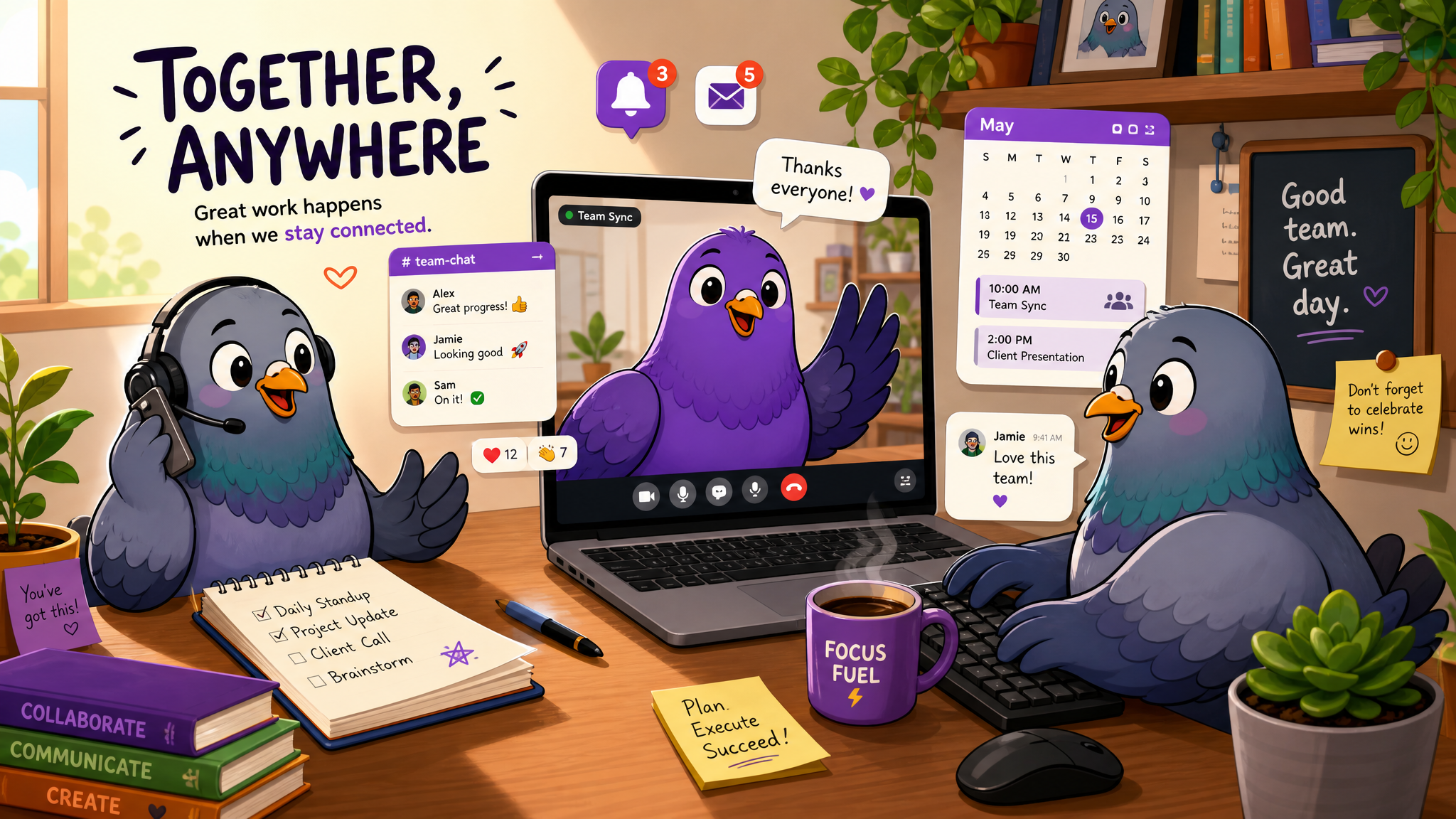
Remote Work Communication: How Messaging Apps Are Reshaping the Office
Discover how messaging platforms have become the backbone of remote work culture, replacing water cooler chats with channels, threads, and sticker reactions.
The traditional office is no longer the center of work communication. With 70% of workers now working remotely at least part-time, messaging apps have become the virtual water cooler, meeting room, and brainstorming space all in one.
The Shift from Email to Instant Messaging
Email isn't dead, but it's no longer king. Research from McKinsey shows workers spend 28% of their workweek managing email. Instant messaging cuts this dramatically by enabling quick, informal exchanges that don't require subject lines or signatures.
Channels Replace Departments
Modern teams organize around topic-based channels rather than rigid department structures. A marketing campaign might have its own channel where designers, copywriters, and analysts collaborate in real-time.
The Async Advantage
One of messaging's greatest strengths for remote work is asynchronous communication. Team members across time zones can catch up on conversations at their own pace, without the pressure of real-time meetings.
Maintaining Culture Remotely
Stickers, GIFs, and reactions aren't just fun — they're essential tools for remote team culture. A well-placed sticker can convey warmth and personality that formal text simply can't.
Setting Boundaries
The flip side of always-available messaging is the risk of burnout. Smart teams establish "core hours" for synchronous communication and respect offline time outside those windows.
Whether for work or play, Pigeon makes team communication effortless and expressive.

Writer & Editor at PigeonChat
Related Articles

Best Free Team Chat App for Small Businesses and Remote Teams in 2026

Best Free Team Chat Apps for Small Businesses in 2026

The Best Slack Alternatives in 2026: Free Team Chat Apps

Best Business Group Chat Apps in 2026: How Teams Actually Communicate
Why chat folders matter for busy group conversations