
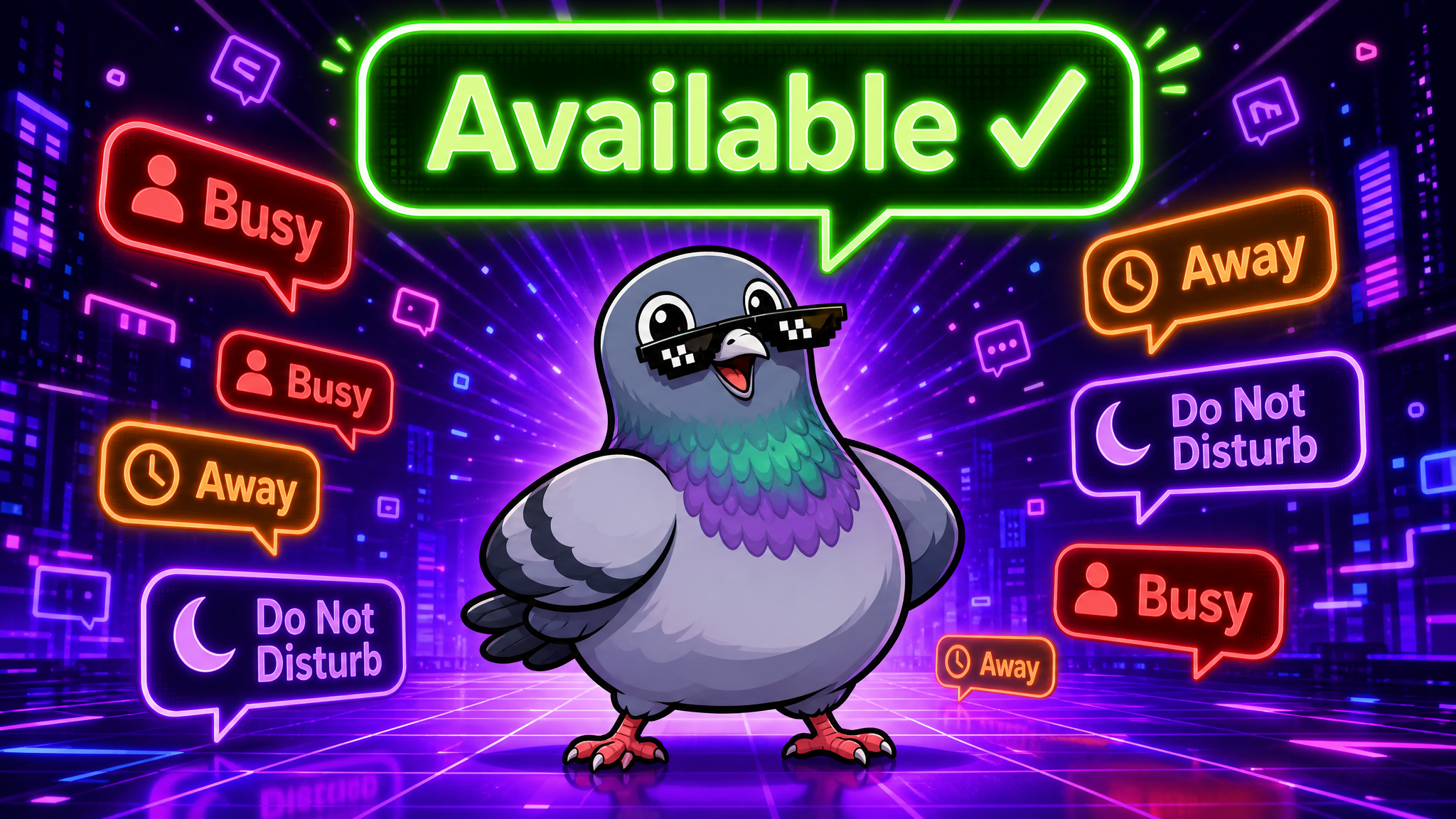
The Hidden Power of Status Messages: What Your Online Status Really Says
Explore the psychology behind online indicators, last seen timestamps, and custom statuses — how these tiny features shape perceptions, set expectations, and influence every digital conversation.
More Than "Online" or "Offline" — Your Status Tells a Story
It's one of the smallest features in any messaging app — a tiny line of text or a colored dot beneath your name. Yet your online status wields surprising influence over how people perceive you, when they choose to message you, and how they interpret your responses. In the subtle social ecosystem of digital communication, status messages are quiet but powerful signals that shape every interaction before a single word is exchanged.
From the simple green "Online" indicator to elaborately crafted custom status messages, these micro-communications reveal more about us than we might realize. Let's explore the hidden psychology and social dynamics behind the humble status message.
The Evolution of Status Messages
Status messages have been part of digital communication since the early days of instant messaging. AIM's "Away Messages" in the late 1990s were perhaps the first widespread use of the concept — brief notes that told your contacts whether you were available and, if not, what you were up to.
Those early away messages became a form of self-expression that went far beyond their functional purpose. Teenagers used them to post song lyrics, passive-aggressive hints about crushes, and cryptic emotional statements. The away message wasn't just a utility — it was a performance, a tiny stage for broadcasting your mood and identity to everyone on your contact list.
Today's status messages have evolved but retained that dual nature. They serve a practical function (signaling availability) while simultaneously operating as tools of social communication (signaling mood, personality, and social positioning). The platforms have changed, but the human need to broadcast "here's where I am and how I'm feeling" remains constant.
The Psychology of the Green Dot
The simple "online" indicator — typically a green dot or the word "Online" beneath a user's name — carries more psychological weight than its humble appearance suggests.
When you see that someone is online, your brain processes a cascade of social information. They're available. They're probably looking at their phone. If you send a message now, they'll likely see it quickly. These assumptions create an implicit expectation of responsiveness that shapes the entire dynamic of the interaction.
Research from the University of British Columbia found that people who see a contact's "online" status are 64% more likely to send a message and expect a response within 5 minutes, compared to when the contact's status is hidden. The green dot creates a social contract — an unspoken agreement that online means available and available means responsive.
This is why many people feel a twinge of anxiety when they see someone online who hasn't responded to their message. The green dot suggests presence and attention, making silence feel deliberate rather than circumstantial. "They're right there and they're choosing not to reply" is the narrative our brains construct, even when the reality might be that they're in a meeting, multitasking, or simply didn't notice the message.
"Last Seen": The Timestamp That Launched a Thousand Arguments
If the green dot is a gentle signal, the "last seen" timestamp is a surveillance tool disguised as a convenience. Showing exactly when someone was last active on the app, this feature has generated more relationship anxiety than perhaps any other element of messaging design.
"Last seen 5 minutes ago" combined with an unanswered message is an equation that, fairly or unfairly, computes to "they saw my message and ignored it." Romantic partners check each other's last seen timestamps. Friends note discrepancies between claimed unavailability and observed activity. Parents monitor their teenagers' late-night messaging habits.
The social pressure created by last seen timestamps has led many users to disable the feature entirely. Most messaging apps now offer the option to hide your last seen status, though this often comes with the trade-off of not being able to see others' timestamps either. This creates an interesting social experiment: those who value their privacy must sacrifice their ability to monitor others, while those who want to monitor others must expose their own activity.
Custom Status Messages: The Art of the Micro-Broadcast
Custom status messages — user-written text that appears beneath their name — are the most expressive form of status communication. In the few words a status allows, users craft tiny broadcasts that serve multiple purposes simultaneously.
Availability signaling: "In meetings until 3 PM" or "On vacation – slow replies" set clear expectations about response times without requiring individual explanations to every contact.
Mood expression: A status featuring song lyrics, a motivational quote, or a weather complaint provides an emotional temperature reading that shapes how others approach you. A cheerful status invites casual conversation; a melancholy one might prompt a concerned "Are you okay?" from close friends.
Social signaling: "At the gym 💪" or "Studying for finals 📚" communicates not just what you're doing but what you want others to know you're doing. Status messages have an inherently performative quality — they're broadcasts to an audience, and we curate them accordingly.
Passive communication: Sometimes a status message says what a direct message can't. Changing your status to a breakup song the day after ending a relationship communicates volumes without requiring you to initiate a conversation about it. This passive broadcasting allows emotional expression with plausible deniability — "I just liked the song" — even when the real message is clear to anyone paying attention.
The "Busy" Status Paradox
Setting your status to "Busy" or "Do Not Disturb" creates a fascinating social paradox. The message it sends is clear: I'm unavailable, don't disturb me. But the act of setting that status also communicates that you're thinking about your contacts and their expectations — that you care enough about their messages to proactively manage their expectations.
Research on workplace messaging found that people who regularly use "Busy" statuses are perceived as more professional and organized than those who simply don't respond. The status doesn't just manage availability — it signals conscientiousness and respect for others' communication.
However, a permanently set "Busy" status can have the opposite effect. If you're always marked as busy, the status loses its meaning and can be interpreted as unapproachable or passive-aggressively antisocial. Like the boy who cried wolf, a permanently busy status undermines its own credibility.
The most effective approach is dynamic status management — updating your status to reflect your actual availability throughout the day. This creates a reliable signal that contacts learn to trust and respect, making the times you are available feel more accessible and the times you're busy feel genuinely earned.
Status Messages in the Workplace
In professional messaging platforms, status messages have become essential tools for remote and hybrid work culture. When you can't see whether a colleague is at their desk, their digital status becomes the primary indicator of availability.
Forward-thinking companies have developed status message norms that promote healthy communication culture. Some examples: "Deep work until 2 PM — will respond after" signals focus time without appearing unresponsive. "Back from lunch at 1:30" provides specific availability information. "WFH today — reachable via chat" clarifies location and preferred communication channel.
Calendar-integrated statuses take this further, automatically updating your messaging status based on your calendar events. In meetings? Your status reflects it automatically. Free for the next hour? Your green dot appears. This automation removes the burden of manual updates while keeping your team informed.
The impact on workplace culture is significant. Teams that actively use status messages report less communication anxiety, fewer unnecessary interruptions, and better respect for focused work time. The status message becomes a social norm that gives everyone permission to protect their attention without feeling antisocial.
The Invisible Mode Phenomenon
An increasing number of messaging app users choose to hide their online status entirely — appearing offline even while actively using the app. This "invisible mode" represents a fascinating choice: the desire to access digital communication without the social obligations that visibility creates.
Invisible mode users report several motivations. Some want to browse messages and respond selectively without the pressure of appearing available to everyone simultaneously. Others value privacy and resent the surveillance-like nature of online status indicators. Some use it to manage specific relationships — avoiding a particular person's messages while remaining accessible to others.
The ethical dimensions of invisible mode are debated. Is it dishonest to appear offline while actively messaging? Or is it a reasonable exercise of privacy in an environment that demands more accessibility than any previous communication technology?
The answer probably depends on context. Using invisible mode to maintain healthy boundaries around your attention and availability is perfectly reasonable. Using it to systematically avoid someone who deserves a response crosses into avoidance territory that messaging features shouldn't enable.
Status Messages as Relationship Barometers
In romantic relationships, status messages become loaded with meaning that their creators may or may not intend. A changed status is noticed, analyzed, and sometimes agonized over by romantic partners in ways that the person who changed it might never anticipate.
Relationship counselors report that status messages have become a common topic in couples therapy. "She changed her status to a sad quote — is she unhappy with me?" "He went invisible after our argument — is he talking to someone else?" These interpretations, whether accurate or not, carry real emotional weight in relationships where digital communication is a primary channel.
The healthiest approach to status messages in relationships, according to therapists, is direct communication about what they mean and don't mean. A simple conversation — "My statuses aren't about us; I just like posting quotes" — can prevent weeks of unnecessary anxiety.
Crafting Your Status Strategy
Whether you realize it or not, you already have a status strategy — a pattern of how you use (or don't use) online indicators and status messages. Making this strategy intentional can improve your digital communication life significantly.
Consider what you want your status to communicate. Do you want to signal availability? Set specific hours. Do you want to express personality? Use creative, rotating status messages. Do you want maximum privacy? Disable visibility features. Do you want professional credibility? Use clear, informative status updates during work hours.
Platforms like PigeonChat that offer flexible status options — custom text, visibility controls, and activity indicators — give users the tools to manage their digital presence intentionally. The best messaging experience is one where your status works for you, communicating what you want to the people who matter, on your terms.
The Small Feature with Big Influence
Status messages might occupy the smallest real estate in any messaging app, but their influence on our digital social lives is outsized. They set expectations, signal emotions, manage boundaries, and shape how every subsequent message in a conversation is interpreted.
Understanding the power of status messages — both as a sender and a receiver — is a small but meaningful step toward healthier, more intentional digital communication. The next time you update your status, remember: those few words or that tiny green dot are speaking volumes before you ever type a message.

Writer & Editor at PigeonChat
Related Articles
Why chat folders matter for busy group conversations

How image sharing works in private chat apps
What chat features users expect in modern private apps
Why chat folders help busy groups stay organized

How chat groups help schools and universities stay organized