What Is End-to-End Encrypted Messaging? Everything You Need to Know in 2026
A plain-language guide to end-to-end encryption in messaging apps — how it works, why it matters, and how it protects your private conversations from everyone, including the app provider.
You've probably seen the phrase "end-to-end encrypted" on your messaging app's loading screen or in its marketing. But what does it actually mean? Is it genuinely protecting you, or is it just a buzzword?
This guide explains what end-to-end encrypted messaging is, how it works in plain language, why it matters for your privacy, and how it applies to team messaging, group chats, and everyday conversations.
End-to-End Encryption in 30 Seconds
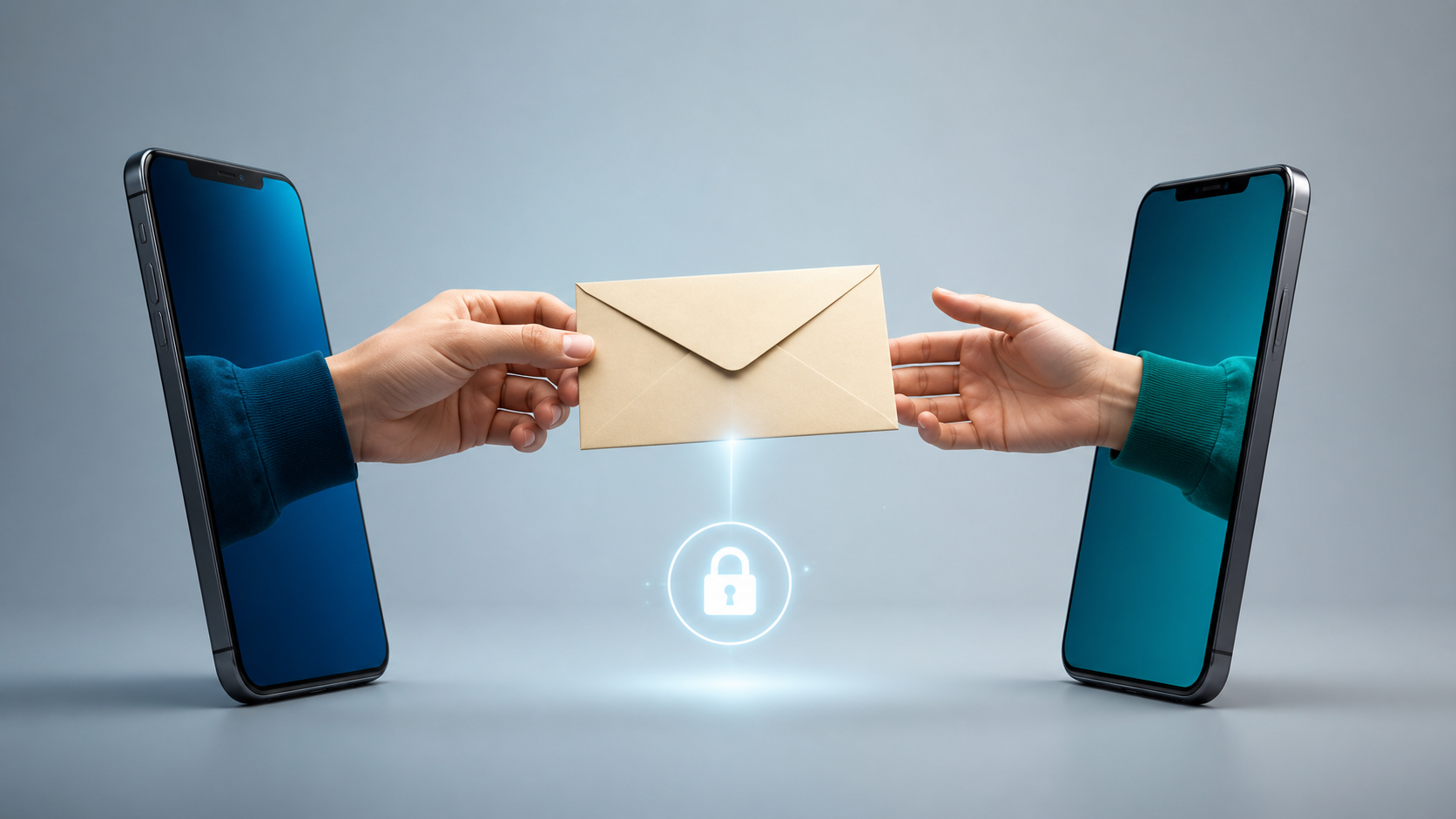
End-to-end encryption (E2EE) means that when you send a message, it gets locked (encrypted) on your device and can only be unlocked (decrypted) on the recipient's device. Nobody in between — not the messaging company, not your internet provider, not a hacker who breaches the server — can read it.
Think of it as sending a letter in a lockbox. You have the key, and your friend has the key. The postal service carries the box, but they can never open it.
How E2EE Works: The Technical Basics
Under the hood, E2EE relies on asymmetric cryptography — a system where every user has two mathematically linked keys:
- Public key: Shared openly. Anyone can use it to encrypt a message intended for you.
- Private key: Never leaves your device. It's the only key that can decrypt messages encrypted with your public key.
The Message Journey
- You type a message and hit send.
- Your app encrypts the message using the recipient's public key.
- The encrypted ciphertext travels through the server.
- The server stores and forwards the ciphertext — which looks like random gibberish to anyone without the key.
- The recipient's device uses their private key to decrypt it back into readable text.
This all happens in milliseconds, invisibly. You don't need to do anything — the encryption is automatic.
Perfect Forward Secrecy
Modern E2EE systems also use Perfect Forward Secrecy (PFS), which generates a new temporary key for every single message. Even if someone somehow obtained one session key, they could only decrypt that one message — not your entire conversation history.
E2EE vs Regular Encryption: What's the Difference?
| Feature | Encryption in Transit (TLS) | End-to-End Encryption |
|---|---|---|
| Encrypted between you and server | ✅ | ✅ |
| Server can read your messages | ✅ Yes | ❌ No |
| Protected from server breaches | ❌ | ✅ |
| Protected from legal subpoenas | ❌ | ✅ |
| Only sender & recipient can read | ❌ | ✅ |
Most websites use encryption in transit (TLS — the padlock in your browser). This protects data while it's moving, but the server can still read it. With E2EE, even the server is locked out.
What About Metadata in a Private Chat?
Here's the part most people miss: end-to-end encryption protects message content, but not necessarily metadata. Metadata includes:
- Who you messaged
- When you sent the message
- How often you communicate
- Your IP address and location
- Your device fingerprint
A metadata-private chat requires more than just E2EE — it requires the messaging provider to minimise or eliminate the metadata it collects. Apps like Signal and PigeonChat take active steps to reduce metadata exposure. Others, like WhatsApp, encrypt your content while harvesting your metadata for advertising.
End-to-End Encrypted Team Messaging
E2EE isn't just for personal conversations. In 2026, end-to-end encrypted team messaging is becoming essential for businesses, schools, and organisations that handle sensitive information.
When a team uses E2EE messaging, it means:
- Internal discussions stay confidential — even the hosting provider can't read them.
- Client communications are protected from data breaches.
- Regulatory compliance (GDPR, HIPAA, CCPA) is easier to maintain.
- Intellectual property shared in chat remains secure.
PigeonChat's group chats and channels support E2EE, making it suitable for team messaging where privacy is non-negotiable — from legal firms to healthcare providers to schools.
Common Misconceptions About E2EE
"If I have nothing to hide, I don't need encryption."
Privacy isn't about hiding. You close the bathroom door not because you're doing something illegal, but because you have a right to privacy. The same applies to your conversations.
"E2EE protects me from everything."
E2EE protects messages in transit and at rest on the server. But if someone physically accesses your unlocked phone, or if you take an unencrypted cloud backup, your messages are exposed. Security is a chain — E2EE is the strongest link, but you need the others too.
"All encrypted apps are equally secure."
Not true. Telegram's regular chats are NOT end-to-end encrypted. WhatsApp encrypts content but collects metadata. The implementation and the business model matter as much as the protocol.
The Bottom Line
End-to-end encrypted messaging is the single most important technology protecting your conversational privacy in 2026. It ensures that your words stay between you and the person you're talking to — no one else. Not the app, not hackers, not governments.
Choose a messenger that uses E2EE by default, minimises metadata, and has no incentive to sell your data. PigeonChat is built on exactly these principles.

Writer & Editor at PigeonChat
Related Articles
What makes an end to end encryption chat app secure
What a fully compliant EU chat app should include
Why people search for a WhatsApp alternative without a number
What end to end encryption chat really protects
Why chat folders matter for busy group conversations