

How chat folders help busy groups stay organized
Chat folders can reduce noise for school, university and work communities. Learn how they keep active groups easier to manage.
Busy group chats can be useful, but they can also become noisy very quickly. One minute someone is sharing a timetable, the next minute three people are discussing lunch, and a practical update has slipped out of sight. In that kind of environment, chat folders are a simple way to keep the important things easy to find.
The appeal is not complicated. Folders give structure to chat groups that would otherwise sit in one long, unbroken list. For people juggling school, university, family groups, clubs, and work updates, that small bit of order can make a surprising difference to daily life.
This is why folders are worth paying attention to even if you are not particularly organised by nature. They do not change the content of conversations, but they do change how manageable those conversations feel. When messages are grouped sensibly, it becomes easier to stay involved without feeling dragged in ten directions at once.
Why chat folders matter in busy group chat environments
Most people do not have one chat group. They have many. There may be one for a class project, another for parents, another for a local sports team, and a few more for different circles of friends. Without folders, everything competes for attention in the same stream.
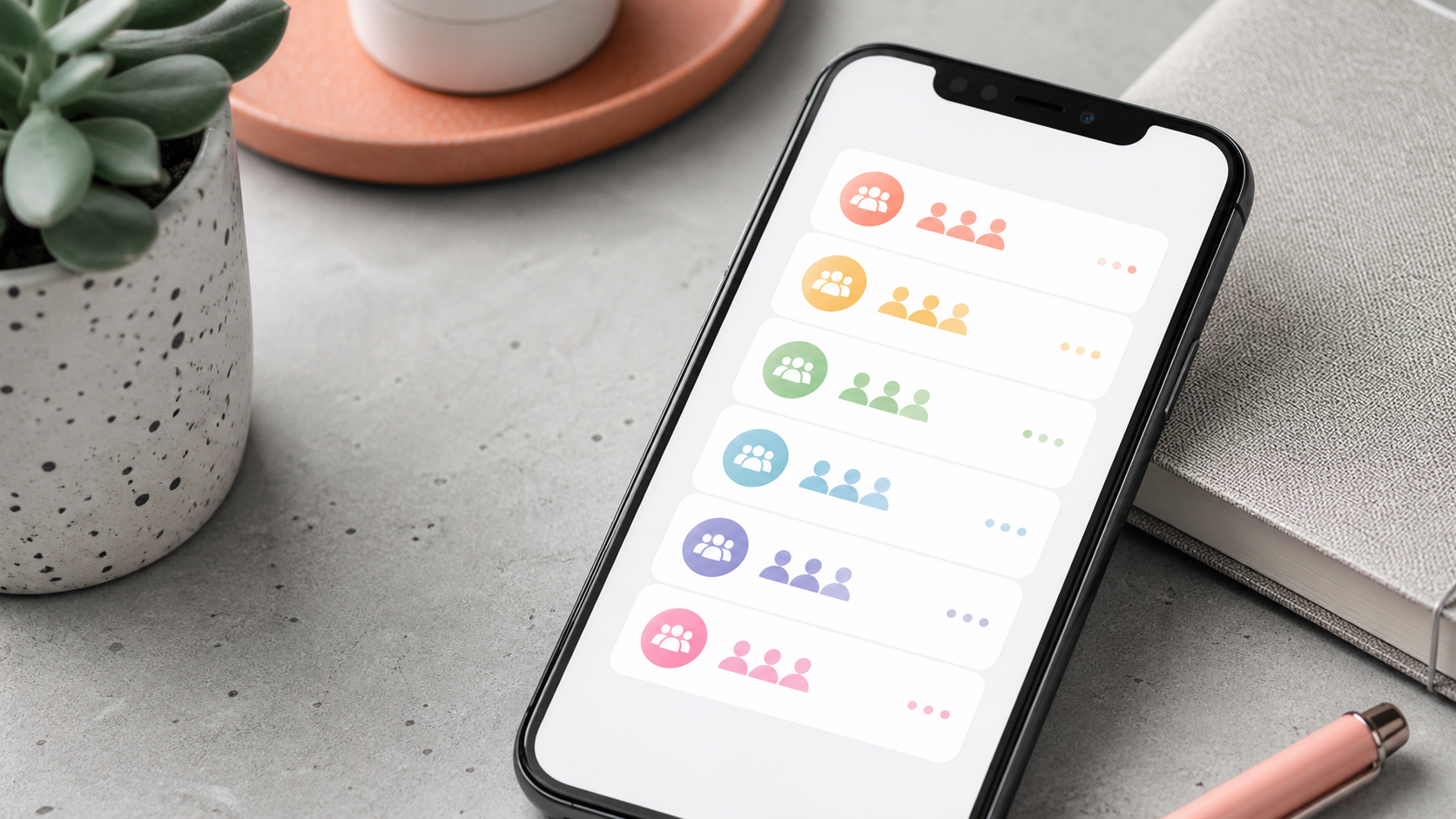
That is where chat folders help. They act like a set of labelled shelves rather than one large pile. Instead of searching through every conversation to find the one you need, you can go straight to the right place. In a crowded chat environment, that saves time and reduces friction.
Folders also make it easier to switch contexts. If you are checking a university group between lectures, or scanning a school notice chat before pickup, you do not want to sift through unrelated banter first. A tidy layout supports faster, calmer checking.
How chat folders support school and university life
School and university are good examples of where folders earn their keep. Students often need to follow several chat groups at once, each with a different purpose. One group may be for coursework, another for a society, and another for accommodation or coursemates.
When these conversations are mixed together, important details are easier to miss. A deadline reminder can be buried under jokes, while a room change or event update gets pushed down the list. Chat folders help separate academic chats from social ones, so the useful messages are easier to return to.
They are also helpful for reducing the sense of constant interruption. If you know where your study-related chats live, you can check them deliberately instead of being pulled into every notification. That can make it easier to focus while still staying informed.
What makes folders more effective than a long chat list
A long list of chat groups is not just untidy, it is mentally expensive. Every time you open the app, you have to scan, decide, and filter. That small act of sorting happens over and over again, and it adds up. Folders reduce that repeated decision-making.
They also make prioritising more natural. You can keep high-importance groups in one folder and lower-priority or occasional chats in another. For example, you might separate urgent family messages from hobby groups, or keep active work threads apart from older communities you only check once a week.
There is another advantage that is easy to overlook: folders encourage better habits. Once people see chats arranged clearly, they are more likely to keep related discussions together. Over time, that gives the whole messaging system a bit more shape and consistency.
- Keep urgent or frequently checked chats in one folder.
- Group school or university conversations separately from social chats.
- Use one folder for project-based groups and another for ongoing communities.
- Move low-priority chats out of the main view so they do not distract you.
- Review folders occasionally so they still match how you actually use chat groups.
Practical ways to set up chat folders
The best folder setup is usually the simplest one that matches your real habits. There is no need to build a complicated system with too many categories. If you make the structure too fine-grained, you may end up spending more time organising than reading.
A good starting point is to think in terms of purpose. For instance, you might create folders for work, study, family, friends, and community groups. Or you may prefer a split such as urgent, regular, and occasional. The point is not perfection, but making the list easier to understand at a glance.
If you use a platform such as PigeonChat, the same logic applies. The tool matters less than the habit. A clear folder structure gives you a better way to handle active chat groups, especially when your day involves several different circles of people.
Common mistakes to avoid when using folders
One common mistake is making folders too broad. If everything goes into one “other” category, the benefit disappears. The point is to create enough separation that each folder feels meaningful, not to hide clutter somewhere else.
Another mistake is over-organising. People sometimes assume that a neat system must be a complex one, but that often backfires. If a folder setup is hard to maintain, it will fall apart. Simplicity usually lasts longer than ambition.
It also helps not to treat folders as a one-time fix. Chats change. A university project ends, a club becomes inactive, a family thread becomes more active than before. A quick review every now and then keeps the system useful instead of stale.
Frequently asked questions
Are chat folders only useful for large group chats?
No. They are most helpful when you have many chats to manage, but even smaller setups can benefit. If you regularly switch between different chat groups for school, university, work, or family, folders can still make things easier to navigate.
Do chat folders replace the need for good naming or pinned messages?
No, they work best alongside other tools. Folders help you sort chats at the top level, while names, pins, and message searches help inside individual conversations. Used together, they create a much cleaner experience than relying on one feature alone.
How many folders should I create?
Start with as few as possible and add more only if you need them. A small number of clear folders is usually easier to maintain than a detailed system you barely use. The aim is to make your chat groups easier to manage, not to turn organisation into a task in itself.
In the end, chat folders are valuable because they reduce noise without reducing access. They help busy people stay on top of the conversations that matter, whether those conversations are for school, university, work, or everyday life. That is a modest feature with outsized practical value, and it is often exactly the kind of structure crowded chat environments need.
Ready to try PigeonChat?

Writer & Editor at PigeonChat
Related Articles
Why chat folders matter for busy group conversations

How image sharing works in private chat apps

What chat features users expect in modern private apps

Why chat folders help busy groups stay organized

How chat groups help schools and universities stay organized