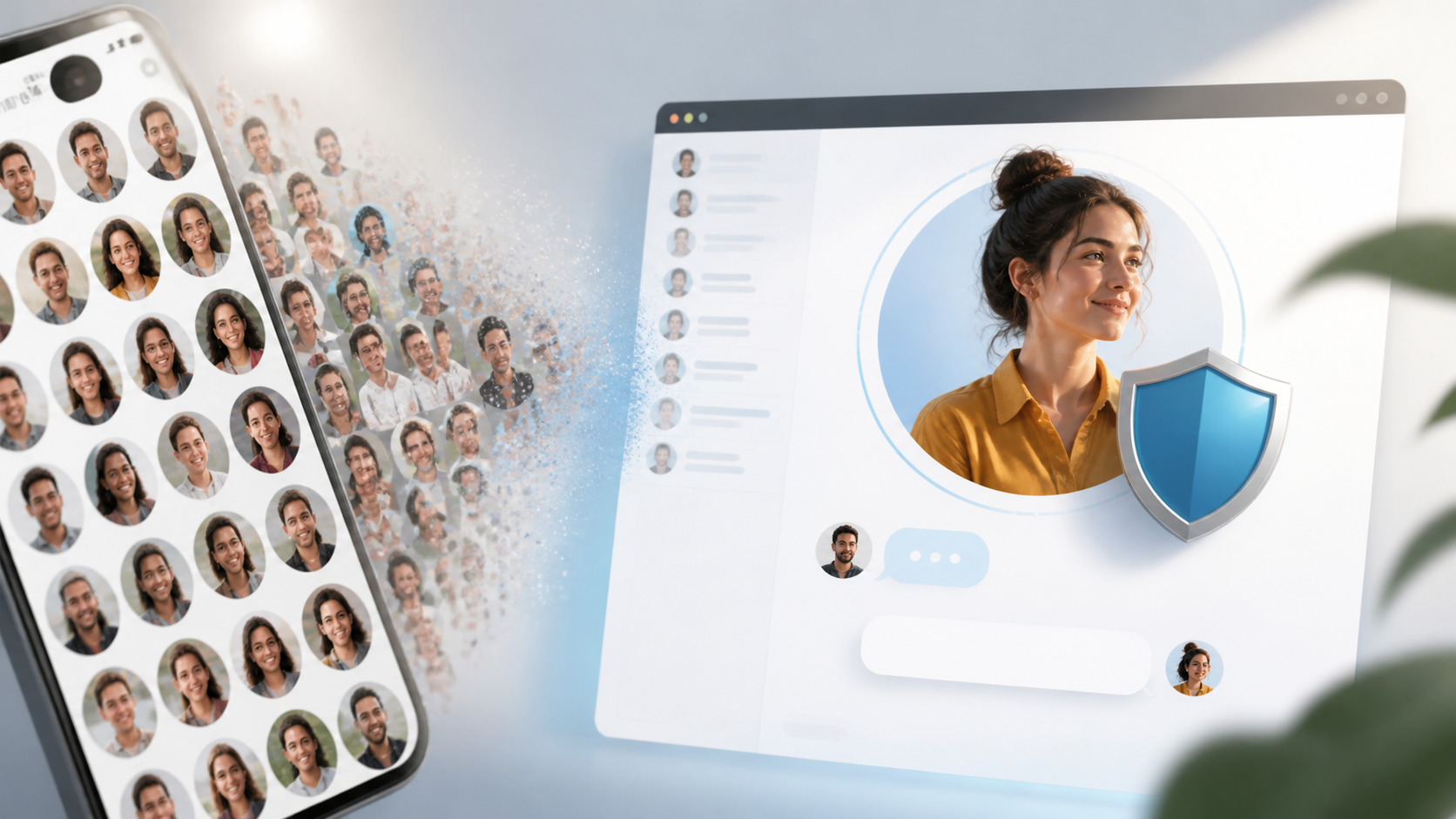
Why people search for a WhatsApp alternative without a number
Many users want a WhatsApp alternative that works without a phone number and keeps personal contact details out of shared chats.
Many people start looking for a WhatsApp alternative for a very practical reason: they want to chat without tying every conversation to a phone number. That can matter if you are trying to keep personal details separate, reduce unwanted contact, or simply avoid handing out the same identifier to every service you use.
There is also a broader privacy concern. With a typical WhatsApp setup, your number can become part of how people find you, save you, and recognise you. For some, that is convenient. For others, it feels like too much exposure for everyday messaging. A private chat app does not need to be secretive or complicated. Often, it just needs to be less revealing.
This is why searches for a no phone number chat option keep coming up. People are not always rejecting WhatsApp itself. More often, they are looking for a different balance between convenience, contactability, and account privacy. A good alternative chat app should make that trade-off clearer, not force you into it by default.
Why people want a WhatsApp alternative without a number
The most obvious reason is separation. A work contact list, a community group, or a dating conversation does not always belong on the same number you use for family and friends. When a messaging app is built around phone numbers, that line becomes harder to keep.
Another reason is control. A number feels permanent, and in many cases it is widely shared across other services. If you are trying to cut down on account exposure, a whatsapp alternative that does not depend on your number can feel much safer and easier to manage.
For some people, it is about principle as much as privacy. They want messaging to work more like a username or handle based system, where they choose what to reveal and to whom. That is a simple idea, but it changes the experience of using a chat app quite a lot.
What “no phone number chat” usually means in practice
The phrase no phone number chat can mean different things depending on the app. Sometimes it means you can register with an email address, username, or invite link instead of a mobile number. In other cases, a number may still exist behind the scenes, but it is not what other people see or use to contact you.
That distinction matters. Some services remove the number from the social layer but still ask for one during sign-up. Others avoid phone numbers entirely. If you are comparing options, it helps to ask one simple question: what do other people need in order to find me?
This is where the idea of a private chat app becomes more practical than abstract. Privacy is not just about encryption or disappearing messages. It is also about reducing the amount of personal data exposed at the point of connection.
- Username or handle based contact instead of a mobile number
- Invite-only discovery for new chats
- Separation between personal and professional identities
- Less reliance on a permanent, widely shared identifier
- More choice over what profile details are visible
What to look for in an alternative chat app
If you are comparing a whatsapp alternative, start with the basics. Can you create an account without giving away more than necessary? Can you control who finds you? Can you use the app comfortably on the devices you already have?
Then think about how the app handles everyday use. A private chat app should still be easy to trust, easy to navigate, and easy to keep up to date. If the privacy features make the app awkward or confusing, most people will not use them properly.
It is also worth checking whether the app supports the kind of conversations you actually have. For some, that means one-to-one chats only. For others, it means small groups, communities, or a mix of both. A good alternative chat app should fit the shape of your communication, not just advertise privacy.
Why a phone number can feel like too much exposure
A phone number is useful because it is familiar, but it is also a strong identifier. People often use the same number across multiple services, share it in different contexts, and keep it for years. That makes it powerful, but also difficult to separate from the rest of your digital life.
When a chat app depends on that same identifier, the risk is not only spam. It is also context collapse. One number can connect a personal life, a business identity, and a private community profile in ways you may not want.
That is why many people searching for a WhatsApp alternative are really searching for less account exposure. They want to talk to someone without handing over a piece of identity that was never meant to be the key to everything else.
How privacy and usability can work together
The best alternatives do not treat privacy as an advanced setting hidden in the corner. They make it part of the normal experience. That can mean using usernames, limiting discoverability, or making contact requests more intentional.
At the same time, usability matters. A private chat app is only useful if people can actually adopt it. If joining requires too many steps, they may abandon it before they ever get to the conversation. Good design reduces friction without forcing more data collection than necessary.
PigeonChat follows that approach with a focus on simpler account exposure and easier control over how you are reached. If you are exploring options, PigeonChat is worth a look, but the wider lesson applies to any service you choose: the best chat tool is the one that matches your comfort level, not just your contact list.
Common trade-offs to think about before switching
No whatsapp alternative is perfect for everyone. Some apps are excellent for privacy but less common among the people you already know. Others are popular but still rely on the same basic identity model you are trying to avoid.
So it helps to be realistic about the trade-offs. You may be choosing between convenience and separation, familiarity and control, or broad adoption and reduced exposure. None of those choices is wrong. The right answer depends on what you value most in everyday communication.
Before you commit, it can help to compare a few practical points.
- Does the app require a phone number at sign-up?
- Can other people find you without your number?
- Can you keep personal and public contact details separate?
- Is the app easy enough that you will actually use it?
- Does it support your main kind of chatting, such as one-to-one or group messages?
Frequently asked questions
Why do people search for a WhatsApp alternative without a number?
Usually because they want more privacy and less account exposure. A phone number can be easy to share, but it also makes it easier for people and services to link conversations to a real-world identity.
Is a no phone number chat always more private?
Not automatically. Avoiding a number helps reduce exposure, but privacy also depends on how the app handles discovery, profile visibility, message security, and account recovery. A good private chat app should make all of that clearer, not just hide the number.
What should I look for in an alternative chat app?
Focus on sign-up requirements, discoverability, profile control, and whether the app matches how you actually communicate. If you want a whatsapp alternative for personal separation or lower exposure, those details matter more than marketing claims.
If your main concern is being reachable without handing over a phone number, you are not being difficult. You are being careful. That is a sensible reason to explore alternatives, whether you choose PigeonChat or another service that fits your needs better.
Ready to try PigeonChat?

Writer & Editor at PigeonChat
Related Articles
Viber, Telegram, and Messenger compared for private chat

Signal alternative chat app: what users actually want
What a true WhatsApp alternative should include
WhatsApp, Signal, Viber, and Telegram compared
Why chat folders matter for busy group conversations