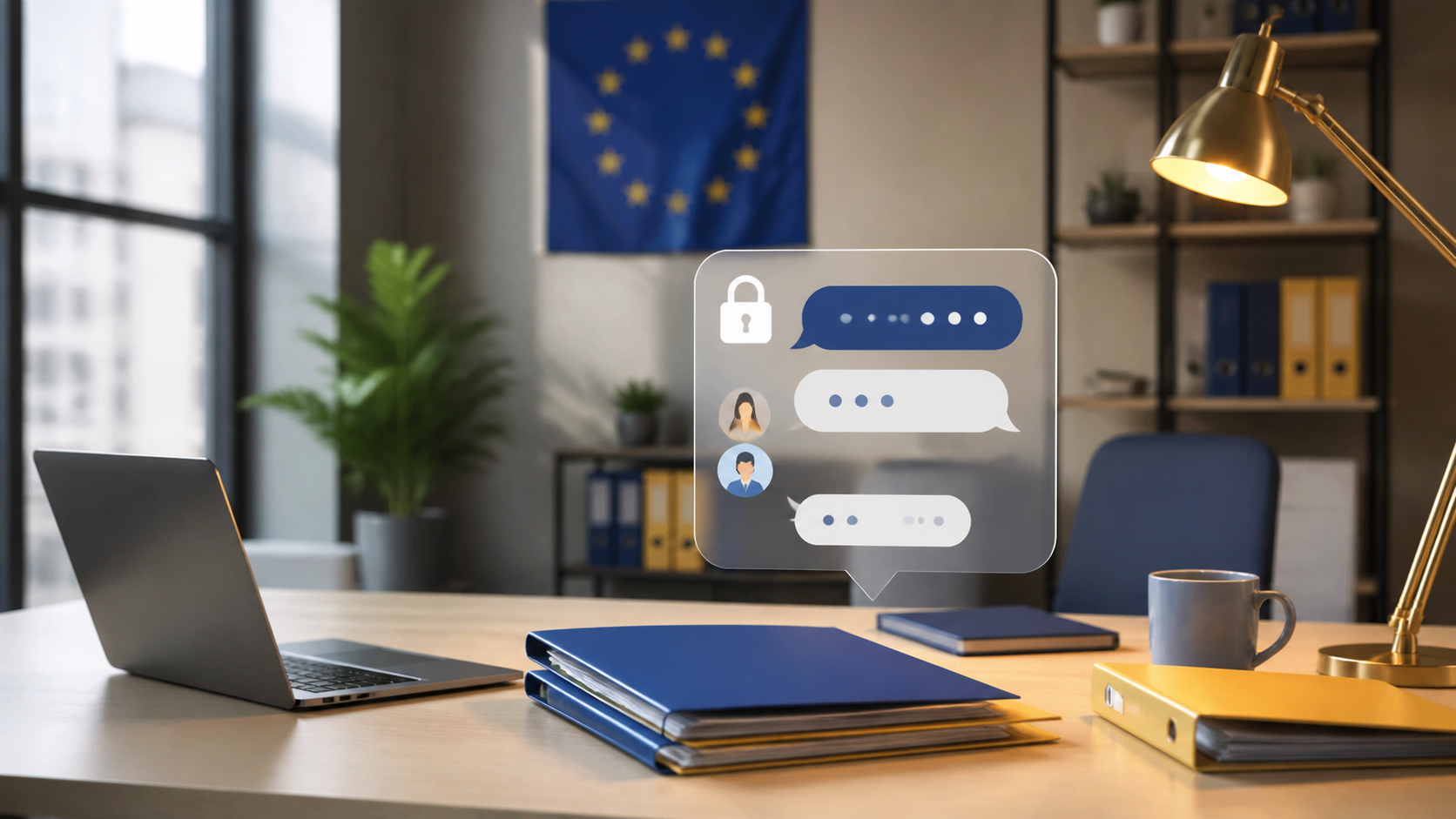
What a fully compliant EU chat app should include
A compliant EU chat app should focus on privacy, transparent data handling, security controls, and clear rules for AI features and moderation.
If you are comparing messengers in Europe, the phrase fully compliant EU chat app should mean more than a polished interface or a promise of “privacy”. It should point to a service that respects EU data protection rules, gives people meaningful control over their information, and is transparent about how messages, metadata and any AI features are handled.
For users, the practical question is simple: what can I verify before I trust this app with my conversations? That is where policy signals, product design and documentation matter. A strong European chat app should make those signals easy to find, not buried in vague marketing.
This is also where products such as PigeonChat can be useful as reference points. Even if you never sign up, looking at how a service describes its privacy model can help you judge whether an EU-focused messenger is taking compliance seriously or just using the language of compliance.
What “fully compliant” should mean in practice
There is no magic badge that turns a product into a compliant messenger overnight. A genuinely fully compliant EU chat app should align its data handling, security, account controls and vendor relationships with the expectations set by EU privacy law and broader digital regulation.
In practical terms, that means the app should explain who the controller and processor are, where data is hosted, what gets collected, what is optional, and how users can exercise their rights. It should also be honest about the limits of encryption, backups and retention. If a service cannot explain these basics clearly, it is not giving you much to trust.
For buyers and privacy-minded users, the first signal is not technical jargon but clarity. Good documentation is often the easiest way to tell whether a platform is designed for accountability or merely designed to look compliant.
Privacy signals to look for in an EU chat
A serious EU chat should publish a privacy notice that reads like a working policy, not a legal smokescreen. Look for plain explanations of what data is collected at signup, what is required to run the service, and what is optional. A clear lawful-basis summary is also a positive sign.
Data minimisation matters as much as encryption. An app that only asks for what it needs, and avoids building a profile from contacts, location, device fingerprints or ad-tech style identifiers, is easier to trust. If the app uses phone numbers, it should explain why and whether alternatives exist.
Other useful signals include:
- Clear retention periods for messages, logs and deleted accounts
- Transparent handling of backups and export files
- Account deletion that actually removes or anonymises data where appropriate
- Simple controls for contact sync, read receipts and online status
- Published support for data access, correction and deletion requests
A mature European chat app should also explain what happens when the app talks to third-party services. Even a privacy-friendly service may use hosting, analytics or delivery infrastructure. The point is not that third parties are forbidden, but that they are disclosed and bounded.
Security features that support compliance
Security is not the same thing as compliance, but the two are closely related. If a messenger cannot protect messages properly, its policy promises do not mean much. End-to-end encryption is often the headline feature people look for, but it is not the only one that matters.
A trustworthy app should explain whether messages are encrypted in transit, at rest and end to end, and where key material is stored. It should also make clear whether group chats, file sharing, voice notes and backups use the same protection. Many users focus on chat text and forget the wider attack surface.
Good security signals include strong authentication options, device management, session visibility and clear reporting of security incidents. For business users, admin controls, access logs and role-based permissions can matter just as much as consumer privacy features.
AI features and the chat app regulated under AI act question
More messengers now add summarisation, auto-replies, translation or moderation tools powered by AI. That can be useful, but it changes the compliance picture. If a platform behaves like a chat app regulated under AI act expectations, it should be upfront about what the AI does, whether human oversight is involved, and whether user content is used to train models.
Users should be able to tell when a feature is AI-assisted and when it is not. That distinction matters because some tools process sensitive conversational content in ways that are less obvious than normal messaging. A clear opt-in, a clear explanation of model providers, and a clear route to disable the feature are all reassuring signs.
It is also sensible to ask whether AI processing happens on-device, in the cloud, or through a subcontractor. If a service cannot explain where conversational data goes, it is difficult to assess whether its compliance story is credible. This is particularly relevant for an EU-focused messenger that markets itself as privacy-first.
Questions to ask before you trust a messenger
When you are trying to judge a fully compliant EU chat app, a short checklist is often more useful than a long policy. Start with the basics, then test the service against its own claims. If the answers are vague, that is usually the answer.
- Who is the legal provider and where is it established?
- What user data is required, and what can be left out?
- Does the app support deletion, export and correction requests?
- Are metadata, backups and logs covered by the privacy policy?
- Are AI features optional, clearly labelled and easy to turn off?
- Are security practices documented in a way non-specialists can understand?
If a service is genuinely designed as an EU chat, these answers should be easy to find. You should not have to chase support just to discover whether your messages are backed up in a way you did not expect.
Why transparency matters as much as features
Many apps advertise encryption, but less often do they explain the rest of the system around it. Transparency is what lets users judge trade-offs. A messenger can be secure in one area and weak in another, especially if it collects too much metadata or allows broad internal access to user content.
A good indicator of maturity is whether the service owns its limitations. For example, if it cannot offer perfect deletion because of backup architecture, it should say so plainly. If it uses third-party infrastructure, that should be disclosed. If some features are region-limited, that should not be hidden behind vague marketing.
This is where PigeonChat-style documentation can be helpful for anyone evaluating the market. Not because every service will match the same model, but because clear explanations make it much easier to compare one European chat app against another on real-world trust, not branding.
Frequently asked questions
Does a fully compliant EU chat app have to be end-to-end encrypted?
Not always by law, but end-to-end encryption is often a strong sign that the app takes privacy seriously. For many users, it is one of the most important practical protections because it limits who can read message content. That said, encryption alone does not make a service compliant if it still collects too much data or lacks clear user controls.
Is an app compliant if it only stores data in the EU?
EU hosting can help with governance and contract oversight, but it is not a complete compliance story on its own. What matters is how data is collected, shared, protected and retained, and whether users can exercise their rights. A service can host data in Europe and still have weak privacy practices if its policies or operations are poor.
How can I tell if an AI feature is safe in a chat app?
Look for clear labels, an explanation of what the AI processes, and an option to disable it. The app should say whether your messages are sent to a third-party model provider, whether they are retained, and whether they are used for training. If the service cannot answer those questions plainly, treat that as a warning sign.
In the end, choosing a fully compliant EU chat app is less about chasing perfection and more about recognising honest design. Clear policies, restrained data collection, strong security and transparent AI use are the best practical indicators. If a messenger makes those things easy to verify, it is already doing better than most. If it does not, you probably do not need to wait for a breach to decide that it is not the right place for your conversations.
Ready to try PigeonChat?

Writer & Editor at PigeonChat
Related Articles

What makes an end to end encryption chat app secure

Why people search for a WhatsApp alternative without a number

What end to end encryption chat really protects

What a privacy first EU chat app should offer
Why chat folders matter for busy group conversations