
What a fully compliant EU chat app should offer
A practical checklist for choosing a compliant EU chat app, from privacy controls and data handling to transparent moderation and access policies.
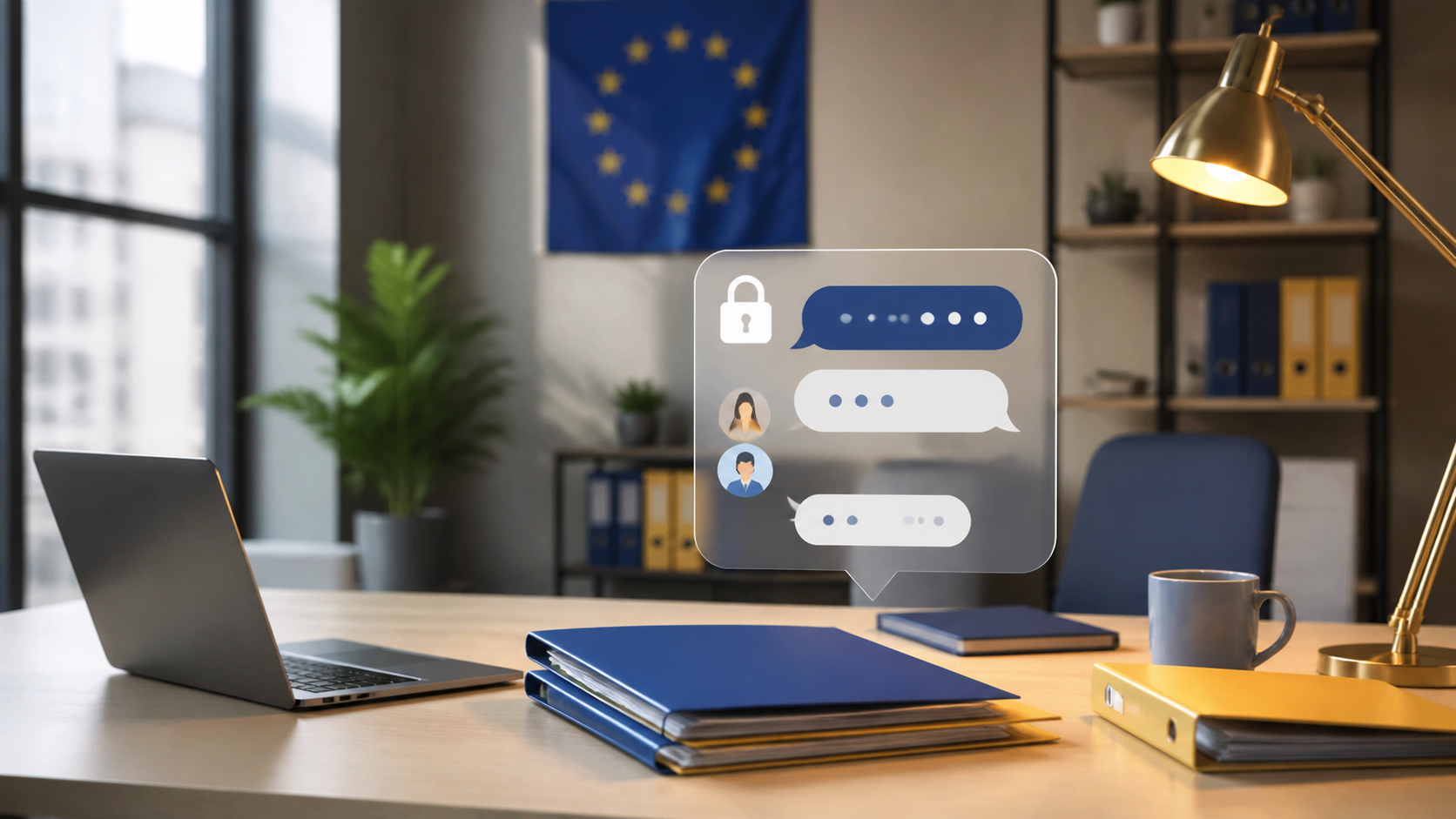
Choosing an EU chat app is not just about sending messages. It is about whether the service respects your rights, keeps your conversations secure, and gives you clear control over your data. For many people, the phrase fully compliant EU chat app should mean more than a marketing claim. It should point to a service that is designed around data protection from the start.
If you are comparing tools for work, community groups, or private conversations, it helps to know what compliance looks like in practice. A Privacy first chat app should be transparent about how it handles personal data, where it stores it, who can access it, and what happens when you delete it. Those details matter whether you are a casual user or part of a team.
This guide explains the features and policies that people typically look for in a European chat app they can trust. It also shows why good privacy design is useful even if you never plan to sign up anywhere today.
What EU compliance should mean in a chat app
When people say an EU chat app is compliant, they usually mean it aligns with data protection expectations in the European Union, especially around lawful processing, transparency, and user rights. In practical terms, that means the service should explain what data it collects, why it collects it, and how long it keeps it.
A trustworthy service should also make it easy to exercise your rights. That includes access to your data, correction of errors, deletion where appropriate, and clear information about any third parties involved in processing. If a provider cannot explain these basics in plain language, that is a warning sign.
It is also worth remembering that compliance is not a badge you put on once and forget. A fully compliant EU chat app should have policies, technical safeguards, and internal processes that are kept up to date. That is true for any platform, including ones like PigeonChat, which should make privacy and accountability visible rather than hidden behind jargon.
Privacy first chat app features users should expect
A Privacy first chat app should limit data collection to what is necessary for the service to function. The less personal data a platform needs, the less there is to protect and the less there is to misuse. This is often a sign that the product has been built with restraint rather than growth at any cost.
Encryption is a key part of that picture, but it is not the only part. Users should also look for clear account controls, sensible defaults, and the ability to manage conversations without exposing unnecessary metadata. A secure app that still over-collects data is not truly privacy first.
- Clear privacy policy written in plain English
- Account deletion that actually removes data, where legally possible
- Optional profile details rather than forced identity fields
- Strong authentication options, such as two-factor login
- Encryption for messages in transit, and clear explanation of any end-to-end encryption
- Minimal tracking and no unnecessary advertising identifiers
Another useful sign is transparency around logs and diagnostics. Some technical information is often needed to keep a service reliable, but users should know what is collected and how long it is retained. This matters just as much for a small European chat app as it does for a large platform.
Data protection policies that build trust
Good data protection starts with clear purpose limitation. A service should only use personal data for reasons it can justify, not for vague future experimentation or broad secondary use. That applies to chat content, contact details, device information, and support records.
Users should also look for honest information about processors and subprocessors. If a provider uses external infrastructure, analytics, or customer support tools, that should be disclosed. Trust grows when a service is open about the chain of responsibility instead of pretending everything happens in-house.
Deletion and retention policies deserve close attention. A reliable provider should say what happens when an account is closed, how backups are handled, and whether any data must be kept for legal reasons. If you are evaluating a fully compliant EU chat app, this is one of the most important sections to read.
Security controls that support compliance
Compliance and security are closely linked. A service can have a polished privacy notice and still be weak if its technical controls are poor. That is why a European chat app should have sensible protections against unauthorised access, account takeover, and accidental disclosure.
Look for secure authentication, device management, and careful access control within the organisation. Staff should only see the data they genuinely need to do their jobs. For business users especially, this is part of both data protection and operational maturity.
It is also good practice for a provider to explain how it handles incidents. No system is perfect, so what matters is whether the company has a clear response plan, informs users appropriately, and learns from problems. That level of discipline is a stronger signal than vague promises.
Transparency, ownership, and user rights
One of the simplest ways to assess trust is to ask who owns the service and who runs it. A privacy focused product should make its legal entity, contact details, and governing terms easy to find. If those basics are buried or unclear, it is harder to know who is responsible when something goes wrong.
User rights should also be easy to exercise without drama. Can you export your messages? Can you delete your account without contacting support? Can you review the settings that control sharing and retention? Those practical questions tell you far more than broad claims about being secure or ethical.
For many people, the best sign of a trustworthy service is simply that it treats users like adults. A good EU chat app explains choices, avoids dark patterns, and does not make privacy settings difficult to find. PigeonChat and similar services should be judged by that standard, not by slogans.
What to check before choosing a European chat app
If you are comparing services, it helps to use a simple checklist. You do not need to be a lawyer or security specialist to spot the basics. A serious provider should be able to answer straightforward questions about data handling and account control.
Use the following as a practical screen when assessing any fully compliant EU chat app:
- Is the privacy policy specific about what data is collected?
- Does the app explain retention periods and deletion rules?
- Are security features documented clearly?
- Can you control sharing, notifications, and profile visibility?
- Does the company identify itself and provide a contact route?
- Are cross-border transfers explained, if they happen?
If a provider cannot answer these questions clearly, you may want to keep looking. Compliance should reduce uncertainty, not create it. The best services make trust easier by being consistent, specific, and boring in the best possible way.
Frequently asked questions
Does a fully compliant EU chat app have to be end-to-end encrypted?
Not necessarily, but strong encryption is often a valuable sign. Compliance is broader than one technical feature. It also covers lawful processing, transparency, user rights, retention, and security controls. End-to-end encryption can help, but it does not replace good governance or clear policies.
What is the difference between a Privacy first chat app and a standard messenger?
A Privacy first chat app generally tries to collect less data, share less data, and give users more control. A standard messenger may still be secure, but it might rely more heavily on analytics, metadata, or broad account information. The difference is often in design philosophy as much as in technology.
How can I tell whether an EU chat app takes data protection seriously?
Read the privacy policy, account deletion terms, and security information carefully. Look for plain language, specific retention rules, and clear contact details. A trustworthy service will explain its choices without hiding behind vague statements. If the documentation is thin or confusing, that is usually a sign to be cautious.
In the end, a trustworthy European chat app is one that is careful with data, honest about its limits, and respectful of user control. Whether you are evaluating PigeonChat or any other service, the standard should be the same: clear policies, sensible security, and privacy by design. That is what real confidence in chat software looks like.
Ready to try PigeonChat?

Writer & Editor at PigeonChat
Related Articles

What makes an end to end encryption chat app secure
What a fully compliant EU chat app should include

Why people search for a WhatsApp alternative without a number

What end to end encryption chat really protects
Why chat folders matter for busy group conversations