
How chat folders help busy groups stay organized
Chat folders can keep school, university and community conversations organized by topic, making busy group messaging easier to follow.
Busy chat groups can become cluttered very quickly. A class discussion blends into weekend plans, a club notice gets buried under jokes, and a personal message arrives at the wrong moment. When everything sits in one long feed, it is easy to miss what matters.
That is where chat folders help. They give people a simple way to separate conversations by purpose, so group chats feel easier to scan and less noisy. Whether you are managing school announcements, university project chats, or personal threads, folders can make the difference between staying on top of things and constantly catching up.
This is not just about tidiness. Good organisation reduces friction. When people know where to find a conversation, what belongs in it, and when to check it, the whole chat experience becomes calmer. Platforms like PigeonChat are built around that kind of practical clarity, but even if you use another app, the same habits apply.
Why chat folders matter in busy group chats
Most people do not struggle because they have too few messages. They struggle because too many different conversations are competing for attention at once. Chat folders help separate chat groups by topic, which makes it easier to focus on the right thread at the right time.
This is especially useful when one account has to handle several roles. You might use one set of chats for school, another for university, another for a sports club, and another for family. Without folders, every new notification looks similar. With folders, the difference is obvious before you even open the app.
Folders also support better habits. When a conversation has a clear home, people are more likely to check it deliberately rather than react to every ping. That makes group chats feel less urgent and more manageable.
How chat folders reduce noise
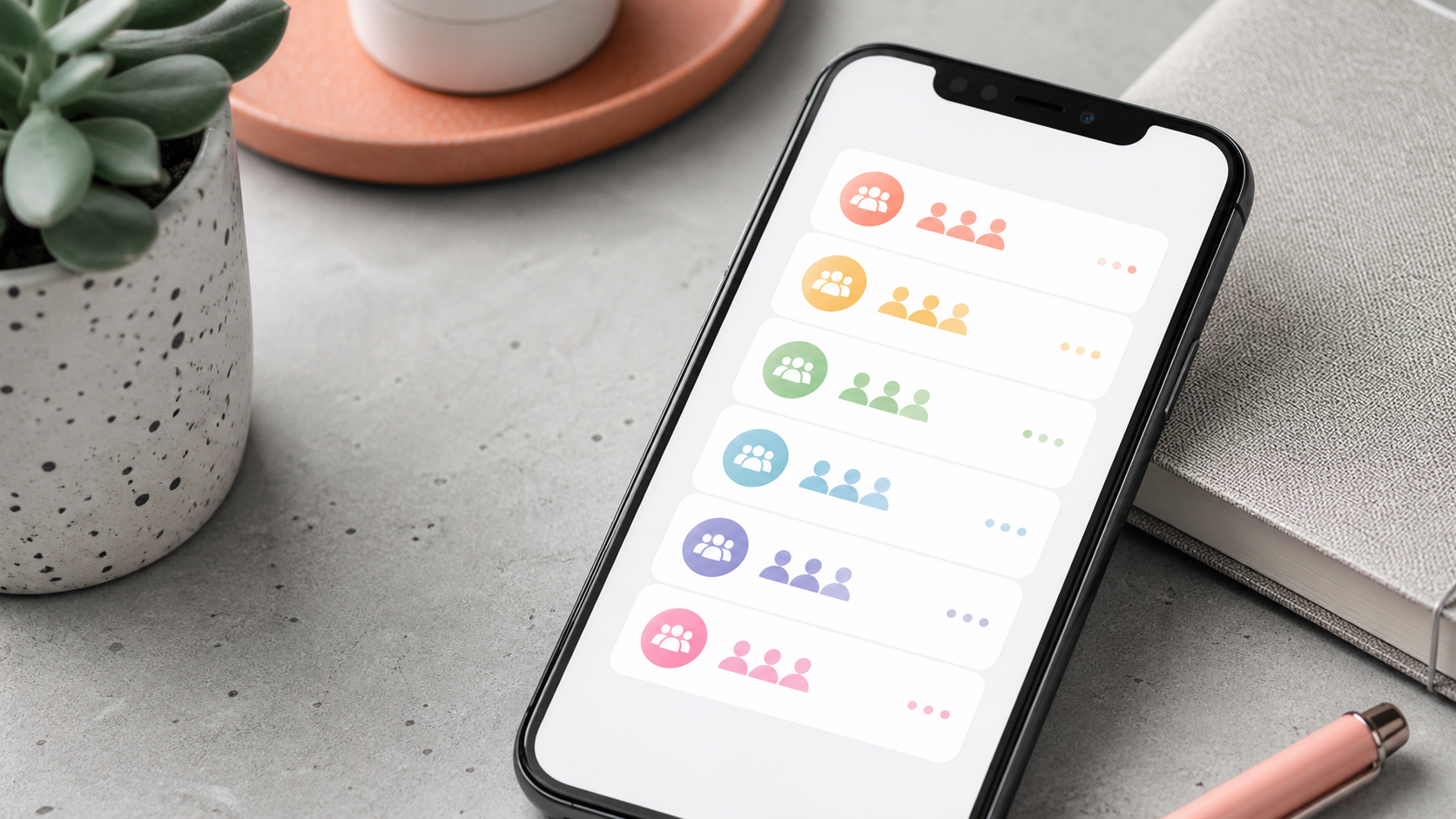
The main benefit of chat folders is that they cut down on visual clutter. Instead of facing one long list of chat groups, you can group them into smaller categories. This makes it easier to find the conversation you need and ignore the rest until later.
Noise is not only about the number of messages. It is also about context switching. If a school assignment chat sits beside a meme-heavy club group and a family thread, your brain has to keep reorienting itself. Folders reduce that mental effort by putting related conversations together.
For many people, that also means fewer accidental replies in the wrong place. A folder for “university”, for example, can help keep seminar chats, project chats and module updates together, while a separate folder holds personal group chats. That simple split lowers the chance of sending the wrong message to the wrong people.
Simple folder setups for school and university
If you are using chat folders for school, keep the system as plain as possible. A folder for each broad area is usually enough. For example, one folder for classes, one for clubs, one for group work and one for personal chats. You do not need a folder for every individual subject unless your schedule really calls for it.
At university, the same principle applies. Many students juggle course chats, seminar groups, accommodation chats and society updates. A practical folder setup can help you tell a deadline from a social plan at a glance. The goal is not to archive everything, but to make the most important conversations easy to reach.
A useful rule is to organise by action, not just by topic. Ask yourself: “What do I need to do with this chat?” If the answer is “check deadlines”, “respond to teammates” or “keep up with club news”, then that folder belongs somewhere visible.
How folders help chat groups stay manageable
In larger group chats, especially active ones, folders help people stay engaged without feeling overwhelmed. A busy class chat can be useful, but it can also flood your notifications. Putting that chat group in a dedicated folder means you can check it on purpose rather than being pulled in all day.
This is particularly helpful for organisers. If you manage a club, society or project team, you may have several parallel conversations running at once. Chat folders let you separate admin from discussion, or planning from announcements, so the group does not rely on everyone remembering which thread matters most.
Folders can also make it easier to set boundaries. Personal chats do not have to sit beside work or study threads. That separation can help reduce the feeling that you must be available everywhere all the time.
- Keep folders broad: Use a few clear categories rather than dozens of small ones.
- Group by purpose: Separate study, club, family and personal chat groups.
- Prioritise active threads: Put the most time-sensitive conversations where you can reach them quickly.
- Review regularly: Move chats when their purpose changes, such as after a project ends.
- Match your routine: Set folders around how you actually use your phone, not how you think you should.
Best practices for keeping folders useful
A folder system only works if it stays easy to understand. If you create too many categories, you risk replacing noise with another kind of confusion. Keep names short and obvious so you can tell at a glance where each chat belongs.
It also helps to think about what deserves attention now and what can wait. For example, a “school” folder might contain all class chats, but you might pin the most urgent one at the top. That way, the folder still stays tidy while the key conversation is easy to spot.
Many people find it useful to review folders at the start or end of the week. Remove stale chats, rename anything that no longer fits, and move active group chats into the right place. Small maintenance habits keep the system from becoming stale.
What to do when a chat no longer belongs
Not every chat should stay where it started. A project chat may become a social chat after the deadline passes. A class group may go quiet once the term ends. When that happens, move the conversation out of the folder it no longer fits.
This kind of clean-up matters because clutter returns gradually. If old chat groups stay in active folders, the system becomes harder to trust. Once people stop trusting it, they stop using it, and everything ends up back in one noisy list.
Think of folders as a working tool, not a permanent archive. Their job is to help you separate current conversations from everything else. If a chat is no longer active, it probably does not belong in your most visible folder any more.
Frequently asked questions
Are chat folders only useful for people with lots of messages?
No. Even people with a modest number of chats can benefit if those conversations serve different purposes. The main advantage is not volume, but clarity. If you use your phone for school, university, clubs and personal chat groups, folders can help you switch context more easily.
Should I make separate folders for every subject or group?
Usually not. A small number of broad folders is easier to manage and far more sustainable. You can always add more detail later if you truly need it, but most people are better served by simple categories such as study, work, clubs and personal.
Do chat folders replace good notification habits?
No, they work best alongside them. Folders help you organise conversations, but notification settings still matter. If a group chat is especially active, you may want to mute it or adjust alerts so it does not interrupt you constantly. Together, folders and notification control create a much calmer setup.
Chat folders are a small feature, but they solve a very real problem: too much noise in too many places. By separating school, university, clubs and personal chats, you make it easier to find what matters and ignore what can wait. That means less stress, fewer mistakes and a better chance of keeping up with the conversations that matter most.
Ready to try PigeonChat?

Writer & Editor at PigeonChat
Related Articles
Why chat folders matter for busy group conversations

How image sharing works in private chat apps

What chat features users expect in modern private apps

Why chat folders help busy groups stay organized

How chat groups help schools and universities stay organized