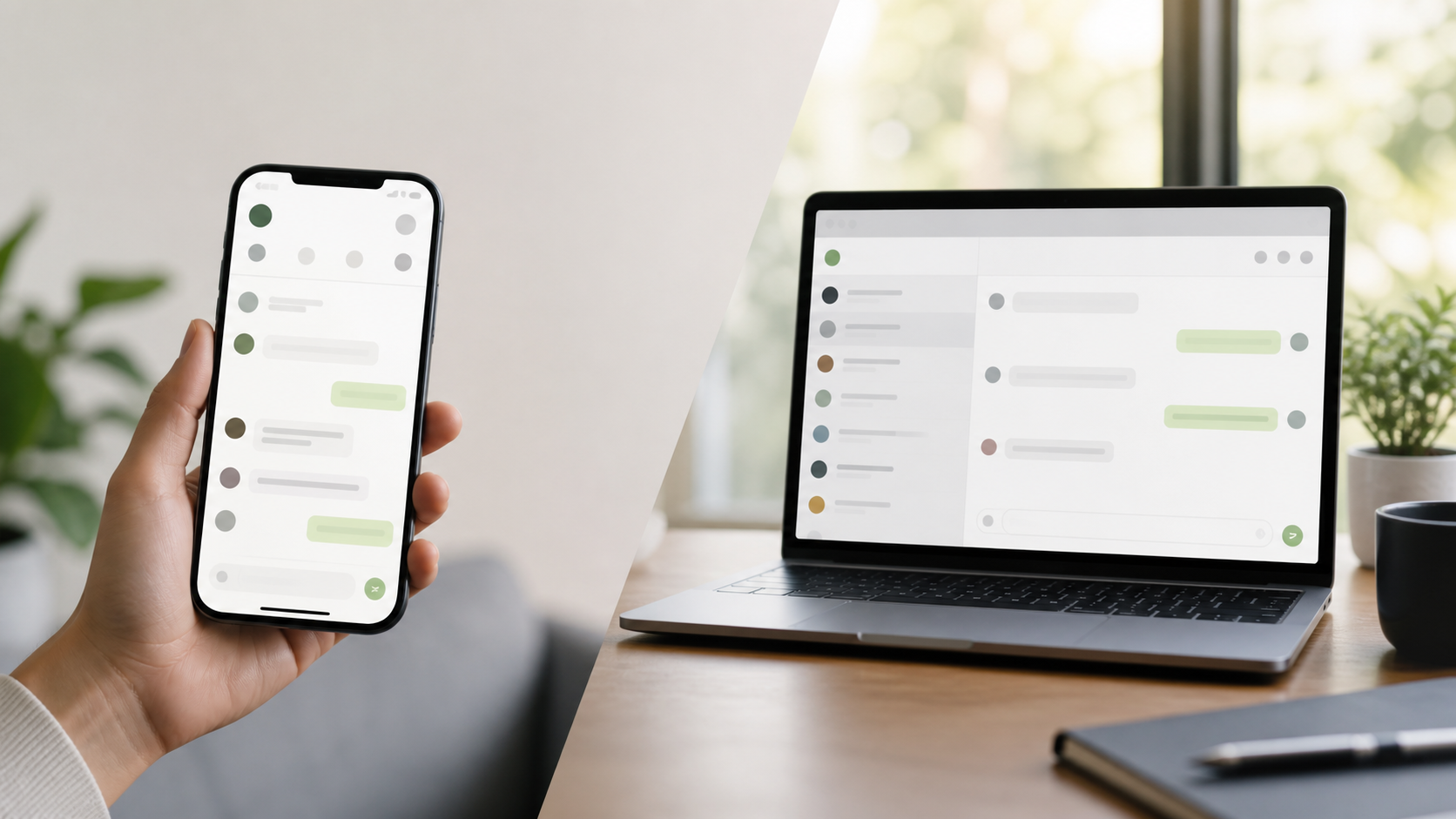
Why people search for a WhatsApp alternative
See why users look beyond WhatsApp for privacy, browser access and no phone number sign-up, and how PigeonChat.site fits that search intent.
When people search for a WhatsApp alternative, they are usually not looking for novelty for its own sake. They are looking for a chat app that feels simpler, asks for less at sign-up, and gives them more control over how they are identified and contacted. That is often the real story behind the search term, even when it is wrapped up in comparisons and feature lists around the wider whats app ecosystem.
For many people, the issue is not that WhatsApp does everything badly. It is that a phone-number based messenger can feel like the default rather than the best fit. If you have ever wanted an alternative chat app that does not immediately tie your conversations to a personal number, you are in familiar company.
This matters because messaging is not just about moving text from one device to another. It is also about who can reach you, what data is exposed at sign-up, and how much friction sits between “I need to send a message” and actually sending it. That is why the search for a whatsapp alternative without a number keeps coming up.
Privacy is usually the first reason
Privacy concerns are often the most obvious driver. People want to know who can see their profile, who can add them, and what personal details are required before they can start chatting. Even if a platform is secure in transit, the onboarding model itself can still feel too revealing for some users.
A phone number is convenient, but it is also a strong identity marker. Many people do not want their everyday chat app to double as a directory of their real-world contact details. That is especially true if they are joining a community group, testing a new service, or separating personal and work conversations.
If you are comparing a WhatsApp alternative with privacy in mind, it helps to look beyond encryption slogans. Ask a simpler question: what does the app require before I can send my first message, and what does it expose to other people by default?
Simplicity matters more than feature bloat
Another reason people look for a new messenger is simple fatigue. Some platforms become crowded with statuses, communities, business tools and endless prompts. For many users, the best chat experience is still the one that gets out of the way and lets them talk.
An alternative chat app can feel better not because it has more features, but because it has fewer distracting ones. A clean interface, straightforward contact management and predictable notifications often matter more than stickers, feeds or optional extras. People searching for a whats app replacement are often searching for calm.
PigeonChat is built around that idea of keeping things simple. You do not need to be sold on a long list of bells and whistles to appreciate an app that is designed to be clear, direct and easy to understand.
Why phone-number onboarding puts people off
Phone-number onboarding has one clear advantage: it is familiar. The drawback is that familiarity can hide a lot of friction. Not everyone wants to hand over a number just to try an app, especially if they are joining from a shared device, a work account, or a one-off project.
This is where searches for a whatsapp alternative without a number make sense. The user is not necessarily rejecting identity altogether. They may simply want a lighter way to sign in, with less coupling between the chat app and their personal phone line.
That distinction is important. A better onboarding flow does not have to be anonymous, and it does not have to be complicated. It just needs to respect that some people want a chat space that starts with conversation, not verification hoops.
- It reduces the feeling of giving away personal data too early.
- It makes testing an app less awkward for new users.
- It can be more practical for groups, communities and side projects.
- It separates messaging identity from a phone contract.
- It makes the first use experience feel lighter and more private.
What people actually want from an alternative chat app
When you strip away the buzzwords, the request is usually modest. People want to message without friction, keep their identity choices flexible, and avoid feeling trapped in a system that assumes everyone is happy to share a phone number.
They also want compatibility with real life. Friends, family and colleagues are already used to the current mainstream messengers, so switching is only worthwhile if the new app makes life easier in some meaningful way. That could be privacy, or it could simply be calmer onboarding and a cleaner interface.
In practice, the strongest alternatives tend to solve one of three problems well. They either simplify the experience, give more control over identity, or reduce the amount of personal information needed up front.
How to judge a WhatsApp alternative fairly
If you are comparing apps, it helps to think in terms of use case rather than brand loyalty. A good messenger for a family group may not be the right one for a local club, a side business or a privacy-conscious community.
Start with the basics. Can you sign up without sharing more than you are comfortable with? Is the interface easy to understand? Do messages, groups and notifications behave predictably? A polished app should feel obvious within a few minutes.
It is also worth checking whether the app suits your level of trust. Some people are happy with a mainstream platform if it is simple enough. Others want something like PigeonChat because they prefer a smaller, more focused experience and a different approach to onboarding.
Practical questions to ask before switching
A good alternative is not just about ideals. It is about whether the service matches your daily habits. Before moving over, it is sensible to ask a few practical questions and be honest about what you need.
- Does it require a phone number, or can you start with less personal information?
- Is it easy enough for the people you actually message?
- Does it keep the interface uncluttered?
- Are groups, media and notifications reliable enough for everyday use?
- Does the app fit a private one-to-one chat, a community group, or both?
These questions matter because the best messenger is the one people will actually use. Even a thoughtful alternative chat app fails if it creates confusion at the point of first contact. That is why onboarding is such a big part of the conversation around phone-number based services.
Frequently asked questions
Why do people search for a WhatsApp alternative?
Usually for a mix of privacy, simplicity and control. Some want fewer personal details exposed at sign-up, some want a cleaner interface, and some simply want to separate messaging from their phone number.
What is the main benefit of a WhatsApp alternative without a number?
The main benefit is reduced friction and less identity coupling at the start. It can make an app feel easier to try, easier to use in different contexts, and less tied to a single personal device or number.
Is a simpler chat app always better than a bigger platform?
Not always. A bigger platform may be better if everyone you need is already there. But if your priority is privacy, a calmer experience or lighter onboarding, a simpler app can be the better choice. That is often why people look at services like PigeonChat in the first place.
If you are exploring options, it may help to visit PigeonChat and compare the experience with what you already use. Even if you do not switch, it can clarify what you value most in a messenger.
In the end, the search for a WhatsApp alternative is rarely about chasing the newest thing. It is about finding a chat app that feels respectful, uncomplicated and aligned with how you actually want to communicate. For many people, that means less fuss, less exposure and less reliance on a phone number just to start a conversation.
Ready to try PigeonChat?

Writer & Editor at PigeonChat
Related Articles
Viber, Telegram, and Messenger compared for private chat

Signal alternative chat app: what users actually want
What a true WhatsApp alternative should include
WhatsApp, Signal, Viber, and Telegram compared
Why chat folders matter for busy group conversations