
PigeonChat.site features for private group chats
See how chat features like folders, public channels, stickers, stories and image sharing support private groups, schools and communities.
Private group chats work best when they are easy to organise, quick to scan, and simple to keep under control. That is the real story behind PigeonChat.site features for private group chats. The platform is not just built for one-to-one messaging. It is set up to help people manage small teams, family groups, project rooms, and any other chat groups that need structure as well as speed.
When people think about chat features, they often focus on sending messages. In practice, the details matter more: how you separate conversations, how you share images, how you keep important threads visible, and how you avoid missing the right message in the wrong place. Those are the kinds of practical group communication tools that make a chat service genuinely useful.
If you are comparing private messaging options, it helps to look at the everyday workflow rather than the headline promise. PigeonChat puts that workflow first, with chat folders, image sharing, and group-friendly organisation designed to reduce friction for people who chat frequently and with purpose.
Why private group chats need more than basic messaging
A private group chat is rarely just a single stream of comments. One conversation might cover plans, another might be for decisions, and a third might exist only for sharing files and updates. Without some structure, all of that becomes difficult to follow. That is where stronger chat features matter.
Useful group chat software should help people distinguish between active discussions and background noise. It should also make it easy to jump back into the right place without scrolling endlessly. Good design in this area is often invisible, because the best systems reduce effort rather than draw attention to themselves.
On PigeonChat, the focus is clearly on making private group chats manageable in everyday use. That means supporting the practical habits groups already have, instead of forcing them into a single rigid conversation style.
Chat groups that stay organised
For most people, the first useful step in organising chat groups is separation. Family updates, work planning, community coordination, and social catch-ups all need different rhythms. Keeping those conversations apart helps each group stay relevant and easier to return to later.
PigeonChat supports this kind of separation in a straightforward way. Rather than treating every chat as equal noise in one long feed, it gives people a more organised place to work from. That matters for private group chats because the goal is not just to talk, but to keep the conversation usable after the moment has passed.
This is also where clear naming, visible group context, and easy switching between conversations become valuable. Even if you are only managing a few chat groups, the difference between a tidy layout and a cluttered one is immediate.
Chat folders for separating conversations
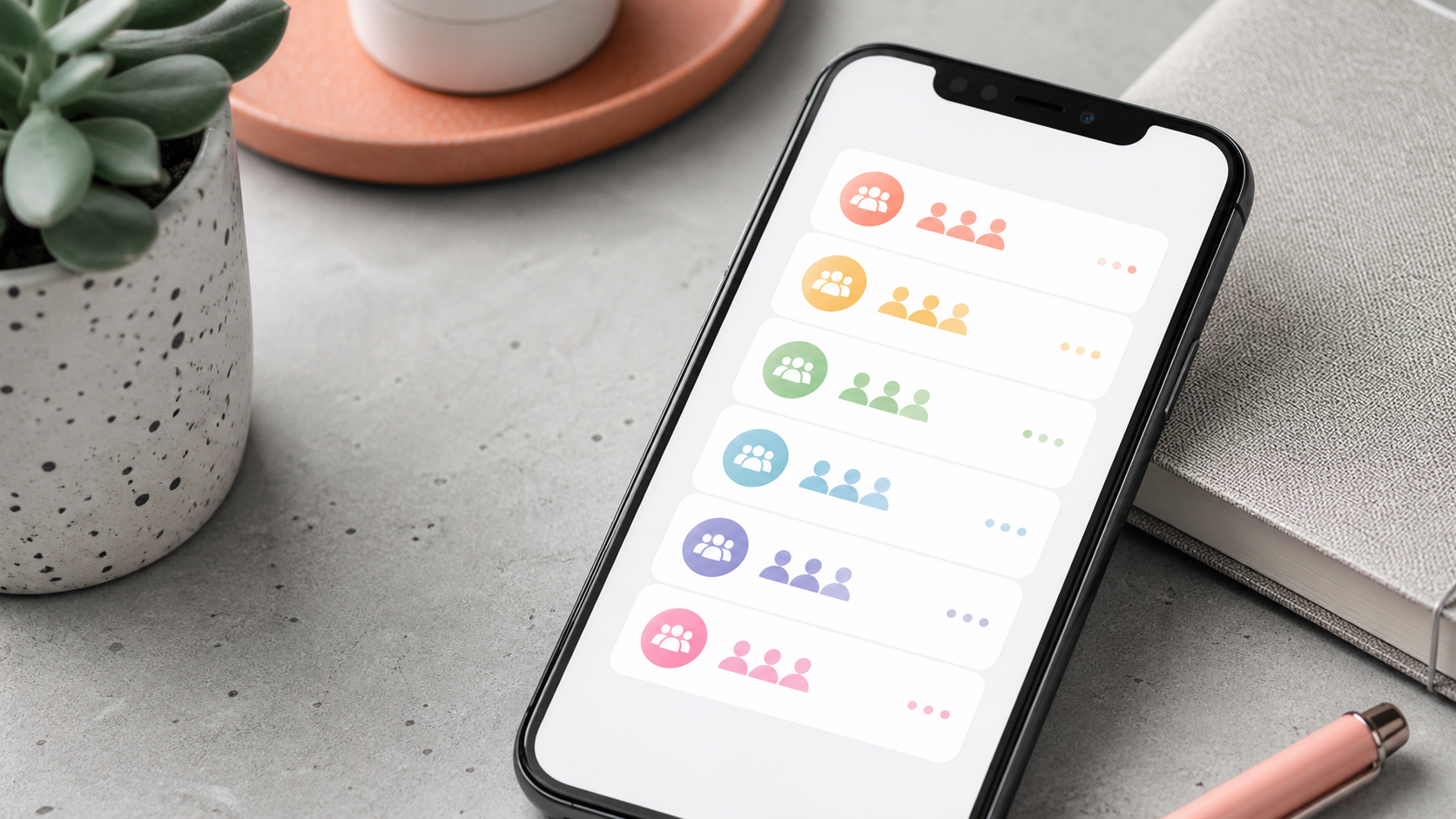
One of the most practical chat features for busy users is chat folders. They give you a simple way to sort conversations by purpose, priority, or audience. That can be as basic as work, family, and friends, or as specific as clients, volunteers, and planning groups.
Chat folders are especially helpful when private group chats become part of a daily routine. Instead of relying on memory or repeated scrolling, you can move straight to the right set of conversations. This reduces confusion and makes the whole messaging environment feel calmer.
For teams and communities, folders also help keep sensitive or focused discussions from getting lost among casual chats. The benefit is not only convenience. It is also a better sense of control over where conversations live and how they are revisited.
Image sharing that fits real group communication
Image sharing is one of the most common things people do inside chat groups. A quick photo can clarify a location, show a draft, share a product reference, or capture a moment that words would explain poorly. In private group chats, this kind of sharing often saves time and avoids misunderstanding.
That is why image sharing should feel immediate and uncomplicated. If sending or viewing pictures becomes a chore, people stop using the feature properly. Practical chat features should support natural conversation, not interrupt it.
PigeonChat treats image sharing as part of normal group communication rather than as an extra add-on. That makes it more suitable for everyday private chats, where people often move between text, images, and short updates without thinking about format.
- Share reference photos during planning conversations
- Send quick visuals instead of long explanations
- Keep private group chats more useful for collaborative decisions
- Make it easier to confirm details at a glance
- Support informal updates without losing context
Practical chat features that help groups work well
The best chat features are usually the ones that save time quietly. That includes simple navigation, clear conversation separation, and an interface that does not make basic tasks feel heavy. For private group chats, this matters because the same people often return day after day and need the experience to stay predictable.
Practical group communication tools also help reduce small errors. When it is obvious which chat group you are in, what belongs where, and how to share the right content, people are less likely to cross wires. That is useful for families, hobby groups, local organisers, and work teams alike.
This is where PigeonChat feels particularly focused. It does not try to be everything for everyone. It concentrates on the essentials that make chat groups usable in the real world, which is often more valuable than a long list of flashy extras.
Choosing a private chat platform for everyday use
When choosing a private chat platform, it helps to ask what the group actually needs on a normal day. Do people need fast switching between conversations? Do they need chat folders to stay sane? Do they share images often? Those questions tell you more than a feature checklist alone.
It is also worth thinking about long-term usability. A group chat can start small and become a regular part of someone’s week. If the system makes it easy to organise, revisit, and share, it is much more likely to remain useful over time. That is true for social groups as much as it is for work-related ones.
PigeonChat’s approach is pragmatic: support the kinds of conversation patterns people already use, and make private group chats easier to manage without requiring extra effort. That is a sensible baseline for anyone evaluating chat tools.
Frequently asked questions
What makes PigeonChat.site different for private group chats?
Its value lies in practical organisation. Rather than focusing only on one-to-one messaging, it gives attention to the everyday needs of private group chats, including structure, easy switching between conversations, and useful group communication tools.
Are chat folders useful if I only have a few group chats?
Yes. Even a small number of chat groups can become hard to follow if they cover different topics. Chat folders help keep conversations sorted by purpose, which makes it easier to find the right group quickly and keep the interface tidy.
Why is image sharing important in chat features for groups?
Image sharing helps people communicate faster and more clearly when text alone is not enough. In private group chats, images can support planning, clarification, and quick updates, which makes the conversation more effective overall.
In the end, the best private messaging tools are the ones that stay out of the way while helping people stay organised. PigeonChat.site features for private group chats are built around that idea, with chat groups, chat folders, and image sharing working together to make conversations easier to manage. If you want a calmer, more practical way to handle group communication, that focus is worth paying attention to.
Ready to try PigeonChat?

Writer & Editor at PigeonChat
Related Articles

How chat groups help schools and universities stay organized

How chat groups support schools and universities

Why chat folders help busy groups stay organized

How chat groups support schools and universities
Why chat folders matter for busy group conversations