
Telegram and Messenger alternatives for private groups
See why people move beyond Telegram and Messenger for private group chats, folders, image sharing, and cleaner control over who joins.
If you are comparing Telegram and Messenger alternatives for private groups, the real question is usually not which app has the biggest audience. It is which one makes it easier to keep a group tidy, control who sees what, and avoid the noise that creeps into larger communities.
That is why many people start looking beyond the obvious options. They want clearer chat groups, better chat folders, simpler admin tools, and privacy that feels intentional rather than bolted on. For small teams, clubs, families, and hobby circles, the best choice is often the one that reduces friction instead of adding more features you will never use.
This guide looks at what matters when you are choosing a private group chat app, including organisation, image sharing, and access control. It also explains why some platforms feel better suited to focused conversations than a general-purpose social messenger like messanger or a broad broadcast-style network.
What people usually want from a private group chat
When people search for telegram. Best private chat or similar terms, they are often trying to solve a practical problem. They may be managing a volunteer group, a project team, a family thread, or a private community where not everyone should see everything.
The ideal app for that kind of use is not necessarily the one with the most members or the most public channels. It is the one that keeps conversation organised, makes it easy to find the right thread later, and gives the group owner enough control to keep things calm.
In practice, that usually means looking for a few basics:
- Clear group permissions and invite controls
- Readable chat folders or similar ways to separate conversations
- Useful moderation tools for admins
- Private sharing options for text, files, and image sharing
- A simple interface that does not overwhelm less technical users
Telegram and Messenger alternatives in a private group setting
Telegram is popular because it supports large groups and flexible features, but that does not automatically make it the best fit for every private group. Some people find that public-facing features and broad discovery tools are more than they need.
Messenger can feel familiar because many people already have it, but familiarity is not the same as good organisation. If the group needs clear boundaries, searchable structure, or stronger separation between social chat and private coordination, you may want something more deliberate.
That is where alternatives become useful. Many of them focus on reducing clutter, keeping chat groups more contained, and giving admins a cleaner way to manage participation. For a lot of users, that is more valuable than a huge community ecosystem.
Organisation matters more than size
A private group works best when it stays easy to follow. If every message lands in one long stream, people stop reading. If important details are buried under stickers, forwards, and unrelated chatter, the group becomes harder to trust as a place for useful discussion.
Good organisation helps everyone. New members can understand the group faster. Existing members can find decisions and links without asking again. Admins spend less time repeating themselves. Features like pinned posts, separate threads, and chat folders all help, but the broader design of the app matters just as much.
This is also where some newer group chat tools do well. They are built around smaller circles rather than mass engagement, so the interface often encourages focus instead of noise. PigeonChat takes that approach, with an emphasis on keeping conversations readable and private rather than trying to be everything at once.
Privacy is more than a settings menu
People often treat privacy as a single toggle, but private group chat is really about habits and boundaries. Who can join? Can messages be forwarded? Are links guessable? Can media be downloaded and shared outside the group?
Those questions matter because privacy in a group setting is social as well as technical. A secure app should make the right thing easy by default. That includes sensible invitation methods, clear admin roles, and controls that help people understand what stays inside the group.
If you are comparing platforms, look closely at how they handle member visibility, message history, and sharing permissions. For some groups, keeping the space small and intentional is more useful than chasing feature density. A platform such as PigeonChat can be appealing in that kind of scenario because it is designed around private, manageable conversation.
Chat folders and the value of separating conversations
Chat folders are one of those features that sounds minor until you use them well. Once a person is in several groups, a dozen one-to-one chats, and a few work threads, organisation becomes a real problem.
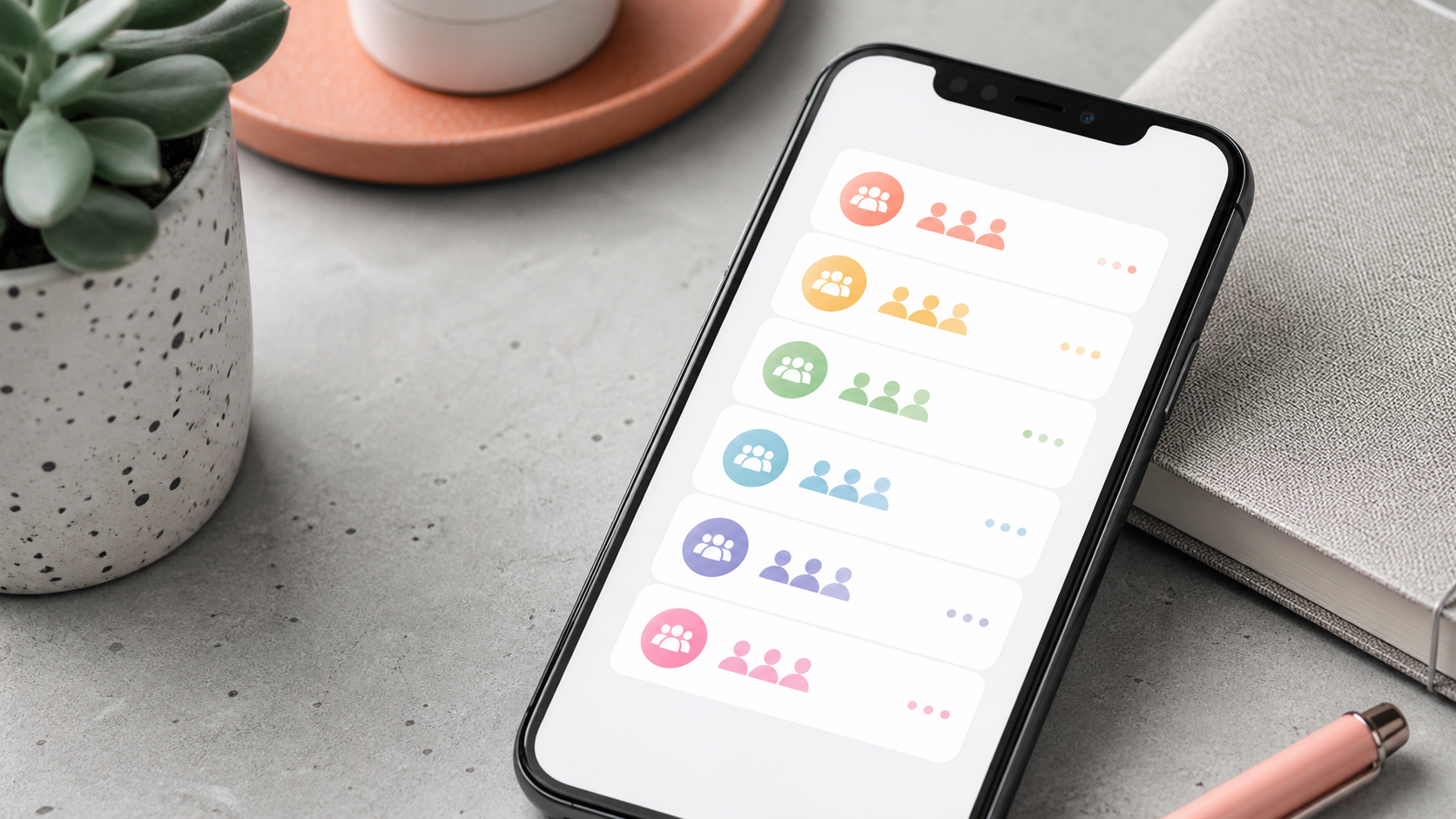
For private groups, chat folders help people separate family, work, community, and project conversations. That reduces missed messages and cuts down on the mental load of checking everything all the time. It is especially useful when the same person belongs to several different groups with different levels of sensitivity.
When comparing Telegram and Messenger alternatives, ask whether the app supports a clean way to organise conversations without turning the inbox into a dumping ground. Even if the app does not call the feature chat folders, the principle still matters. Good structure is part of good privacy because it helps people keep the right conversations in the right place.
Image sharing without losing control
Image sharing is a practical test for any group chat app. Private groups often use photos for planning, updates, receipts, events, or quick coordination. If image handling is clumsy, the group quickly becomes frustrating to use.
The key is not just whether images can be sent, but how they are handled afterwards. Can members see what they need without exposing the group to unnecessary sharing? Are previews clear? Is it easy to keep media attached to the conversation context?
For some private groups, image sharing is also where privacy expectations are tested most sharply. A good app should make it easy to share within the group while still giving admins and members enough control to avoid unnecessary spread. That balance is often more important than flashy media features.
How to choose the right app for your group
There is no single best answer for every private group. A large public-minded platform may suit one community, while a smaller and more structured app may be better for a team or family.
When you compare options, focus on real use rather than feature lists. Ask how the app feels after a week of ordinary conversation. Does it help people stay on topic? Does it make administration easier? Can members find what they need without scrolling forever?
A simple shortlist can help:
- Choose Telegram if your group needs scale and flexibility
- Choose Messenger if your group already lives inside that ecosystem and privacy needs are modest
- Choose a more focused alternative if organisation and tighter privacy matter most
- Check whether chat folders, permissions, and image sharing fit the way your group actually works
The best private chat is usually the one that feels quiet in the right ways. It should support the conversation without constantly demanding attention. That is often a better fit than an app built mainly for reach.
Frequently asked questions
Is Telegram still a good choice for private groups?
Yes, it can be a good choice if your group wants flexible features and can make use of larger chats. But if your main priorities are organisation and tighter privacy, it is worth comparing it with alternatives that are more focused on small, contained groups.
What is the main weakness of messanger-style group chats?
The main issue is often organisation rather than messaging itself. Familiar apps can be convenient, but they may not give you the clean separation, admin control, or chat folders that private groups need to stay easy to manage.
What should I look for if image sharing matters to my group?
Look for clear previews, sensible controls, and a way to keep images tied to the conversation. In a private group, image sharing should be useful without making it easier than necessary for media to spread outside the group.
Private group chat works best when it is calm, predictable, and easy to control. If you are choosing between Telegram, Messenger, and newer alternatives, start with the needs of the group rather than the size of the platform. Better organisation and tighter privacy will usually matter more than a bigger audience, and that is often the real test of a good chat app.
Ready to try PigeonChat?

Writer & Editor at PigeonChat
Related Articles

Viber, Telegram, and Messenger compared for private chat

Signal alternative chat app: what users actually want

What a true WhatsApp alternative should include

WhatsApp, Signal, Viber, and Telegram compared
Why chat folders matter for busy group conversations