

School chat groups need privacy and easy organization
See why school chat groups work better with folders, controlled sharing, and private browser access for students and teachers.
School communication works best when it is calm, predictable and easy to follow. In practice, that means schools need more than open messaging threads. They need structured chat groups, clear permissions and simple ways to keep conversations in order.
When a school relies on one long stream of messages, important details get buried quickly. Parents miss reminders, staff repeat themselves, and students see information that was never meant for them. Good organisation is not a nice extra here. It is part of how a school keeps communication safe and usable.
This is why school chat groups need privacy and easy organisation from the start. Features such as chat folders, controlled image sharing and role-based access make everyday communication less chaotic. Tools like PigeonChat are designed with that structure in mind, but the principles are useful even if you are just reviewing your current setup.
Why school chat groups should not behave like open forums
Schools are not casual group chats between friends. A school conversation often involves safeguarding, timetables, medical needs, class updates, trip information and reminders for families. Those topics need different audiences and different levels of privacy. One open thread cannot handle that well.
In an unstructured space, people reply out of turn, forward screenshots, or add unrelated questions that distract everyone else. What should have been a quick update about a class trip becomes a long scroll of side conversations. For a school, that creates confusion and increases the chance that someone misses something important.
Structured chat groups help separate communication by purpose. A year group can have one space, a club another, and staff a separate channel for operational matters. That organisation makes it easier to know where to post, where to look and who should be included.
Privacy is a practical school requirement
Privacy in school chat groups is not only about sensitive data. It also protects dignity, reduces unnecessary exposure and keeps messages in the right context. A parent does not need to see staff-only operational chatter, and a student does not need access to every discussion between teachers and administrators.
Role-based access is the simplest way to reduce mistakes. If the chat tool makes it easy to set who can view, post and share, staff are more likely to use it correctly. That matters in daily use, because people do not want to spend time checking whether a message reached the right group.
Schools should also think carefully about image sharing. Photos can be useful for classroom work, trip updates or event reminders, but they can also create problems if they are posted too broadly. A good system makes it easy to control who can upload, approve and view images, rather than treating every file as public by default.
Chat folders make busy school communication manageable
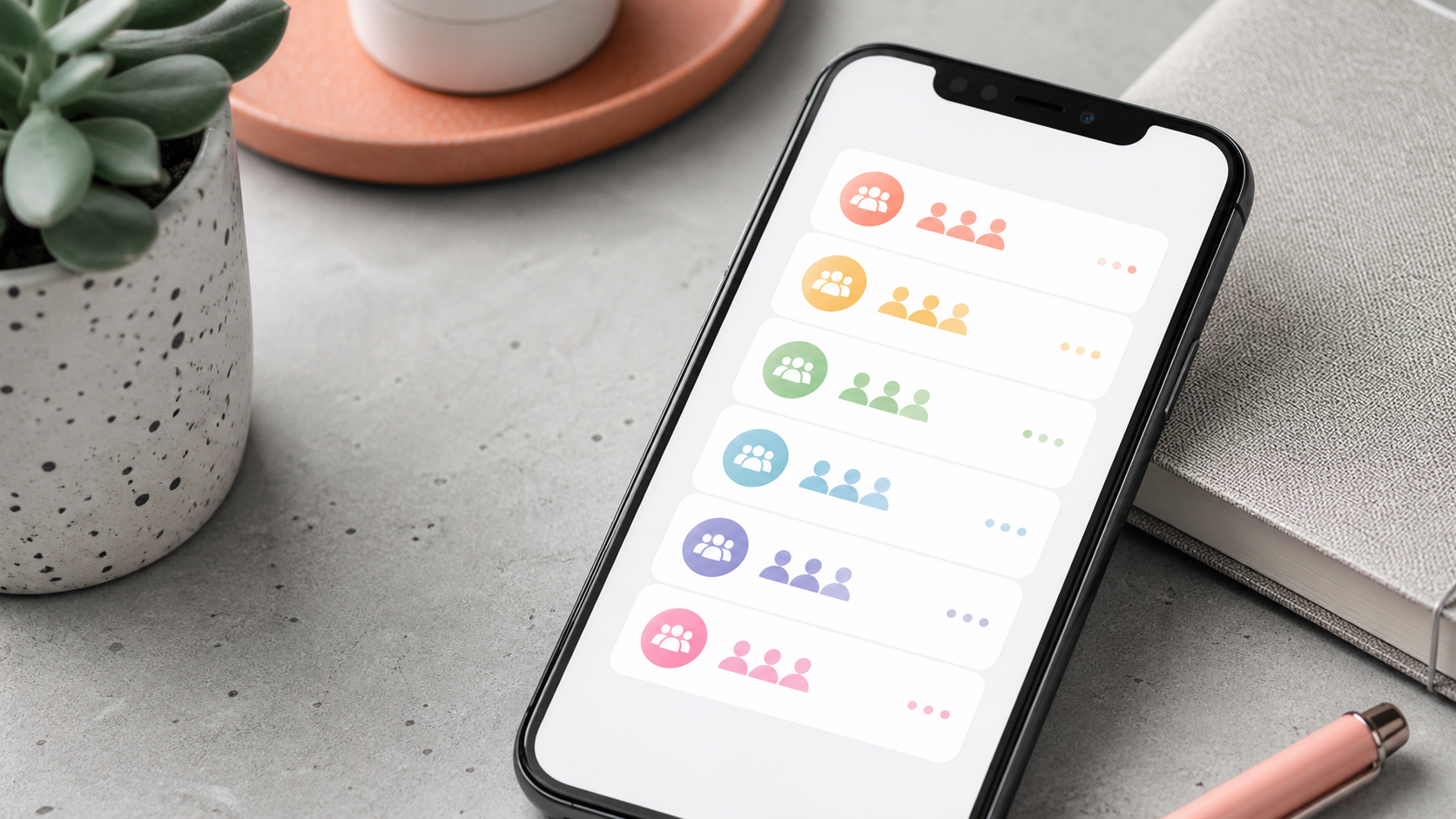
One of the most useful ideas for school chat groups is the chat folder. This is a simple way to sort conversations by topic, audience or urgency. Instead of hunting through a long list of unread messages, staff can move between a staff folder, a parent folder and a class folder with far less effort.
That kind of organisation helps everyone, not just administrators. Teachers can keep club conversations separate from classroom announcements. Parents can focus on the year group or subject relevant to them. Students can check one folder for homework guidance and another for extracurricular activity updates.
Without folders, people tend to mute too much or leave too many chats active. Both options are bad for school communication. Either the important messages disappear into the noise, or the inbox becomes so crowded that nobody wants to check it. A tidy structure encourages people to stay engaged.
- Use one folder for staff-only communication
- Keep parent announcements separate from discussion groups
- Split classroom, club and trip chats into different spaces
- Limit image sharing to the groups that actually need it
- Archive old conversations instead of leaving them active forever
How structure improves daily school coordination
Schools run on small, repeated actions. A teacher needs to confirm an assembly change. A parent needs to know the pickup time after a trip. A department head needs to share a notice about an inset day. In each case, the communication should be quick and clear, not buried under unrelated replies.
Structured chat groups reduce duplication as well. When communication is organised properly, staff do not have to send the same information across several threads and hope nothing gets lost. They can post once in the right place and trust that the correct group will see it.
This also supports better record-keeping. A well-organised chat history is easier to revisit when someone asks, “Where was that sent?” or “What was agreed?” Schools do not need a complicated system for every message, but they do need a consistent way to find what matters later.
What to look for in a school chat tool
If you are evaluating a chat platform for a school, start with the basics: can it separate audiences clearly, can it control visibility, and can it keep conversations easy to scan? Those three things matter more than flashy features that look impressive but do not solve everyday problems.
The most useful tools also make moderation straightforward. Staff should be able to manage who joins a group, who can post, and how attachments are handled. If those settings are buried or difficult to understand, the tool will often be used in a rushed and inconsistent way.
A practical school chat system should support:
- Separate groups for staff, parents, students and activities
- Clear permissions for posting, inviting and viewing
- Chat folders or other simple organisation tools
- Controlled image sharing and file handling
- Easy archiving for old or seasonal conversations
It is also worth choosing something that feels straightforward to use on an ordinary school day. The best system is not the one with the most features. It is the one people will actually use correctly when they are busy.
PigeonChat and the value of structured messaging
Platforms such as PigeonChat are built around the idea that messaging should be organised, not overwhelming. That is especially relevant in a school environment, where a single conversation often has multiple audiences and very different privacy needs.
Even if you are not adopting a new tool today, the lesson still applies. Think in terms of groups, folders and permissions rather than one giant thread for everything. That shift alone can make school communication feel much more manageable.
For schools, structure is not bureaucracy. It is what makes communication reliable. When people know where to look and who can see what, they spend less time untangling messages and more time acting on them.
Frequently asked questions
Why are open messaging threads a problem for school chat groups?
Open threads mix together unrelated topics, different audiences and varying levels of sensitivity. That makes it easy for important information to get lost. Schools usually need clearer separation so staff, parents and students only see the conversations meant for them.
How do chat folders help schools?
Chat folders let schools organise conversations by role, year group, activity or urgency. This reduces clutter and makes it easier for people to find the right discussion quickly. It also helps users avoid muting everything just to escape noise.
Is image sharing useful in school communication?
Yes, but it needs control. Image sharing can be helpful for classroom updates, event reminders and trip communication, but schools should limit who can post and who can view images. That reduces privacy risks and keeps photos in the right context.
School communication works best when it is designed for real life, not just convenience. A structured system gives people the right level of access, keeps information easier to find and makes everyday coordination much smoother. That is the real case for privacy and easy organisation in school chat groups.
Ready to try PigeonChat?

Writer & Editor at PigeonChat
Related Articles

How chat groups help schools and universities stay organized

How chat groups support schools and universities

Why chat folders help busy groups stay organized

How chat groups support schools and universities
Why chat folders matter for busy group conversations