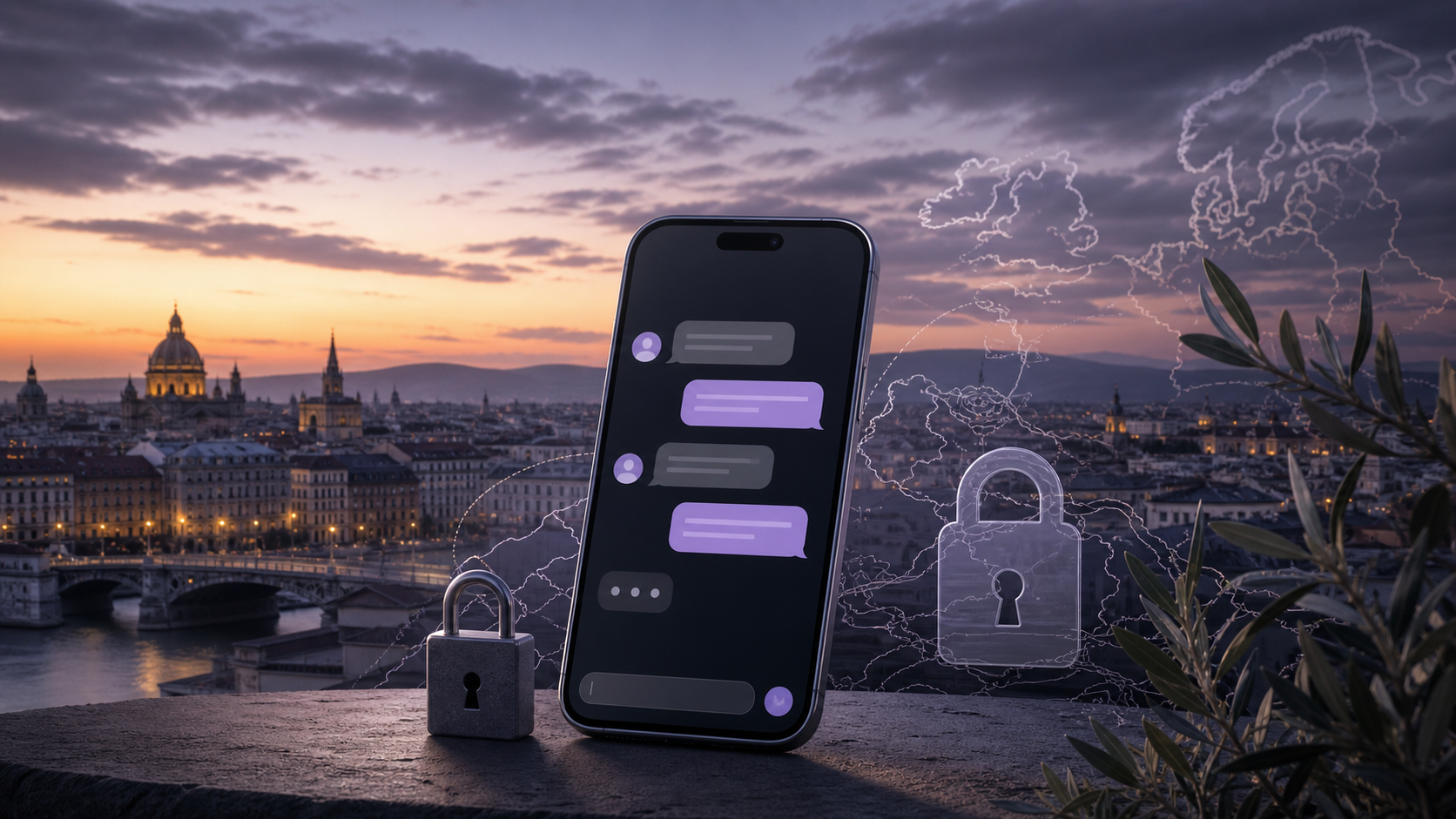
Why people want a privacy first EU chat app
A privacy first EU chat app should balance encryption, data handling and regional expectations while staying usable for everyday private chats.
People do not ask for a privacy first chat app because privacy sounds fashionable. They ask because messaging now carries work notes, family plans, client details, health updates and everyday conversations that do not belong in the open. In Europe, that concern is often joined by another one: who runs the service, which laws apply, and where the data actually lives.
That is why interest in a privacy first chat app keeps growing. Users want an EU chat experience that feels as easy as mainstream messaging, but with clearer governance and fewer surprises. The ideal is simple in theory and harder in practice: a European chat app that is secure, usable and sensible to trust.
When people search for the best european based chat app, they are rarely looking for a niche tool. They want something practical enough for daily use, but designed with stronger defaults. They want a fully compliant eu chat app in the broad sense - one that takes regulation, transparency and data handling seriously, without making every conversation feel like paperwork.
Privacy is not a niche preference in Europe
European users often think about privacy as a basic product quality, not an optional extra. That does not mean everyone wants absolute anonymity. It means many people expect a service to collect less, explain more and give them clearer control over how their messages are handled.
This is especially true for messaging, because chat is where real life happens. A good european chat app has to balance convenience with restraint. If it feels invasive, people notice quickly. If it is vague about encryption, retention or ownership, trust drops just as quickly.
A privacy first chat app therefore answers a few simple questions well: what is stored, who can access it, how are groups managed and what happens if a user leaves. Those are not edge cases. They are the foundations of everyday confidence.
Governance matters as much as features
Users often start by comparing features, but they stay for governance. A messaging product may offer file sharing, voice notes and group chats, yet still feel uncomfortable if it is controlled by a company whose incentives are unclear. In Europe, that concern is sharpened by questions about jurisdiction, data transfers and accountability.
An EU chat app does better when it makes its governance understandable. Where is the company based? Which legal framework applies? How are requests handled? Who is responsible when something goes wrong? Those are not legal trivia. They are part of what makes a service feel dependable.
This is one reason the phrase best european based chat app matters to buyers, even if it sounds like a search term. It captures a broader desire for a product that is not only technically good, but also situated in a context European users recognise and can assess.
Practical messaging still has to feel effortless
Privacy alone does not make a chat app useful. If onboarding is awkward, notifications are unreliable or group chats are clumsy, people will drift back to whatever is familiar. The winning product is the one that makes secure communication feel ordinary.
That means clear contact management, simple invitation flows, dependable syncing across devices and sensible defaults for groups. A European chat app should not ask people to become security experts just to send a message. The best experience is the one where safety is mostly invisible.
- Easy setup without unnecessary personal data collection
- Clear controls for groups, invites and device access
- Reliable message delivery across mobile and desktop
- Simple language for privacy settings, not technical jargon
- Strong defaults that reduce mistakes rather than relying on user vigilance
Products like PigeonChat are part of this shift in expectations. The point is not that every user wants the same feature set, but that a privacy first chat app should still feel like a normal messaging tool. Security works best when it supports the conversation instead of interrupting it.
What people really mean by a fully compliant eu chat app
The phrase fully compliant eu chat app is often used loosely, so it helps to be precise. Compliance is not a badge that solves everything. It is a combination of good data practice, transparent terms, clear responsibility and ongoing maintenance. Users should be cautious of any service that treats it as a marketing slogan.
For most people, compliance is valuable because it signals discipline. A service that takes European rules seriously is more likely to think carefully about consent, data minimisation, access controls and vendor relationships. Those design choices usually improve trust even for users who never read the policy.
That said, compliance should not be mistaken for privacy by itself. A fully compliant eu chat app can still be poor at user experience, and a slick app can still be weak on governance. The strongest products combine legal seriousness with day-to-day practicality.
Why trust is becoming a feature, not just a feeling
People used to choose messaging apps mainly on convenience and network effects. That is still true, but trust has become more visible in the decision. When users choose where to talk to colleagues, communities or family, they are also choosing what kind of relationship they want with the platform.
In that sense, privacy is no longer a background concern. It is part of the product experience. A service that explains itself clearly, offers sensible controls and avoids unnecessary data use creates a calmer environment. That calmness is often what people are really after.
For organisations as well as individuals, trust reduces friction. Fewer doubts about ownership, retention and access can make it easier to adopt a tool consistently. That is one reason a privacy first chat app can appeal to teams, not just privacy enthusiasts.
What to look for when choosing an EU chat service
If you are comparing options, focus on the basics first. The best choice is rarely the one with the longest feature list. It is the one that is clear about how it operates and comfortable to use every day.
Look for signs that the service respects users before it asks for trust. Good documentation, transparent policies and thoughtful defaults matter. So does a product that does not overpromise. If a platform is realistic about what it can and cannot do, that is usually a positive sign.
In practical terms, a strong european chat app should make it easy to understand the following:
- Where the company is based and which legal system applies
- What data is collected and why
- Whether messages are encrypted and what that means in practice
- How group chats, admins and invitations are controlled
- How easy it is to leave, export or delete data
Frequently asked questions
Is a privacy first chat app only for very security-conscious users?
No. Most people want privacy in ordinary ways, not extreme ones. They want to avoid unnecessary data collection, keep conversations controlled and use a service that feels respectful. A privacy first chat app can be suitable for families, teams and communities as well as experts.
Does being an EU chat app automatically mean better privacy?
Not automatically. Being based in Europe can help with governance, legal clarity and user expectations, but privacy still depends on the product’s design and operating practices. The best services combine location with good engineering and transparent policies.
What should I prioritise over marketing claims?
Prioritise clarity. Look for plain explanations of data use, encryption, account recovery, device management and deletion. If a service makes a lot of promises but stays vague on those basics, be cautious. Practical trust matters more than slogans.
In the end, people want a messaging tool that fits normal life while respecting the realities of modern data use. That is why the demand for a privacy first chat app is not a fad. It reflects a mature expectation: good communication should be useful, clear and governed well. Whether you choose PigeonChat or another service, the same principle applies - the best chat app is the one that earns trust without demanding blind faith.
Ready to try PigeonChat?

Writer & Editor at PigeonChat
Related Articles

What makes an end to end encryption chat app secure

What a fully compliant EU chat app should include

Why people search for a WhatsApp alternative without a number

What end to end encryption chat really protects
Why chat folders matter for busy group conversations