
What chat groups and folders solve for busy teams
Chat groups and folders can cut clutter, separate projects, and help teams keep conversations easy to find in one place.
Busy teams rarely struggle because they have too little communication. More often, the problem is the opposite: too many messages, too many places to look, and too many conversations running at once. In that kind of environment, even a simple update can disappear in the noise.
That is where chat groups and folders earn their keep. Used well, they do not add structure for its own sake. They reduce overload, make it easier to find the right thread, and help people move faster without needing to ask, “Where was that posted?” every five minutes.
For teams using tools like PigeonChat, this is less about features and more about flow. Good organisation makes the day feel calmer. It also makes collaboration feel more deliberate, especially when people are switching between projects, clients, and internal discussions.
Why chat groups help teams stay focused
Chat groups are useful because they bring the right people into the same conversation without exposing everyone else to it. That sounds simple, but it solves one of the biggest causes of workplace distraction: irrelevant information arriving at the wrong time.
Instead of sending every update to a broad team channel, you can group people by project, function, or shared task. That means design can talk design, support can talk support, and operations can keep practical decisions moving without forcing the whole company to read along.
In practice, well-structured chat groups also make accountability clearer. When the people involved are obvious, decisions are easier to follow, and it is less likely that someone assumes “someone else” is handling it.
How chat folders cut through overload
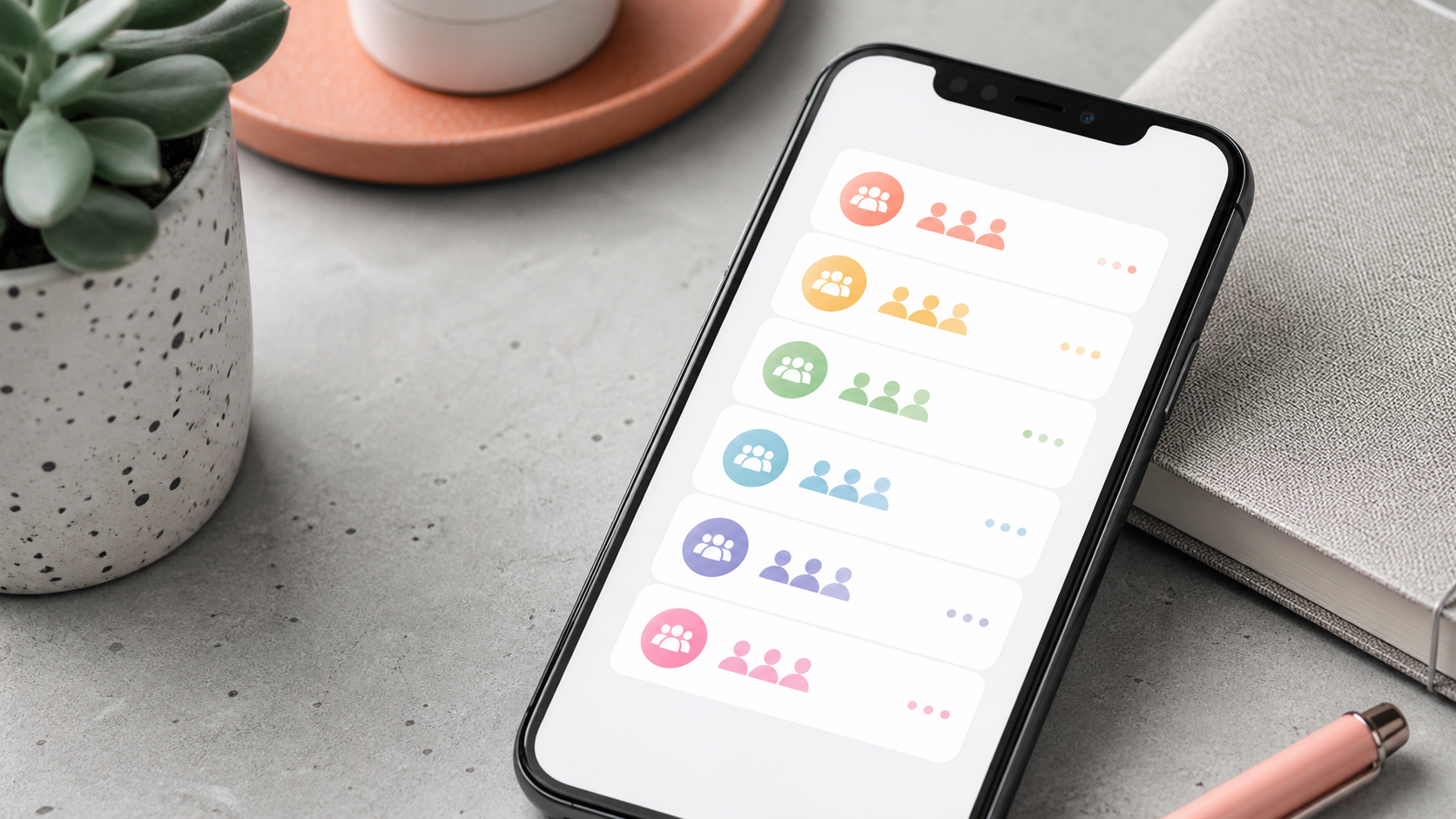
If chat groups help separate conversations, chat folders help separate priorities. They give people a quick way to organise incoming messages by importance, topic, or workflow. That matters when a busy team is handling both urgent tasks and longer-running work at the same time.
Without chat folders, everything tends to look equally important. A quick question from a colleague sits beside a client approval, which sits beside a meeting reminder, which sits beside a message that can wait until tomorrow. Folders restore a sense of order, so people do not have to mentally sort every notification as it arrives.
This is especially useful in a browser messaging setup, where people may keep several workspaces open at once. A tidy interface is not just aesthetically pleasing. It lowers the friction of checking the right place at the right time.
Where private team chat improves speed and trust
Some conversations should not happen in public channels. Sensitive feedback, customer details, staffing issues, and early-stage planning are all better handled in private team chat. Keeping those discussions contained helps teams communicate more honestly and reduces the risk of sharing information too widely.
Privacy also speeds things up. When a smaller group can speak directly, there is less need to redact context, soften every point for a broad audience, or wait for people who do not need to be involved. That often leads to faster decisions and fewer misunderstandings.
It is worth saying that private does not mean secretive in a bad way. It simply means appropriate access. Good team communication respects who needs to know, who should decide, and who can stay focused on their own work.
How folders and groups work together in daily work
The real value appears when chat groups and chat folders are used together. Groups organise who is talking. Folders organise what needs attention. That combination gives teams a cleaner way to move between urgent work, routine updates, and background conversations.
For example, a project team might keep its main discussion in one group, while separate folders collect client requests, internal approvals, and off-topic chat. The team can then scan what matters without digging through everything else. That makes collaboration feel lighter, because the structure is doing some of the remembering for you.
Teams often underestimate how much time is lost just reopening old threads, asking for context, or checking whether a message belongs in the current task. Good organisation reduces that repeated effort. It also helps new joiners get oriented faster because the structure tells a story about how the team works.
- Fewer distractions - people see the conversations relevant to them.
- Clearer ownership - the right group sees the right task.
- Faster replies - less waiting for the whole team to weigh in.
- Easier follow-up - threads are simpler to revisit later.
- Better prioritisation - folders separate urgent items from background noise.
Browser messaging makes this structure easier to use
Many teams now rely on browser messaging because it fits naturally into the workday. There is no extra app to install, no extra context switch, and no need to remember where a desktop client was left. When messaging lives in the browser, people are more likely to use it consistently.
That consistency matters. A useful system is one that people actually keep open and return to. If folders and groups are easy to reach, they become part of the daily habit rather than a feature people only notice after things get messy.
This is one reason platforms like PigeonChat can feel practical rather than gimmicky. The goal is not to create more structure for its own sake. It is to make the existing flow of work easier to follow, especially when conversations multiply across teams and projects.
Simple ways to set up chat groups and folders well
Good structure starts small. A team does not need dozens of folders or a separate group for every slight variation of work. In fact, too much segmentation can create the same problem it was meant to solve. The aim is clarity, not complexity.
A useful rule is to organise around decisions, not personalities. Group chats should map to real workstreams, while folders should reflect how people actually process information. If a folder helps someone decide what to answer now and what can wait, it is doing useful work.
Here are a few practical ways to keep it sensible:
- Create chat groups around projects, clients, or recurring functions.
- Use chat folders for urgent, waiting, and reference material.
- Keep private team chat for sensitive or decision-heavy topics.
- Review old groups regularly so unused spaces do not linger.
- Make naming obvious, so people do not need to guess where to post.
It also helps to agree on a few simple habits. For example, decide when a topic belongs in a group chat versus a direct message, and when a folder should be checked first thing in the morning. These small conventions save a surprising amount of time later.
Frequently asked questions
Are chat groups only useful for large teams?
No. Small teams often benefit just as much, because they still have different workstreams, priorities, and levels of urgency. Chat groups help keep those strands separate without making everyone read every message.
Do chat folders add too much admin?
They can, if you create too many of them. But a few well-chosen chat folders usually reduce admin because people spend less time searching, sorting, and re-reading conversations. The key is to keep the structure simple and useful.
When should we use private team chat instead of a shared group?
Use private team chat when the topic is sensitive, limited to a smaller set of people, or likely to involve quick decisions that do not need wider visibility. Shared groups are better for information the whole relevant team should see and be able to refer back to later.
Good communication tools do not make teams magically aligned, but they do remove some of the friction that slows people down. Chat groups and folders help by giving conversations a sensible shape, so the team can spend less time hunting for context and more time doing the work.
If your team is feeling noisy, fragmented, or harder to coordinate than it should be, start with structure before adding more meetings. A clearer setup in PigeonChat or any other browser messaging tool can make collaboration feel more immediate, more organised, and a great deal less tiring.
Ready to try PigeonChat?

Writer & Editor at PigeonChat
Related Articles
Why chat folders matter for busy group conversations

How image sharing works in private chat apps

What chat features users expect in modern private apps

Why chat folders help busy groups stay organized

How chat groups help schools and universities stay organized