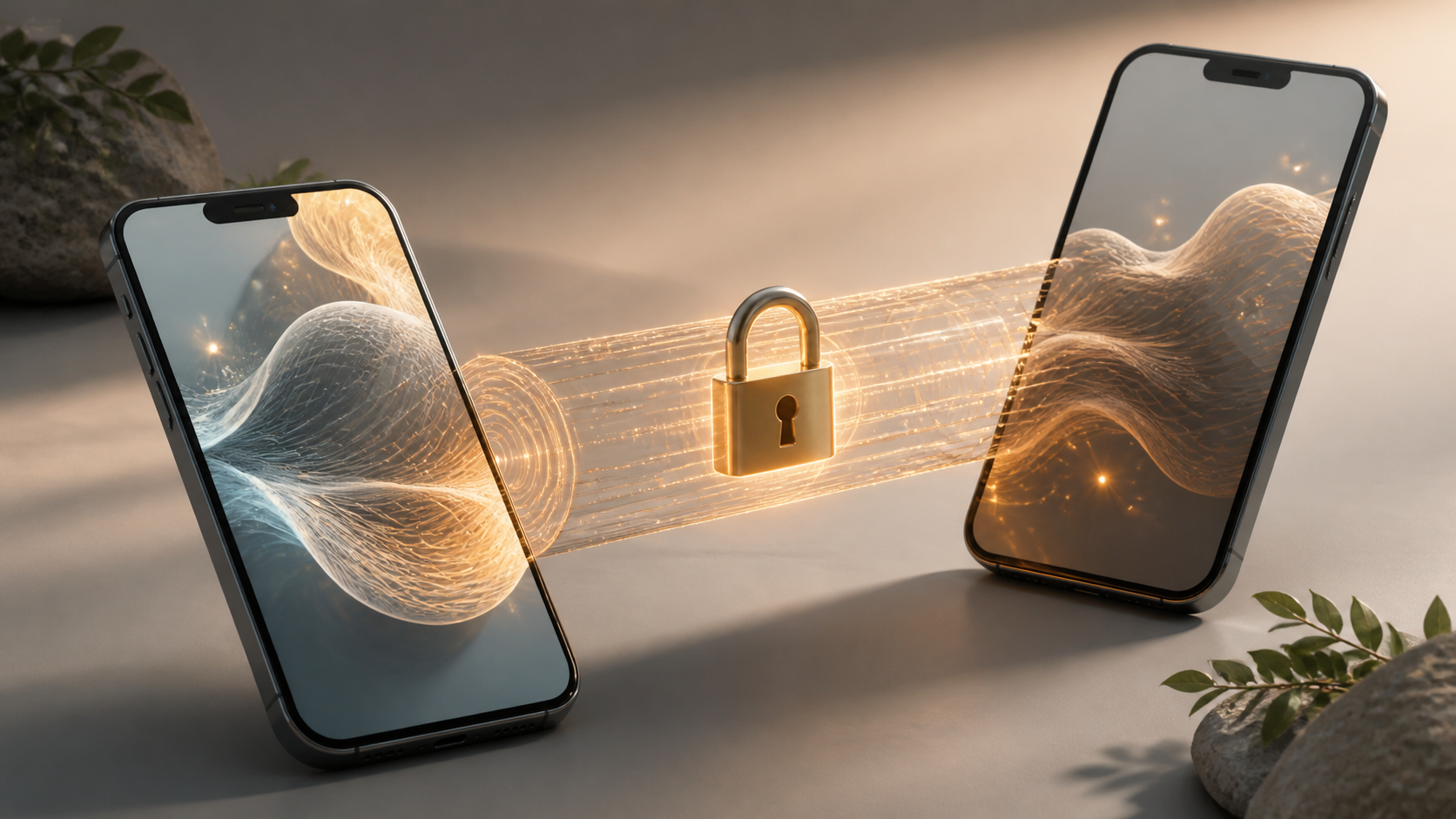
What makes an end to end encryption chat app secure
Understand what end to end encryption really protects, where its limits are, and which design choices matter in secure private messaging.
An end to end encryption chat app can be a strong privacy tool, but encryption by itself does not make a messenger secure. The messages may be unreadable in transit, yet the app can still expose who talked to whom, when they talked, which device they used, and how an account is recovered if something goes wrong.
That is why a good end to end encryption chat service needs more than strong cryptography. It should also limit metadata, protect account access, reduce what the provider can see, and make recovery difficult for an attacker to abuse. If you use a private chat for sensitive work, personal conversations, or business details, those surrounding protections matter just as much as the encrypted message body.
This is also where people often compare tools such as Signal and WhatsApp. Both offer encrypted private chats, but the overall security experience depends on how the app handles identity, backups, linking devices, notifications, and recovery. If you are evaluating an PigeonChat style e2e chat app pigeonchat.site or any other messenger, look at the full design, not only the encryption headline.
Encryption protects content, not everything around it
End to end encryption means only the sender and recipient should be able to read the message content. The service provider should not be able to inspect the text in the middle. That is important, but it is only one part of security.
An attacker who cannot read the message may still learn a great deal from the surrounding data. Metadata can reveal who is contacting whom, how often, from which network, and at what times. In many real situations, that context is sensitive even when the contents stay hidden. A secure chat app should treat metadata as something to reduce, not something to ignore.
This is why encrypted private chats are best understood as one layer in a larger system. A strong system tries to minimise what the app, the server, and any attacker can observe, even if they cannot decrypt the conversation itself.
Metadata protection is a major part of privacy
Metadata includes information such as contact lists, timestamps, IP addresses, device identifiers, push notification behaviour, and group membership. Even if the content is protected, a large amount can still be inferred from these signals.
A more secure private chat app will try to collect as little metadata as possible and keep what it must store for as short a time as possible. It may also use design choices that reduce the provider’s ability to build a detailed profile of your communication habits.
- Limit the data needed to create and use an account.
- Avoid exposing your contact graph more than necessary.
- Reduce message routing information where possible.
- Be careful with read receipts, presence indicators, and typing status.
- Use privacy-preserving notification handling.
These details can sound minor, but they add up. In many encrypted private chats, the provider knows far more than users expect because the app still needs to function, sync, and notify. Good security means asking how much can be hidden without breaking usability.
Account access and recovery can become the weak point
Many chat apps are strongest at message encryption and weakest at account recovery. If an attacker can take over your number, email, recovery code, or secondary device, the encrypted message history may not be the hardest part to compromise. The account entry point often is.
Recovery is especially important because convenience features are easy to abuse. SMS-based codes, easy re-linking, or broad device restore options can help genuine users, but they can also help an attacker who has stolen a SIM, gained email access, or persuaded support staff to reset an account.
A well-designed e2e chat app should make recovery predictable for the user and difficult for an impostor. That usually means stronger device binding, careful key management, and recovery flows that do not silently broaden access too much. For anyone comparing options such as Signal or WhatsApp, this is one of the most useful areas to review closely.
Device security matters as much as transport security
Even the best encryption cannot protect messages if the device itself is compromised. A malicious app, spyware, weak lock screen, or stolen unlocked phone can expose chats after they have been decrypted locally. The threat moves from the network to the endpoint.
That is why a secure end to end encryption chat app should support sensible device controls. These include strong session management, the ability to review and remove linked devices, clear alerts for new logins, and careful handling of message previews on the lock screen.
It is also worth thinking about local backups. If messages are copied into an unprotected cloud backup or a poorly secured export file, the encryption model changes. A chat app may still protect live transit well while leaving copies elsewhere far less protected.
What to look for in encrypted private chats
If you are assessing a chat app, think in terms of layers. The best apps try to make each layer harder to abuse, from sign-up to recovery to everyday use. No system is perfect, but some choices are clearly better than others.
- Clear key handling - the app should make it understandable who holds the decryption keys.
- Minimal metadata - less logging and less linkable information is better.
- Strong account recovery - recovery should not be an easy takeover path.
- Device management - linked devices should be visible and removable.
- Backup clarity - users should know whether messages are backed up, and where.
- Open security posture - clear documentation and regular updates help trust.
When people ask what makes an end to end encryption chat app secure, the answer is usually not a single feature. It is the combination of encryption, metadata restraint, account safeguards, and device-level protection. That is true whether you are using PigeonChat, Signal, WhatsApp, or another encrypted private chats service.
Security is also about defaults and user behaviour
The safest design can still be undermined by poor defaults. If read receipts are on by default, if contacts are overshared, or if message previews appear everywhere, the user may leak more than they intended without realising it.
Good defaults matter because most people never dig into advanced settings. A secure app should therefore make the private choice the easy choice. That includes simple controls, understandable warnings, and settings that do not require specialist knowledge to configure well.
For users, a few habits help a great deal. Keep your phone locked, update the app promptly, review linked devices, be cautious with backups, and think before joining large groups that reveal your number or profile. Encryption is the foundation, but day-to-day discipline still matters.
Frequently asked questions
Is end to end encryption enough on its own?
No. It protects the content of messages, but not necessarily metadata, account recovery, device compromise, or backups. A secure chat app needs to handle all of those areas carefully.
Why do people compare Signal and WhatsApp for private chat?
Because both support encrypted private chats, yet they differ in how they handle metadata, device linking, backups, and account controls. The comparison is useful because it shows that encryption alone does not tell the whole story.
What is the biggest hidden risk in a private chat app?
Often it is account takeover or metadata exposure rather than message decryption. If an attacker can access your account, linked device, or recovery path, the underlying encryption may not protect you.
In short, a secure end to end encryption chat app should do more than hide message content. It should reduce what the provider learns, protect your account from takeover, keep recovery tight, and make devices easy to manage. If you remember only one thing, let it be this: encryption is necessary, but it is not the whole security model.
Ready to try PigeonChat?

Writer & Editor at PigeonChat
Related Articles
What a fully compliant EU chat app should include
Why people search for a WhatsApp alternative without a number
What end to end encryption chat really protects
What a privacy first EU chat app should offer
Why chat folders matter for busy group conversations