
Why school chat groups need privacy and easy organization
School chat groups work better when privacy, moderation and folder-based organization make it easy to manage classes, clubs and parents.
School communication works best when it is easy to follow, hard to misuse, and respectful of everyone’s privacy. That sounds obvious, yet many schools still rely on a general messaging app and hope people will organise themselves. In practice, school chat groups quickly become noisy, fragmented, and difficult to supervise.
The issue is not that families, teachers, and pupils should not message each other. It is that schools need structured private chat, not just a free-for-all stream. A good setup should make it simple to separate classes, year groups, clubs, parent notices, and urgent updates without creating confusion or exposing information to the wrong people.
When schools treat messaging as a simple convenience, they often discover the hidden costs later: missed messages, duplicated threads, archived links no one can find, and accidental sharing of personal details or images. A privacy first chat app and a sensible system of chat folders can prevent much of that friction before it starts.
Why school chat groups need structure, not just volume
A school is not a single conversation. It is many overlapping conversations between staff, parents, and pupils, each with different permissions and expectations. A head of year may need to message a form group, while a club organiser needs to share timings with a smaller set of families. Without structure, all of this ends up in the same place.
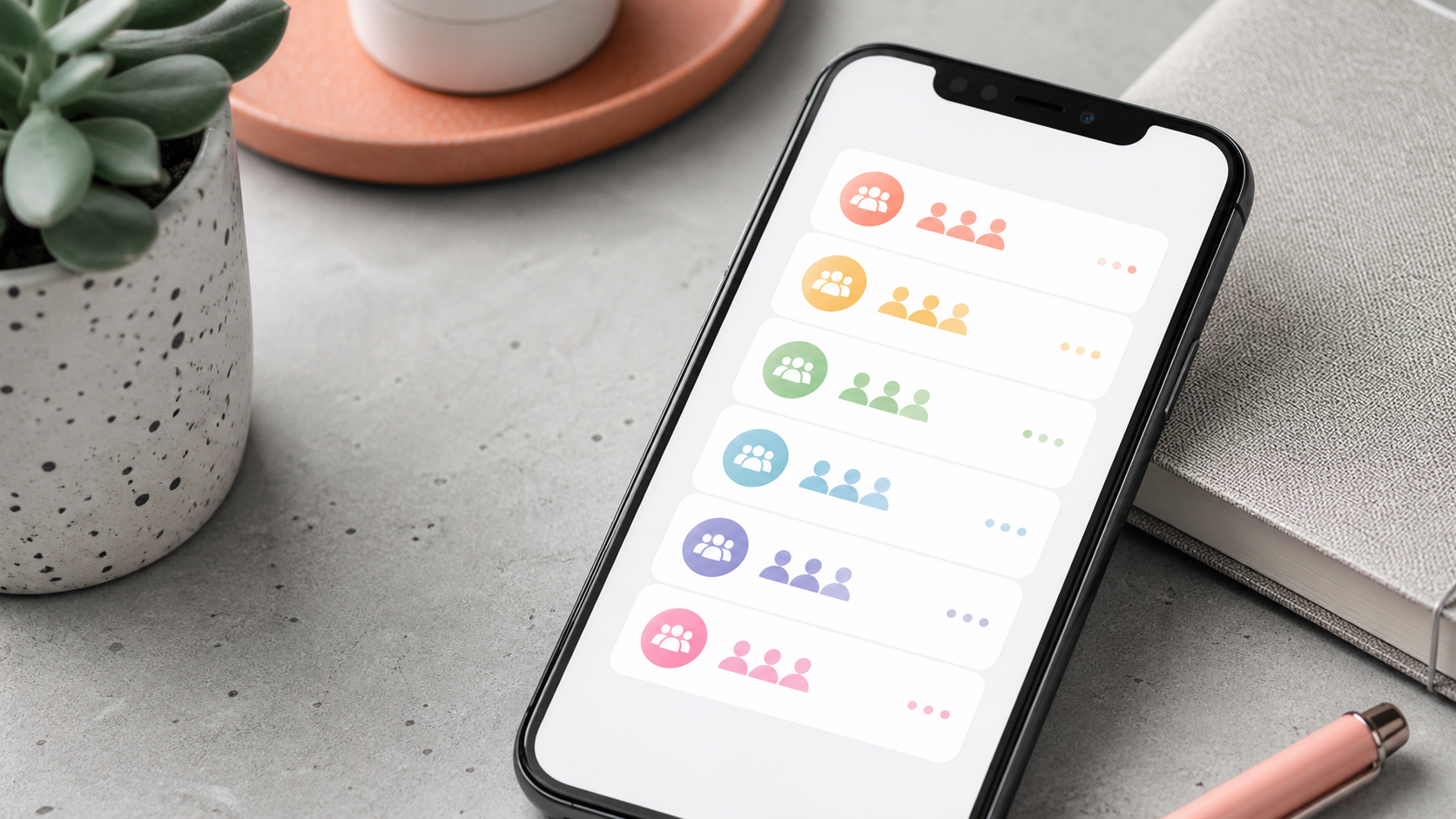
That is where chat folders become useful. They give people a way to separate active school chat groups from less urgent threads, so a parent can quickly find the class group, sports updates, or trip information without scrolling through unrelated messages. For staff, folders help reduce the chance that an important safeguarding or timetable note gets buried.
Organisation is not just about tidiness. It affects how reliably people respond. If a school messaging system feels cluttered, users start muting it, delaying replies, or missing messages altogether. The more cluttered the chat app, the more likely people are to treat it as background noise.
Privacy first chat app design matters in schools
Schools handle names, attendance details, emergency contacts, images of pupils, and sometimes sensitive matters that should never drift into public spaces. A privacy first chat app is designed with that reality in mind. It limits access to the right people, keeps conversations closed by default, and avoids the assumption that every group should be searchable or shareable.
That does not mean every message must be formal or restrictive. It means schools should be able to set boundaries cleanly. A year group chat should stay within that year group. A staff channel should not become visible to families by accident. A private browser chat can also be useful when parents, supply staff, or volunteers need access without installing another permanent app on a personal device.
The practical benefit is trust. When people know the environment is private and managed, they are more likely to use it properly. They ask questions, share updates, and follow through, instead of avoiding the system because they are unsure who else can see it.
How chat folders reduce confusion for staff and parents
Good chat folders are one of the simplest ways to improve day-to-day school communication. They let users sort conversations by class, role, topic, or urgency, rather than leaving everything in one long list. That helps the teacher who needs to check a room change, the parent who wants the homework thread, and the administrator who is tracking club notices.
For staff, folders can mirror how the school already works. For example:
- Year group updates
- Class or tutor group messages
- Safeguarding or staff-only channels
- Trips, clubs, and events
- General announcements
For parents, the value is equally clear. They do not want to search through a jumble of chat groups to find whether there is a school closure update, a consent form reminder, or an after-school timing change. When information sits in the right folder, it is easier to find and easier to trust.
Tools like PigeonChat are useful here because they make the structure feel natural rather than forced. That matters in a school setting, where people will only keep using a system if it is quick enough for a busy morning and clear enough for occasional users.
Image sharing needs extra care in school communication
Image sharing can be helpful in school chat groups, but it also needs careful controls. A teacher may want to send a photo of a worksheet, a trip leader may want to share an arrival update, and a coach may need to confirm equipment or uniform. At the same time, images can reveal more than intended, including faces, locations, documents on desks, or other personal details.
This is why schools should choose systems where image sharing is intentional, contained, and easy to review. It should be obvious who can see the image, how long it remains available, and whether it can be forwarded elsewhere. In a general messaging app, those questions are often overlooked until something goes wrong.
A sensible policy is to keep image sharing tied to a specific purpose. If the message is about learning, logistics, or supervision, the image should support that purpose and nothing more. If it is not necessary, it is better not to send it. That simple habit reduces risk and keeps the chat clearer for everyone.
Why a private browser chat can make access easier
One reason schools struggle with messaging tools is that not everyone wants, or is able, to install another app. Staff may use shared devices. Visitors and volunteers may need temporary access. Parents may prefer not to add yet another app to their phone. A private browser chat can lower that barrier by allowing secure access from a web browser.
Browser access is especially helpful in schools where devices vary. A secure browser-based option can work on office computers, home laptops, and shared tablets without making the system harder to manage. It also reduces the frustration of remembering multiple logins or hunting for app updates at the wrong moment.
That flexibility should never come at the expense of privacy. The best approach is still a controlled, private environment with clear permissions. The browser is just the access point. The structure, visibility, and safeguards are what make the system suitable for school use.
What good school chat groups should include
If a school is reviewing its messaging setup, the most useful question is not whether a tool can send messages. It is whether it helps people communicate clearly, privately, and with as little friction as possible. A strong system should support the daily reality of school life, not force everyone to adapt to a generic app.
At minimum, school chat groups should make it easy to manage who is included, where conversations are stored, and how urgent messages are separated from routine chatter. The right tool should also support sensible moderation and simple navigation.
- Closed groups with controlled membership
- Clear chat folders for different audiences
- Privacy first chat app settings by default
- Safe, purposeful image sharing
- Optional private browser chat access for flexibility
- Simple archiving so old information does not get lost
When these basics are in place, school communication becomes calmer and more reliable. Parents find what they need. Staff spend less time repeating themselves. And pupils, where appropriate, get a clearer sense that the messaging space has boundaries.
Frequently asked questions
Why are general messaging apps often a poor fit for schools?
They are usually designed for broad social use, not for the layered needs of a school. Schools need controlled access, clear separation between groups, and better handling of sensitive information. A general app can work for casual coordination, but it often becomes messy once many different conversations overlap.
Do chat folders really make a difference?
Yes. Chat folders help users sort important school chat groups from routine or low-priority threads. That makes messages easier to find, reduces clutter, and lowers the chance that families or staff miss a key update. In a busy school, that kind of clarity matters.
Is image sharing safe for school communication?
It can be, but only with clear rules and the right controls. Schools should treat image sharing as something purposeful rather than casual. Images should be shared only where needed, with access limited to the right people, and with care taken to avoid exposing more information than intended.
Schools do not need more noise in their messaging. They need private, organised communication that reflects how school life actually works. Whether you are choosing a new platform or improving your current process, the goal is the same: keep conversations secure, easy to follow, and simple enough that people will actually use them. If that is the standard, a structured system like PigeonChat starts to look less like a nice-to-have and more like the sensible baseline.
Ready to try PigeonChat?

Writer & Editor at PigeonChat
Related Articles

How chat groups help schools and universities stay organized

How chat groups support schools and universities

Why chat folders help busy groups stay organized

How chat groups support schools and universities
Why chat folders matter for busy group conversations