

Why school chat groups need privacy and easy tools
School chat groups work better when privacy, simple group tools, and quick access help students and parents stay organized safely.
School communication needs to be clear, private, and easy to manage. That sounds simple, but anyone who has watched a class group drift into noise knows how quickly messages can get buried, forwarded, or mixed with unrelated chatter. When parents, teachers, and students all need the same space, the tool matters just as much as the message.
This is why school chat groups should be designed around privacy and structure, not just speed. A good group chat app helps people share reminders, deadlines, and updates without turning every conversation into a social feed. It should feel calm, predictable, and easy to use for busy staff and families.
For schools, the goal is not more messaging. It is better messaging. A private chat app with sensible controls can reduce confusion, protect personal information, and make it much easier for the right people to see the right updates at the right time.
Why school chat groups need stronger privacy
Schools handle information that should not be spread casually. Timetables, medical notes, safeguarding concerns, contact details, and internal plans all need careful handling. If messages sit in a public-style feed or a loosely managed group, it becomes easier for information to be copied, forwarded, or seen by the wrong person.
Privacy also supports trust. Parents are more likely to engage when they know a group chat is limited to the relevant class, year, or team. Teachers and support staff can also communicate more freely when they are not worrying about every message ending up in the wrong place. In practice, a private chat app is less about secrecy and more about keeping communication appropriately contained.
There is also a practical reason to prefer privacy. School communities are full of overlapping conversations, and not every update needs a large audience. The smaller and better defined the space, the easier it is to keep discussions relevant and respectful.
Why easy tools matter more than feature-heavy ones
Many communication tools are built to do everything. That can be a problem in a school setting, where teachers do not have time to learn complicated settings or hunt through menus to find a simple announcement. An effective group chat app should be obvious at a glance, with minimal friction for posting, reading, and replying.
Ease of use matters for parents too. Some will check messages on the move, others only once in the evening, and some may not be especially confident with technology. If the system is awkward, people will miss important updates or stop using it altogether. That is when messages end up scattered across emails, text messages, and unofficial threads.
A good rule is that the best tool should disappear into the background. Staff should be able to create a group, share an update, and move on. Families should be able to find the information they need without learning a new communication style every term.
How chat folders help schools stay organised
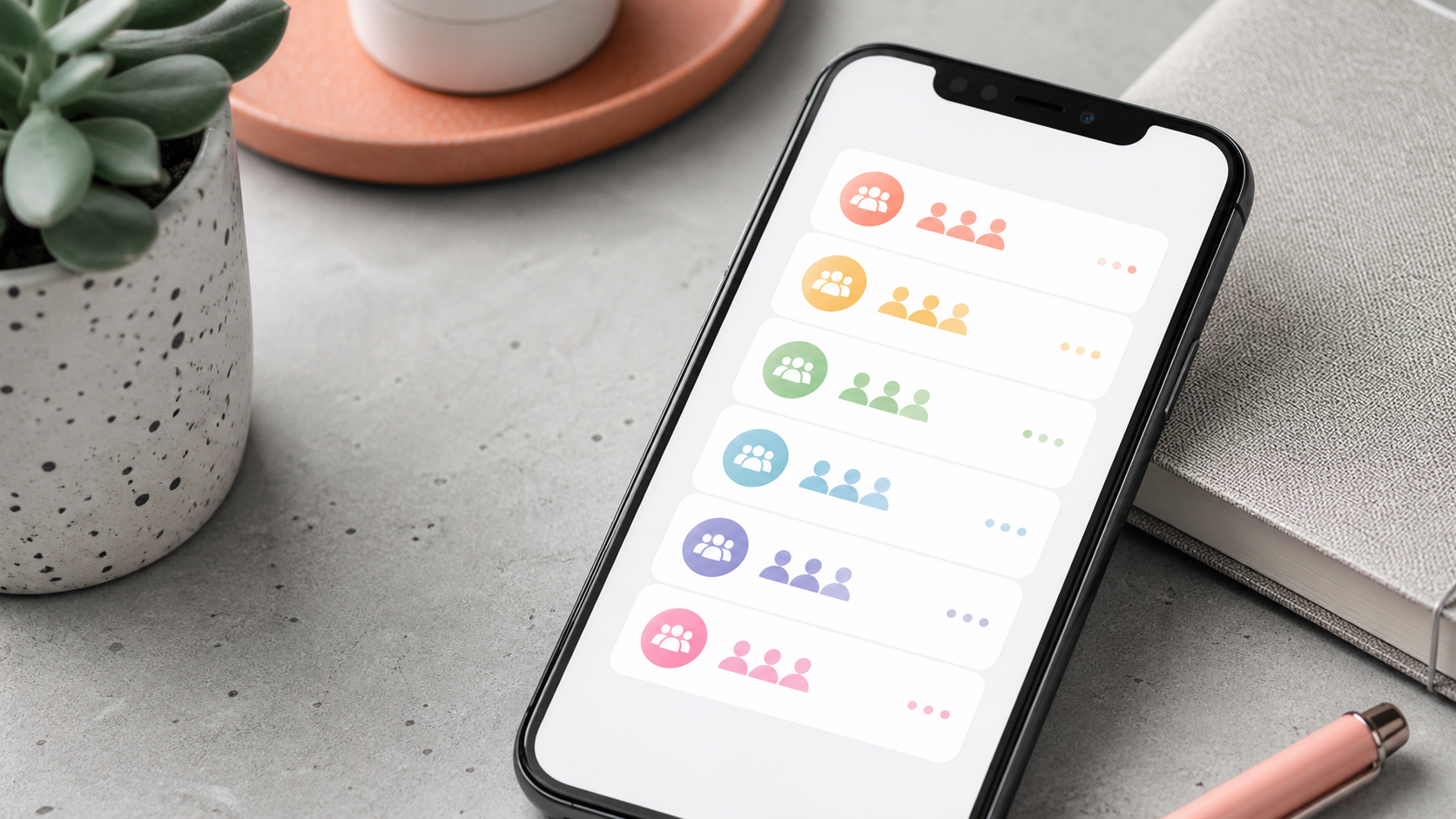
One of the simplest ways to reduce chaos is to use chat folders. When school communication is grouped by class, club, year, or topic, people do not have to sift through unrelated messages. This is especially useful for staff who are part of several school chat groups at once.
Chat folders also make boundaries clearer. A teacher can keep a class group separate from a staff planning group, while a parent can keep one child’s activities apart from another’s. That sort of organisation reduces mistakes and helps people stay focused on what matters.
Folders do not solve every problem, but they do support a calmer workflow. When used alongside clear naming conventions and simple rules for participation, they make a private chat app much easier to live with day to day.
- Use one folder for class or year-group updates
- Keep staff coordination separate from parent communication
- Group clubs, trips, and after-school activities by topic
- Archive inactive groups so they do not clutter the main view
- Give each folder a clear name that matches how people think
What makes a school-friendly group chat app
A school-friendly group chat app should be easy to set up, simple to moderate, and clear in its structure. It should support the reality of school life, where one message may need to reach a small team quickly, but not the entire institution. It should also make it easy to see who is included in each conversation.
Good management features matter because schools need consistency. If every group has different rules, different naming patterns, and different access settings, communication becomes harder to trust. The better approach is to standardise the basics so staff know what to expect every time.
Tools like PigeonChat are built with that sort of clarity in mind. The aim is not to replace every channel a school uses, but to provide a more controlled place for group communication than a social feed usually can.
Reducing noise without losing speed
Schools need quick communication, but speed should not come at the cost of clarity. Social-style feeds encourage constant posting, reacting, and scrolling, which can make important school updates harder to spot. In contrast, well-managed school chat groups can keep urgent information visible and unrelated conversation to a minimum.
This is especially important for time-sensitive messages such as trip reminders, room changes, weather updates, or short notice schedule changes. A quiet group with a clear purpose is often more effective than a busy feed that tries to be everything at once.
If you are evaluating a private chat app, look for features that support calm communication rather than attention-seeking behaviour. Simplicity, readable message history, and straightforward moderation are more valuable in a school context than flashy extras.
How PigeonChat fits school communication needs
Schools do not necessarily need a brand new communication culture. They need a better container for the one they already have. That is where a focused tool like PigeonChat can be useful. It offers a more contained way to organise conversations than an open-ended social platform.
When communication is kept private and well structured, teachers can spend less time repeating themselves and parents can spend less time searching for what they missed. The result is not just convenience, but a lower chance of confusion at the point where it matters most.
PigeonChat is one example of how a group chat app can be kept practical rather than noisy. Even if a school uses other tools as well, the principle is the same: keep sensitive conversations private, make groups easy to manage, and use structure to support real-life communication.
Frequently asked questions
Why are private chat groups better for schools than public social feeds?
Private chat groups help keep school communication limited to the right audience. That means fewer accidental shares, less background noise, and a better chance of keeping personal or sensitive details appropriately contained. Social feeds are designed for broad visibility, which is rarely ideal for school updates.
What should schools look for in a group chat app?
Look for clear privacy controls, simple group management, readable message history, and an interface that staff and parents can understand quickly. Chat folders can also help organise different classes, teams, and topics so people are not overwhelmed by unrelated messages.
Can a private chat app really reduce communication chaos?
Yes, if it is used consistently. The app itself will not solve every issue, but it can make a big difference by keeping conversations separate, limiting who can see each group, and making it easier to find the right information later. That is often enough to turn scattered communication into something much more manageable.
School communication works best when it is private, well organised, and easy for ordinary people to use. The right tools do not need to be complicated. They just need to help schools share the right message with the right group, without adding noise, confusion, or unnecessary risk.
Ready to try PigeonChat?

Writer & Editor at PigeonChat
Related Articles

How chat groups help schools and universities stay organized

How chat groups support schools and universities

Why chat folders help busy groups stay organized

How chat groups support schools and universities
Why chat folders matter for busy group conversations