

What chat features matter most in private apps
Private chat apps win on practical features. See which tools people ask for most, from folders and groups to media sharing and stickers.
When people choose private chat apps, they often start with a security promise. That matters, of course, but in day-to-day use it is usually the practical details that decide whether an app feels worth keeping. The best private apps are the ones people can open quickly, organise messages sensibly, and use without friction.
Good chat features do not need to be flashy. They need to help you manage real conversations with family, friends, colleagues or a small community. If an app is secure but awkward, people drift back to whatever is easier. That is why usefulness is just as important as privacy when comparing private chat apps.
This guide looks at the chat features that matter most in private apps, with a focus on everyday use rather than marketing claims. If you are evaluating options, including PigeonChat and other private messengers, these are the features that usually make the biggest difference.
Clear chat features that reduce friction
The first thing to look for is how quickly you can start and continue conversations. A private app should not make basic tasks feel heavy. Sending a message, finding a conversation, muting a noisy thread, or checking unread replies should all be straightforward.
Simple interfaces are especially important in private chat apps because people tend to use them for trusted conversations. If you are sharing plans, discussing work, or keeping in touch with a group, you want the app to stay out of the way. Clean navigation and obvious controls often matter more than extra settings hidden behind menus.
Useful chat features also include message search, pinned conversations, read indicators where appropriate, and sensible notifications. None of these are dramatic on their own, but together they determine whether the app saves time or creates it.
Chat groups that are easy to manage
For many people, chat groups are the heart of a private app. A good group feature should make it easy to add people, see who is included, and understand what the conversation is for. Group chats become messy quickly if there is no structure.
Look for ways to name groups clearly, control membership, and separate active conversations from dormant ones. In private apps, this matters because users often run small circles for friends, family, clubs, projects or local communities. The ability to manage those spaces well can be more useful than advanced security language.
Moderation tools also help. Even in a private setting, you may want options for muting members, limiting who can post, or removing people cleanly. Strong group design makes private chat feel organised rather than chaotic.
- Easy invitation and removal of members
- Clear group names and descriptions
- Admin controls for small communities
- Mute, archive and notification options
- Simple ways to find older messages
Chat folders and message organisation
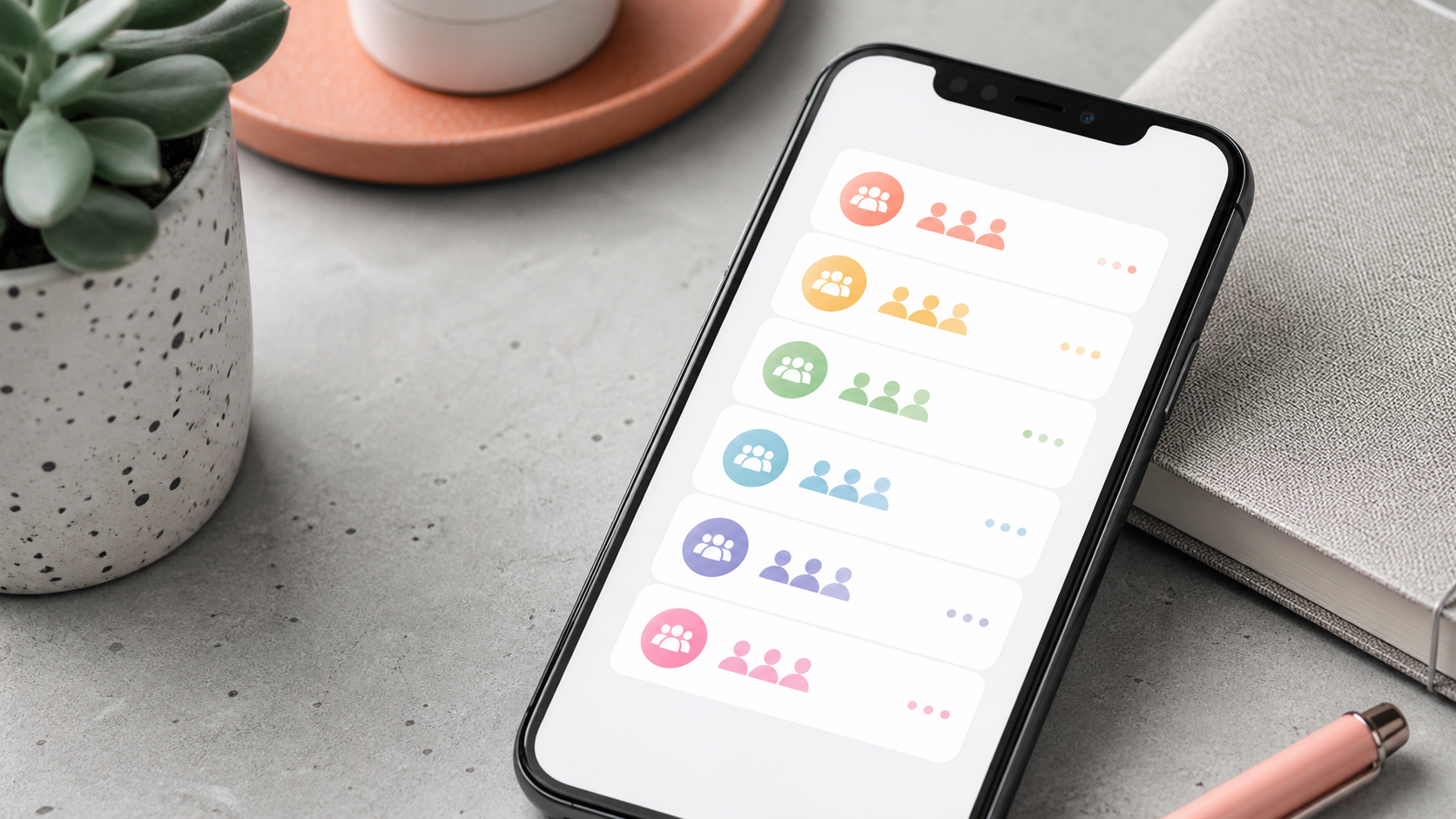
As soon as a chat app becomes part of daily life, organisation starts to matter. Chat folders help people separate work, family, announcements and casual conversations. That can make a private app feel much more manageable, especially if you belong to several groups or receive messages across different contexts.
Folders are useful because they reduce mental clutter. Instead of scanning one long list, you can jump to the conversations that matter most right now. Some people prefer labels, archive views or favourites. The exact design matters less than whether the app gives you a reliable way to sort conversations.
If you test a private app, pay attention to whether folders are easy to create and maintain. Good organisation should not require constant manual effort. The best systems make it simple to keep the inbox tidy without thinking about it every day.
Image sharing and media handling
Image sharing is one of the most revealing chat features in private apps because it shows how well the app handles everyday communication. People share screenshots, receipts, photos, event posters, diagrams and quick updates. If image sharing is slow or awkward, the app feels incomplete.
It is worth checking whether photos send at a reasonable quality, whether previews are clear, and whether the app handles multiple images smoothly. Some apps also make it easy to caption images, forward them carefully, or keep media grouped within a conversation. Those details help people understand context without extra back-and-forth.
Private apps should also make media handling feel safe and deliberate. You may want controls over auto-download, saving to device, or deleting shared images later. Practical image sharing is not only about convenience. It is about giving users confidence that media behaves the way they expect.
Search, history and everyday retrieval
One of the most underrated chat features is search. In real life, people often return to a message to find an address, a link, an image or a decision made last week. If search is weak, the app becomes harder to trust for important conversations.
Good search should be fast, broad enough to find relevant messages, and easy to use inside a conversation or across the whole app. History matters too. A private chat app that keeps conversations accessible, while still giving users control over what is stored, tends to feel more practical than one that hides old messages behind extra steps.
Archiving can help here as well. When archive tools are sensible, people can keep the main view tidy without losing access to useful information. That is especially important for private chat groups where conversations may pause and restart over time.
Privacy controls that support real use
Security features should be present, but they work best when they support daily habits rather than dominate them. Private apps should make it easy to manage who can contact you, how notifications appear, and what content is visible on screen previews. These settings help people use chat comfortably in public, at work or at home.
It is also helpful when the app makes account and device management clear. People want to know where their conversations are, which devices are signed in, and how to leave a group or delete a conversation. Clarity builds trust more reliably than vague assurances.
When comparing apps, do not assume that the most technical-sounding privacy feature is the most valuable. Often, the features that matter most are the ones that let you use the app naturally without worrying about accidental exposure or confusing defaults. PigeonChat and similar services tend to stand out when they balance privacy with straightforward controls.
Frequently asked questions
What chat features should I prioritise first?
Start with the basics: easy messaging, reliable notifications, search, and simple group management. If those are clumsy, the app will feel frustrating no matter how strong its privacy claims are. After that, look at chat folders, media handling and device controls.
Are chat folders really necessary in private apps?
They are not essential for everyone, but they help a great deal once you use the app for more than one context. Chat folders make it easier to separate family, work and community conversations, which keeps private messaging organised and usable over time.
Is image sharing safe in private chat apps?
It can be, but safety depends on both the app design and your own habits. Look for clear controls over downloads, previews and deletion, and think carefully before sending sensitive images. A private app should make image sharing convenient without making it careless.
In the end, the best private chat apps are the ones people keep using because they fit real life. Security matters, but everyday usefulness decides whether a chat app becomes part of your routine or gets abandoned after a week. If you want a private messenger to feel genuinely helpful, focus on the features that make conversations easier, clearer and less cluttered.
Ready to try PigeonChat?

Writer & Editor at PigeonChat
Related Articles

Why people want a best chat app UAE option

PigeonChat.site: what the private browser app is for

PigeonChat.site explained for private browser messaging

What chat features users expect in modern private apps
Why chat folders matter for busy group conversations