
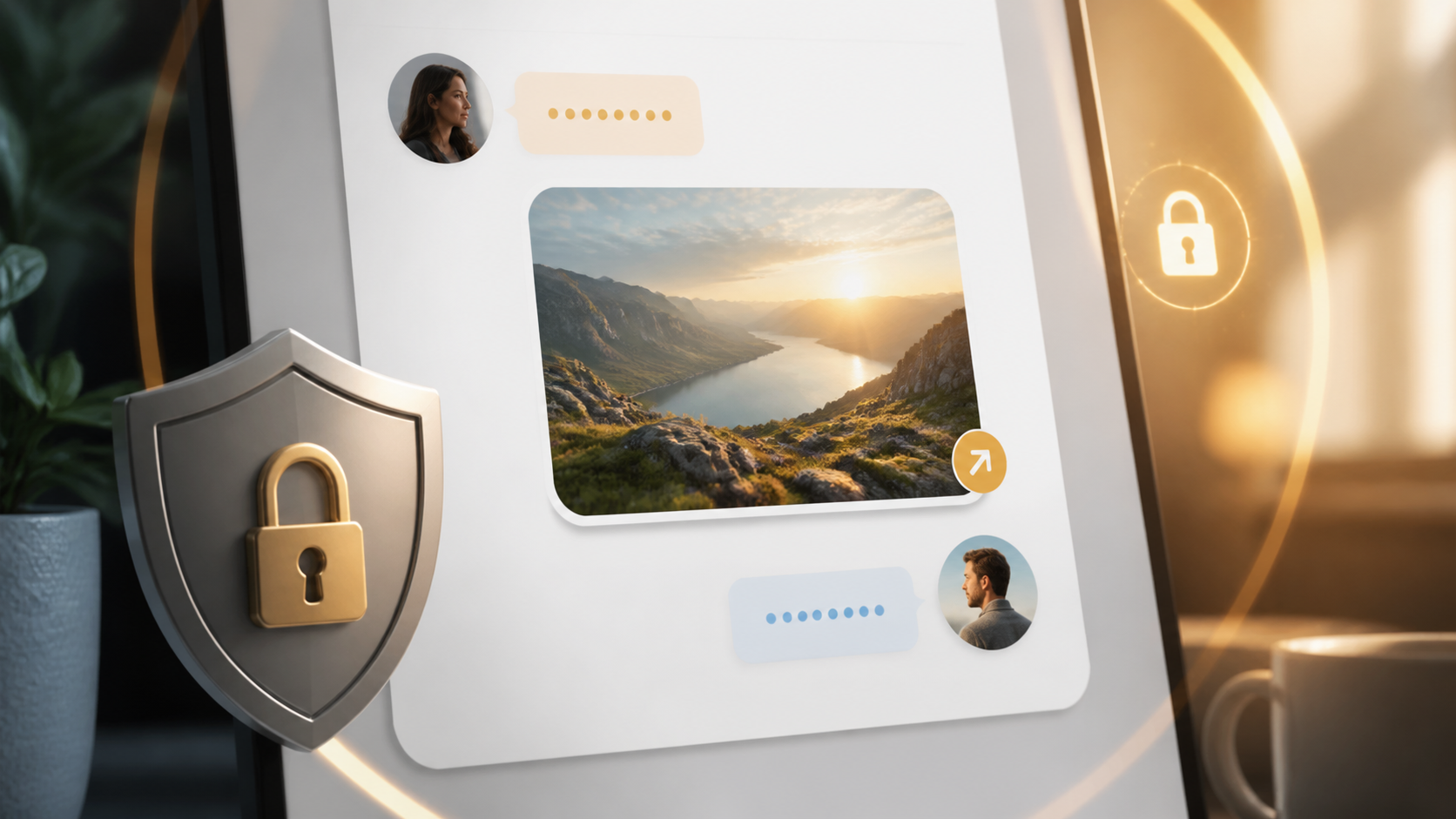
How image sharing works in private chat apps
See how image sharing works in private chat apps, what privacy risks to check, and how browser-based tools can keep sharing simple.
Sending a photo in a chat app feels simple. Tap the attachment button, pick an image, send it, and move on. But behind that quick action there is usually a chain of storage, processing and delivery choices that affect who can see the file, how long it stays available, and what happens if the app or server is compromised.
That is why image sharing is worth understanding before you treat it like ordinary messaging. In private chat apps, the privacy question is not just whether the text is encrypted. It is also whether the image itself is encrypted, where it is stored, and whether thumbnails, previews or metadata leak more than you intended.
If you are comparing options, it helps to separate convenience from control. Some services make sharing effortless by handling uploads in the cloud. Others, including PigeonChat, focus on keeping the mechanics of secure file sharing as minimal and predictable as possible. The right choice depends on what you are protecting and from whom.
What actually happens when you send an image
In most chat apps, the image does not travel directly from your device to the other person in one simple step. It is often uploaded to a server first, then the recipient’s app fetches it later. Even when message text is end-to-end encrypted, the image may be handled differently, especially if the app generates previews, compresses files, or stores media for later access.
That matters because each extra step creates another place where data can be retained or exposed. A server might keep the original image, a resized version, and a thumbnail. Your device might also cache copies locally. If the service uses cloud links, there may be a period where the file exists outside the chat itself.
When you are evaluating image sharing, ask a practical question: is the app moving a file, or is it creating a shareable object in its own system? The second approach is often smoother, but it can widen the privacy surface area.
Encrypted image sharing and what it does not solve
Encrypted image sharing is a strong starting point, but it does not automatically mean perfect privacy. End-to-end encryption can protect the contents in transit and at rest on the provider’s servers, but it does not always cover everything around the image. File names, size, timestamps, recipient identifiers and device metadata may still be visible in some form depending on the app design.
It is also important to think about what the recipient can do once the image arrives. Encryption does not stop screenshots, downloads or forwarding on another device. If you send a sensitive photo, the technical protections on the wire are only one part of the story. Trust in the person receiving it still matters.
Another tradeoff is convenience. Some apps reduce image quality, strip metadata or generate previews to make sharing faster. That can be helpful, but if you need a faithful original file, or if you want to keep location data out of the image, you should check the app’s handling of media before sending anything sensitive.
What to check before sharing a photo
Before you send an image through a private chat app, it helps to look for a few concrete features and policies. These are the details that usually determine whether a service feels private in practice rather than only in marketing.
- End-to-end encryption for media - check whether images are protected the same way as text messages.
- Temporary storage rules - see how long the service keeps uploads on its servers.
- Metadata handling - find out whether location data and camera details are removed.
- Preview behaviour - understand whether thumbnails are generated and where they are stored.
- Link sharing controls - confirm whether files can be shared by URL and whether those links expire.
- Device sync - check whether media is copied to every linked device by default.
These checks are useful even if you never plan to use an app for anything highly sensitive. Good habits around media sharing also reduce accidental oversharing. A casual holiday photo can still reveal location, routines or other details you did not mean to broadcast.
Private chat apps versus secure file sharing
People often use chat apps as a shortcut for file transfer, but chat and secure file sharing are not always the same thing. Chat is designed for conversation. File sharing is designed for moving documents and media with clearer controls around access, retention and expiry.
That difference matters when an image is important, sensitive or reusable. A private message thread may be easy to manage, but it can make files harder to audit later. Secure file sharing can offer better control over download limits, expiry dates or access revocation, though the tradeoff is usually a less immediate experience.
If the image is a receipt, an identity document, a work mock-up or anything you may need again, a dedicated sharing flow can be safer than dropping it into a casual chat. If it is just a quick snapshot for a friend, a good private messenger may be enough. The key is matching the tool to the risk.
Common privacy tradeoffs to watch for
There is no perfect system, only choices that favour some risks over others. In practice, most private chat apps balance speed, storage costs and usability against stronger privacy. Knowing the common tradeoffs makes it easier to spot where your comfort level ends.
Here are some of the most common ones:
- Convenience versus retention - easier re-downloads often mean longer server storage.
- Quality versus privacy - automatic compression can reduce file size but may alter the original image.
- Searchability versus exposure - if the app indexes media, it may need to process more of your content.
- Multi-device access versus control - syncing to several devices improves usability but increases the number of copies.
- Rich previews versus metadata leakage - thumbnails and previews can reveal more than the file itself.
One useful habit is to assume that every extra feature creates one more place for a mistake. If an app offers automatic cloud backups, public links, device syncing and read receipts all at once, ask whether you really need all of them for the image you are about to send.
How PigeonChat approaches media privacy
Different apps make different design choices, and that is where users need to pay attention. PigeonChat is built for people who want a calmer, simpler messaging experience, with fewer surprises around how data moves through the system. That does not remove all risk, but it can make the privacy model easier to reason about.
When you compare platforms, it is worth looking for clear answers rather than vague promises. Does the app explain how media is handled? Can you tell whether an image is stored, forwarded or cached? If a service cannot answer those questions plainly, that is a signal to be cautious. For a closer look, you can start at PigeonChat and read the product details for yourself.
The broader lesson is simple: the best private chat apps are the ones that help you understand the path your image takes. When the path is shorter and clearer, the privacy tradeoffs are easier to manage.
Frequently asked questions
Is image sharing in chat apps ever truly private?
It can be private in a practical sense, but only if the app protects the image, limits retention and avoids unnecessary copies. Even then, privacy is not absolute because the recipient can still save or forward the image.
Does end-to-end encryption protect photos as well as text?
Sometimes yes, sometimes not in the same way. You need to check whether the app applies encryption to media, not just messages. Also remember that encryption does not hide everything around the file, such as metadata or the fact that a transfer happened.
What should I do before sending a sensitive image?
Check whether the app uses encrypted image sharing, whether metadata is stripped, and whether the file will stay on a server after delivery. If the image is especially sensitive, consider secure file sharing with expiry controls instead of a normal chat thread.
Image sharing does not have to be complicated, but it should never be treated as risk-free. A little attention to storage, encryption and device access goes a long way, whether you use a mainstream messenger or a more privacy-minded service. The best habit is to pause for a moment before you send and ask what copies of that image will exist afterwards.
Ready to try PigeonChat?

Writer & Editor at PigeonChat
Related Articles
Why chat folders matter for busy group conversations
How image sharing works in private chat apps

What chat features users expect in modern private apps
Why chat folders help busy groups stay organized

How chat groups help schools and universities stay organized