
Instant Messaging Security Risks You Need to Know About in 2026
From phishing links to metadata harvesting, here are the biggest security risks in instant messaging — and how to protect yourself from live chat security issues.
Instant messaging is the backbone of modern communication. We use it for everything — personal conversations, work coordination, financial transactions, medical discussions, even legal advice. But how often do we stop to think about the security risks hiding in our chat apps?
The truth is, instant messaging security risks are real, varied, and evolving. From phishing attacks to metadata harvesting to live chat security issues in customer support tools, the threats are not hypothetical — they're happening right now.
The Top Instant Messaging Security Risks in 2026
1. Phishing and Social Engineering via Chat
Phishing has moved from email to messaging. Attackers send malicious links disguised as legitimate content — a fake bank notification, a fraudulent delivery update, a "your account has been compromised" scare. In group chats with hundreds of members, a single phishing link can compromise dozens of people.
How to protect yourself: Never click links from unknown senders. Verify URLs before tapping. Use a messenger that previews links safely without loading malicious content.
2. Lack of End-to-End Encryption
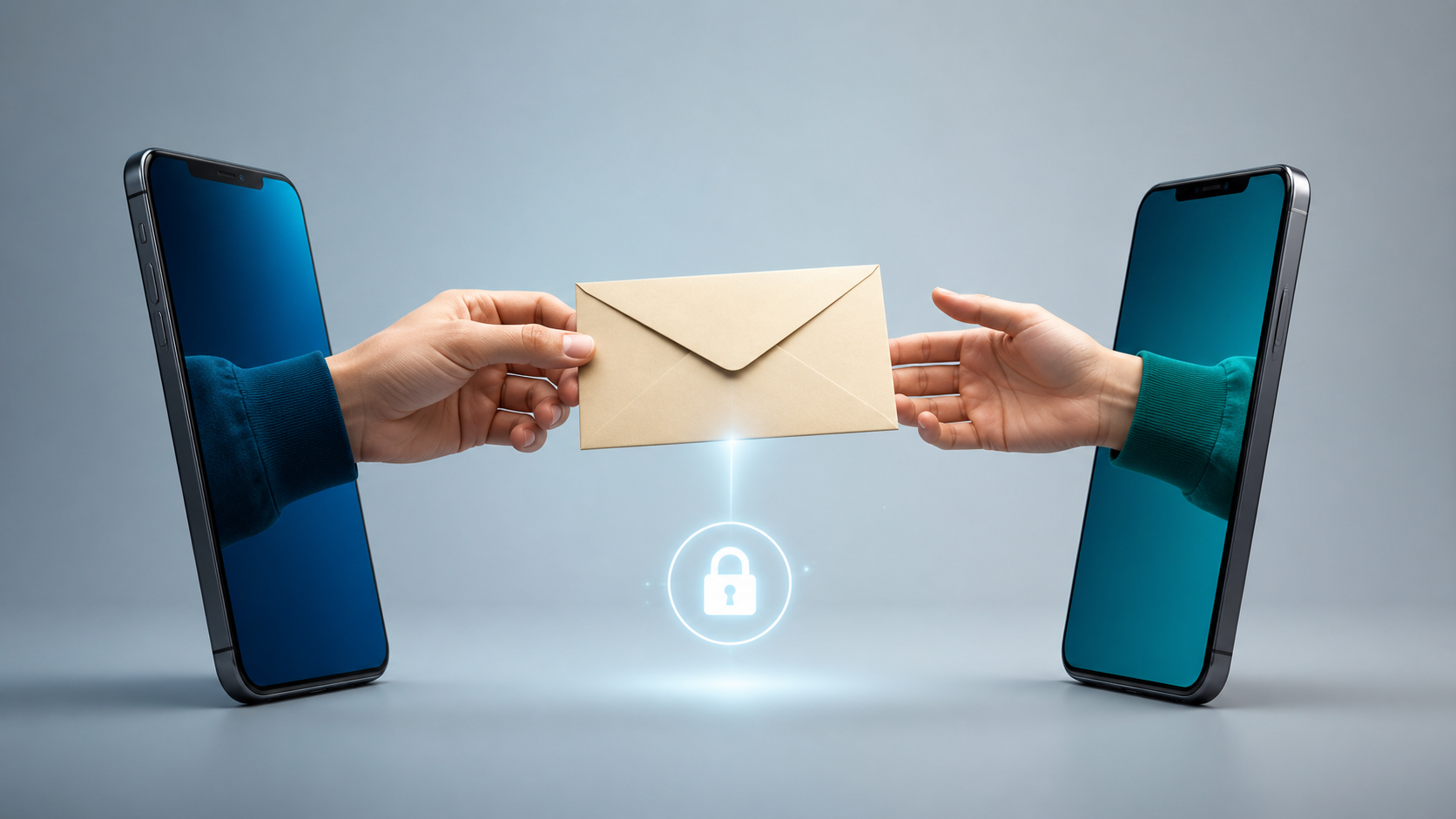
Many messaging apps — including Telegram's regular chats, Facebook Messenger's default mode, and most live chat widgets — do NOT use end-to-end encryption by default. This means the server (and anyone who compromises it) can read your messages.
How to protect yourself: Use a messenger with E2EE enabled by default, not as an opt-in feature.
3. Metadata Harvesting
Even when messages are encrypted, the metadata — who you talk to, when, how often, your IP address, your device — can reveal almost as much about you as the content itself. Companies like Meta harvest this metadata across WhatsApp, Instagram, and Facebook to build advertising profiles.
4. Unencrypted Cloud Backups
WhatsApp and iMessage can back up your messages to Google Drive or iCloud. These backups are often NOT encrypted by default, meaning your "end-to-end encrypted" messages are sitting in plaintext on a cloud server that can be subpoenaed.
5. Man-in-the-Middle (MITM) Attacks
On unsecured Wi-Fi networks (coffee shops, airports, hotels), attackers can intercept unencrypted messages between your device and the server. Even with TLS, sophisticated MITM attacks using fake certificates are possible.
6. Account Takeover via SIM Swapping
If your messenger relies on SMS-based verification (many do), a SIM swap attack can give an attacker access to your account. They convince your carrier to transfer your number to their SIM, receive your verification code, and take over your account.
7. Live Chat Security Issues
Customer support live chat widgets on websites often have significant security vulnerabilities. Many transmit conversations in plaintext, store chat logs indefinitely, don't authenticate the support agent's identity, and are vulnerable to session hijacking. If you share sensitive information (account numbers, addresses, personal details) via a website's live chat, that data may not be as protected as you assume.
8. Malware and Spyware
State-sponsored spyware like Pegasus can compromise your device at the operating system level, rendering even the strongest encryption useless. While this primarily targets journalists, activists, and political figures, commercial spyware is becoming more accessible.
How to Minimise Instant Messaging Risks
- Use a genuinely secure messenger with E2EE by default — like Signal or PigeonChat.
- Enable two-factor authentication (not SMS-based — use an authenticator app).
- Disable cloud backups or ensure they're encrypted.
- Verify contacts using safety numbers or QR codes when available.
- Keep your app and OS updated — security patches fix known vulnerabilities.
- Be sceptical of links — even from contacts, whose accounts may be compromised.
- Avoid sharing sensitive data in live chat widgets on websites — call instead if possible.
- Use disappearing messages for sensitive conversations to limit your exposure window.
The convenience of instant messaging shouldn't come at the cost of your security. Choose your tools wisely, stay vigilant, and prioritise apps that are built to protect you rather than monetise you. PigeonChat is designed with these risks in mind — private, secure, and transparent.

Writer & Editor at PigeonChat
Related Articles
What makes an end to end encryption chat app secure
What a fully compliant EU chat app should include
Why people search for a WhatsApp alternative without a number
What end to end encryption chat really protects
Why chat folders matter for busy group conversations