

Why chat folders help busy groups stay organized
Learn how chat folders reduce clutter for school, university, and community chats by separating what needs attention now.
Busy chat groups can become hard to follow very quickly. New messages arrive, side conversations branch off, and important updates get buried under everything else. That is true whether you are managing a work team, a class group, or a community chat with lots of moving parts.
One of the simplest ways to keep things readable is to use chat folders. They do not make the conversation quieter in the way muting does. Instead, they help you separate conversations so you can find what matters without losing sight of what is active. For many people, that is the difference between a useful chat app and a stressful one.
If you use PigeonChat or any similar tool, folders are worth understanding even if you never set them up yourself. They are a basic organising habit that can make busy chat groups feel much more manageable.
What chat folders actually do
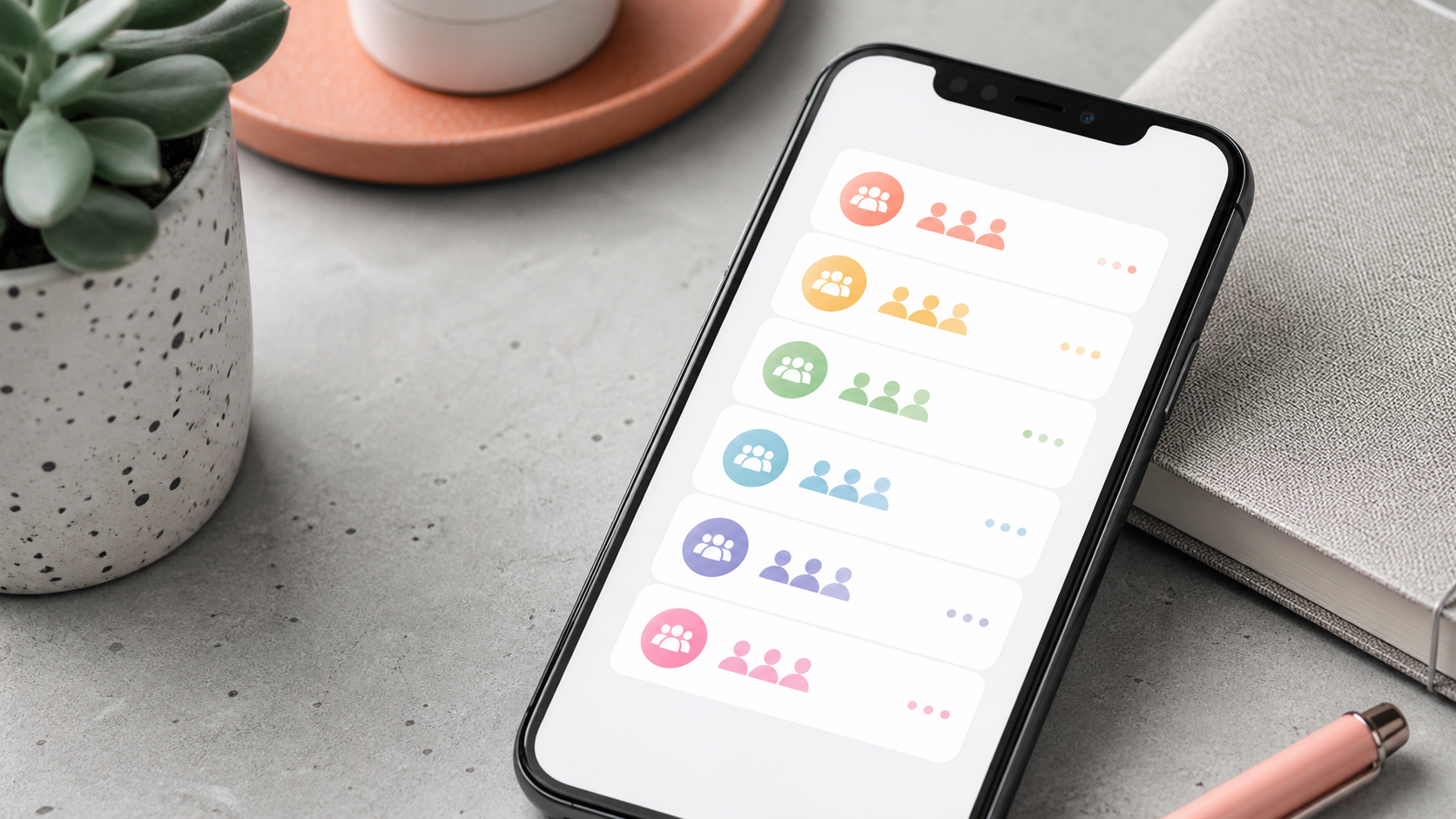
Chat folders let you sort conversations into groups based on purpose, priority, or people. You might keep school chats in one folder, team updates in another, and family or social threads somewhere else. The exact labels do not matter as much as having a clear structure.
The main benefit is that you are no longer scanning one long list every time you open the app. Instead, you can go straight to the chats that matter in that moment. That saves attention, and it also reduces the chance of missing a message because it was pushed down the list.
Think of folders as a filing system for chat groups. They do not change the conversation itself. They simply give it a place to live.
Why folders help busy chat groups stay readable
When a chat group gets busy, the problem is often not the number of messages alone. It is the mix of message types. Announcements, questions, jokes, reminders, and replies all sit together, which makes it harder to spot what needs a response.
Folders help by letting you separate high-value conversations from low-priority ones. A class admin chat can sit apart from a student discussion group. A project channel can be kept away from casual team chat. That makes the app easier to scan, and it helps people return to the right place more quickly.
This is especially useful if you are part of several chat groups at once. The more groups you join, the easier it is for everything to blur into one stream. Folders bring a little order back without asking anyone to change how they speak.
- Keep urgent chats visible without everything else getting in the way
- Separate different parts of your life, such as school, work, and personal chats
- Make it easier to return to the right conversation later
- Reduce the feeling of information overload when messages pile up
Good folder setups for school and university
School and university chats can become messy because they often mix announcements, deadlines, group work, and social conversation. A folder structure gives each type of message a clearer home. You might keep one folder for official class updates, another for study groups, and another for clubs or societies.
For students, this can make a real difference during busy periods. When deadlines are close, it is much easier to check the folder that contains course updates than to scroll through unrelated group chat. The same applies when a lecturer, tutor, or class rep posts something important and you want to find it again later.
It also helps with shared responsibility. In a group project, one person may need to watch the admin chat while another keeps an eye on the discussion thread. Folders make that division clearer, especially in larger chat groups where different conversations overlap.
Folders are not the same as muting
People often use muting and folders for the same reason, but they solve different problems. Muting reduces interruptions. Folders reduce confusion. If you mute everything, you may stop the noise, but you can also miss messages that should have stayed visible.
That is why folders are often a better first step for busy groups. You can keep an important conversation accessible without letting it dominate your main chat list. The chat still lives there, ready when you need it, but it does not crowd out everything else.
For example, a parent chat for a school trip may need to stay active, but not every message is urgent. A folder keeps it accessible. You can look in when needed, then return to your main conversations without losing track of the rest.
How to build a simple folder system
The best folder system is usually the one you can maintain without effort. Too many categories can be just as confusing as no structure at all. A small number of clear folders is usually enough for most people.
Start by grouping chats by purpose. Then, if needed, refine those groups by urgency or setting. You do not need a perfect system on day one. The point is to make it easier to find conversations, not to create another task to manage.
Here is a simple approach that works well for many people:
- Put urgent or high-priority chats in one folder
- Keep school or university chats together
- Separate work or team chats from personal conversations
- Make one folder for announcements and admin
- Leave room for a catch-all folder if you need it
If you use PigeonChat, the same idea applies. The exact labels are up to you, but the goal is always the same: fewer distractions, faster scanning, and less risk of losing track of a useful thread. On PigeonChat, that kind of structure can make active chat groups much easier to live with.
When folders are most useful, and when they are not
Folders are most helpful when you are dealing with many overlapping conversations. If you only use one or two chats, you may not need them at all. But once your messages start competing for attention, a folder system becomes valuable very quickly.
They are also most useful when different chats serve different roles. A sports team group is not the same as a parent group, and neither is the same as a revision chat. Keeping them separate helps each conversation stay readable in its own context.
There is a limit, though. If you create a folder for every slight difference, you may spend more time organising than chatting. Simplicity wins. Most people only need a few clear buckets, not a complicated archive.
Frequently asked questions
Do chat folders replace notifications?
No. Chat folders help you organise conversations, while notifications tell you when something has changed. They work best together. A folder keeps related chats easy to find, and notifications let you decide when to look at them.
Are chat folders useful for small groups?
Sometimes, yes. Even a small set of chat groups can become confusing if each one serves a different purpose. Folders are especially useful when you want to separate practical chats from social ones, or when you need to keep school or university messages easy to reach.
What is the simplest folder setup to start with?
Begin with three or four broad categories, such as urgent, school, work, and personal. That is enough for most people. If you later find that a category is too broad, you can split it into smaller sections, but start simple so the system is easy to keep using.
In the end, chat folders are not a fancy feature. They are a practical way to keep busy chats readable without muting important conversations. If your message list feels crowded, a small amount of structure can make a large difference. That is true in school, university, work, and anywhere else people gather in chat groups to coordinate their lives.
Ready to try PigeonChat?

Writer & Editor at PigeonChat
Related Articles
Why chat folders matter for busy group conversations

How image sharing works in private chat apps

What chat features users expect in modern private apps

Why chat folders help busy groups stay organized

How chat groups help schools and universities stay organized