
How chat folders help busy groups stay organized
Chat folders can separate classes, clubs, clients, and family threads fast. Learn how they keep busy conversations easier to manage.
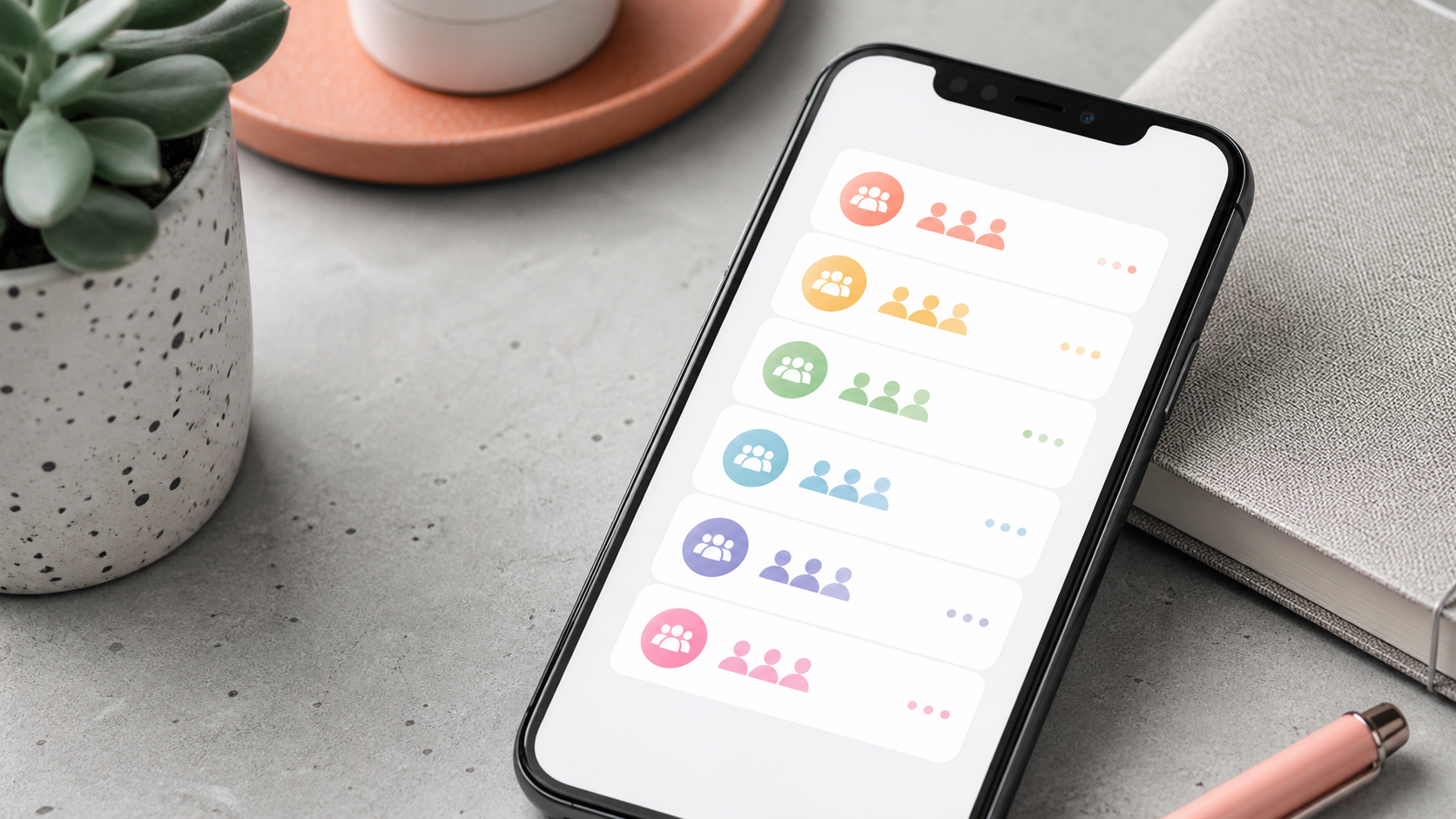
Busy chat groups can be helpful, but they can also become hard to follow very quickly. One announcement gets buried under class discussion, a few casual messages pull attention away from a plan, and suddenly nobody is sure where to look. That is where chat folders make a real difference. They are not just a neat extra. For active communities, they are a practical way to keep conversations usable.
If you manage chat groups for work, school, university, a club, or a family, you already know the problem. The more people talk, the more sorting matters. An organized chat structure helps people find the right thread faster, stay focused, and avoid missing important updates. It also makes a private group chat feel less chaotic, especially when several projects or topics are running at once.
In this article, we will look at why folders matter, how they help different kinds of groups, and how to set them up in a sensible way. The goal is not to create more admin for its own sake. It is to make group communication calmer and easier to use, whether you are organising a student society, a team, or a neighbourhood chat.
Why chat folders matter when conversations multiply
In a small group, a single stream of messages may be enough. In a busy group, it often is not. Once a chat becomes active, people start using it for different things at different times. Some messages are urgent, some are informational, some are social, and some are simply not relevant to everyone. Chat folders help separate those needs before the conversation turns into clutter.
This matters because people rarely read messages in order from top to bottom once a group gets busy. They glance, skim, and return later. If everything is mixed together, important context gets lost. A folder structure gives people a simple way to decide, at a glance, where to look first and what can wait.
For platforms like PigeonChat, the value of folders is not only in tidiness. It is in reducing friction. When people can move between chat folders quickly, they spend less time searching and more time participating in the right discussion.
How chat folders support chat groups in school and university
School and university communities are a strong example of why folders matter. A student might be in a class chat, a project group, a society group, a housing group, and a general year chat all at once. Without structure, those conversations blur together. A message about coursework can easily sit next to an event invite or a room swap request, and that makes it harder to respond properly.
With chat folders, those chats can be grouped by purpose. For example, a student could keep academic chats in one folder, social groups in another, and practical admin in a third. That makes it easier to check the right messages at the right time, especially during busy periods such as deadline week or term start.
For organisers too, folders can reduce repeated questions. If the group knows where updates live, people are less likely to ask the same thing in the wrong place. That creates a more organised chat and helps the whole group stay on the same page.
Using folders to separate topics, roles, and priorities
The best folder system is usually the simplest one that fits the group. You do not need dozens of labels. In fact, too many folders can become as awkward as too many chats. The aim is to create a clear path through the most active conversations, not to turn messaging into paperwork.
Many busy groups organise around a few common categories:
- Urgent updates and announcements
- Day-to-day discussion
- Project or task-specific chats
- Social or off-topic chat groups
- Private group chat spaces for smaller teams or committees
This kind of separation helps people decide where to engage. A committee member can check the private group chat first, while everyone else can keep an eye on announcements. Someone in a large community can ignore casual chatter during work hours and return to it later without losing the important thread.
Folders are also useful when different people have different responsibilities. A leader, a helper, and a general member may all need access to the same platform, but not the same level of attention. Good folder design helps each person focus on the conversations that matter to them.
Practical ways to build an organized chat
Good folder habits are mostly about consistency. If everyone sorts chats in a different way, the system becomes confusing. If you set a small number of clear rules and keep them stable, the whole group benefits. That is true whether the group is formal or informal.
Start by asking what people most often need from the chat. Is it finding announcements, separating personal chatter, tracking tasks, or keeping different communities apart? Once that is clear, choose folders that reflect real behaviour rather than ideal behaviour. A folder system should match how people already use the chat, not force them into a completely new routine.
Here are a few simple habits that help:
- Keep folder names short and obvious
- Use the same naming pattern across related groups
- Review folders when the group changes purpose or size
- Move inactive chats out of the main view
- Put time-sensitive groups where they are easy to reach
If your chat platform supports it, combine folders with notifications that match each category. That way urgent chats stay visible without making every group noisy. This balance is especially useful in a busy private group chat, where members may want contact but not constant interruption.
When folders work best in active communities
Folders are most valuable when a group has enough activity that context starts to matter. A single family chat may not need much structure. A society committee, a course cohort, a sports team, or a distributed work group usually does. The more overlapping conversations you have, the more folders protect clarity.
They also help during shared transitions. At the start of term, when a new project launches, or when a community is growing, people often join several new chats at once. A folder system gives newcomers a map. Instead of facing a long list of similar group names, they can quickly identify where to look for the right type of information.
PigeonChat is built with that kind of everyday organisation in mind. But even if you use another tool, the principle is the same: when communication becomes busy, structure is not decorative. It is what keeps the system usable.
Common mistakes to avoid with chat folders
One common mistake is over-creating folders. If every small variation gets its own category, people stop using the system properly. Another problem is unclear naming. A folder called “General 2” or “Misc” does not help anyone decide what belongs there. Good folder names should tell a person what they will find before they even open the chat.
Another issue is failing to update the structure as the group changes. A folder system that worked for a six-person project may not work for a thirty-person team or a large school club. It is worth checking whether chats still belong where they were placed originally. Keeping an organised chat is an ongoing habit, not a one-time setup.
Finally, do not use folders to hide important conversations completely. The point is to make busy groups easier to manage, not to make key information harder to see. Important announcements should remain obvious, even if they sit inside a broader folder structure.
Frequently asked questions
What are chat folders for?
Chat folders help you group conversations by purpose so they are easier to find and manage. They are useful when you are part of several chat groups at once, especially if some are for announcements, some for projects, and some for casual conversation.
Do chat folders help in school or university groups?
Yes. School and university life often involves many overlapping chats, from class discussions to society planning to private group chat spaces. Folders make it easier to separate academic, social, and practical conversations so people do not miss the right messages.
How many folders should I create?
Usually, fewer is better. Start with a small number of clear categories based on how the group actually communicates. If people can tell instantly where a chat belongs, the system is probably simple enough. If not, it may need simplifying.
When chat groups stay active, folders become more than a convenience. They are one of the simplest ways to keep conversations clear, responsive, and manageable. A good folder system does not remove the energy from a group. It helps direct that energy so the right people see the right messages at the right time. That is what makes an organized chat sustainable, especially when the pace picks up.
Ready to try PigeonChat?

Writer & Editor at PigeonChat
Related Articles
Why chat folders matter for busy group conversations

How image sharing works in private chat apps

What chat features users expect in modern private apps

Why chat folders help busy groups stay organized

How chat groups help schools and universities stay organized