
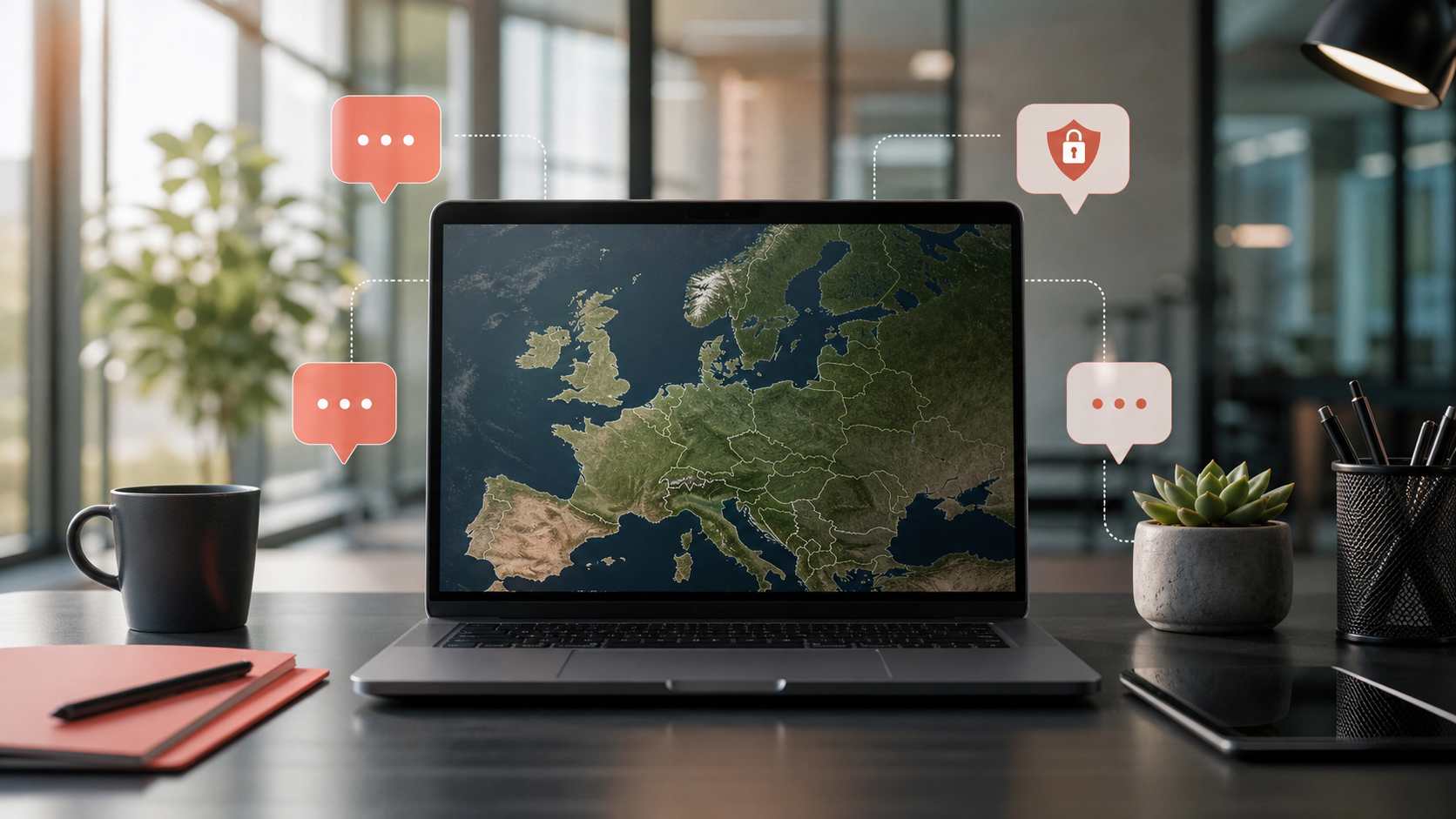
What a privacy first EU chat app should offer
A practical look at what people expect from a privacy first EU chat app, including compliant design, encryption, and clear data handling.
Choosing an EU chat service is no longer just about where the servers sit. For many organisations and individuals, the real question is whether a European chat app can combine privacy, compliance, and clear operational transparency without becoming awkward to use. That is a fair expectation, and it is now one of the main reasons people look for a Privacy first chat app rather than settling for the biggest name on the market.
In practice, users want fewer surprises. They want to know where data is stored, how it is protected, what the provider can access, and which legal obligations shape the service. A fully compliant EU chat app should not treat those details as extras. They should be part of the product from the start, alongside sensible design, reliable messaging, and straightforward administration.
This is where the best EU chat tools stand out. They do not ask people to choose between convenience and control. Instead, they make privacy understandable, compliance visible, and everyday communication easy enough that teams will actually use it. That balance is exactly what a privacy-aware user expects from a modern European chat app pigeonchat.site or any similar service built for European needs.
What privacy means in a European chat app
Privacy in chat is not only about encryption, although encryption matters a great deal. It also includes how much data is collected, how long it is retained, whether metadata is minimised, and whether the service can be operated without exposing unnecessary personal information. A genuinely Privacy first chat app will make these choices deliberately rather than by accident.
For EU-focused users, privacy also means legal clarity. If a provider can explain its data handling in plain language, that is a good sign. If it can tell you what is stored, where it is stored, and who can access it, users and administrators can make informed decisions. That transparency builds confidence more effectively than vague marketing claims.
It is also worth remembering that privacy is not just for highly sensitive sectors. Small businesses, community groups, schools, freelancers, and households all benefit from limiting data exposure. A better European chat app gives those users practical control without forcing them into complex technical workarounds.
Compliance is not a bonus feature
A fully compliant EU chat app should be designed with European expectations in mind from the outset. That includes support for the GDPR, sensible data processing terms, and documentation that helps organisations understand their responsibilities. Compliance should not require a maze of custom settings or legal guesswork.
It helps when the provider is specific about its role. Is it a data controller, a processor, or both in different contexts? What retention policies apply? How are requests for access, deletion, or portability handled? These are not niche questions. They are central to procurement, security reviews, and everyday trust.
For many buyers, compliance is also about reducing operational risk. Teams want to avoid tools that create uncertainty during audits, onboarding, or offboarding. If an EU chat product can support those workflows cleanly, it becomes much easier to adopt across an organisation.
Transparency is what users notice when things go wrong
Transparency is often ignored when everything is working, but it becomes crucial the moment questions arise. Users want to know how incidents are handled, whether status updates are timely, and what happens if a message cannot be delivered. A privacy-focused service earns trust by being clear before a problem appears.
Good transparency also covers product design. If a platform uses end-to-end encryption in some areas but not others, that should be explained. If a feature requires additional processing, users should understand why. A modern European chat app should not rely on technical obscurity to avoid difficult conversations.
Providers that document their security model well make life easier for everyone. Administrators can assess risk, users can make informed choices, and support teams can answer questions faster. That kind of clarity is often more valuable than a long list of promised features.
- Clear data storage locations and jurisdiction details
- Plain-language explanations of encryption and access controls
- Published retention and deletion policies
- Easy-to-find incident and status updates
- Documentation for admin, security, and compliance teams
Features that matter in day-to-day use
Privacy only becomes useful when the chat app works well enough for everyday communication. That means reliable delivery, strong identity controls, sensible admin tools, and a user interface that does not get in the way. A Privacy first chat app should feel calm and practical rather than heavy or over-engineered.
Common features that matter include message history controls, group management, secure file sharing, and role-based access. For organisations, audit trails and admin visibility may be important too, but those tools need careful design so they do not undermine the privacy promise. The best services separate operational oversight from casual surveillance.
PigeonChat is a good example of how privacy positioning should be handled in the market conversation. Even if you are comparing several options, the useful question is the same: does the product help people communicate securely while respecting EU expectations, or does it treat compliance as a badge on a landing page? That distinction matters more than branding.
How to evaluate an EU chat product properly
When assessing a European chat app, start with the provider’s public documentation. Look for privacy notices, security explanations, terms of service, and data processing details that are easy to find and understand. If the basics are hidden, the product may be more difficult to govern later.
Next, think about control. Can administrators manage users and devices sensibly? Can individuals understand and adjust their own privacy settings? Does the platform offer export, deletion, and access options that match EU expectations? These questions help separate a thoughtful fully compliant EU chat app from one that merely sounds reassuring.
It is also sensible to assess the company behind the tool. A stable support model, clear contact routes, and a visible approach to updates all matter. Trust is not built solely through technical claims. It is built through predictable operations and honest communication.
Signs of a privacy first chat app
There are some practical signs that often indicate a stronger privacy posture. None of them is perfect on its own, but together they give a good picture of how the service is likely to behave in real use. If you are comparing options, these points are worth checking early.
- Minimal data collection by default
- Clear explanation of what is encrypted and when
- European hosting or a well-explained hosting model
- Transparent retention, export, and deletion controls
- Documented compliance support for EU customers
- Support materials written for non-specialists as well as admins
In general, the strongest services are the ones that make these features easy to verify. A European chat app should not ask users to trust marketing language alone. It should provide enough detail for a buyer, a privacy officer, or an ordinary user to understand what they are choosing.
Frequently asked questions
What makes an EU chat app different from a general chat platform?
An EU chat app is typically designed with European data protection expectations, hosting choices, and legal requirements in mind. That does not automatically make it better, but it should make compliance and transparency easier for European users and organisations.
Does privacy always mean end-to-end encryption?
Not necessarily. Encryption is important, but privacy also includes data minimisation, retention limits, access control, and clear governance. A service can have strong privacy practices in some areas and still need careful review in others.
How can I tell if a chat service is truly compliant?
Look for clear documentation, specific statements about data processing, user rights, hosting, and support for GDPR-related obligations. If the provider explains these matters plainly and consistently, that is usually a better sign than broad claims of being secure or compliant.
For EU-focused users, the ideal messaging product is one that makes privacy easy to understand, compliance easy to manage, and day-to-day communication easy to trust. That is the standard a serious European chat app should meet. If a platform can do all three, it earns attention for the right reasons.
Ready to try PigeonChat?

Writer & Editor at PigeonChat
Related Articles

What makes an end to end encryption chat app secure
What a fully compliant EU chat app should include

Why people search for a WhatsApp alternative without a number

What end to end encryption chat really protects
Why chat folders matter for busy group conversations