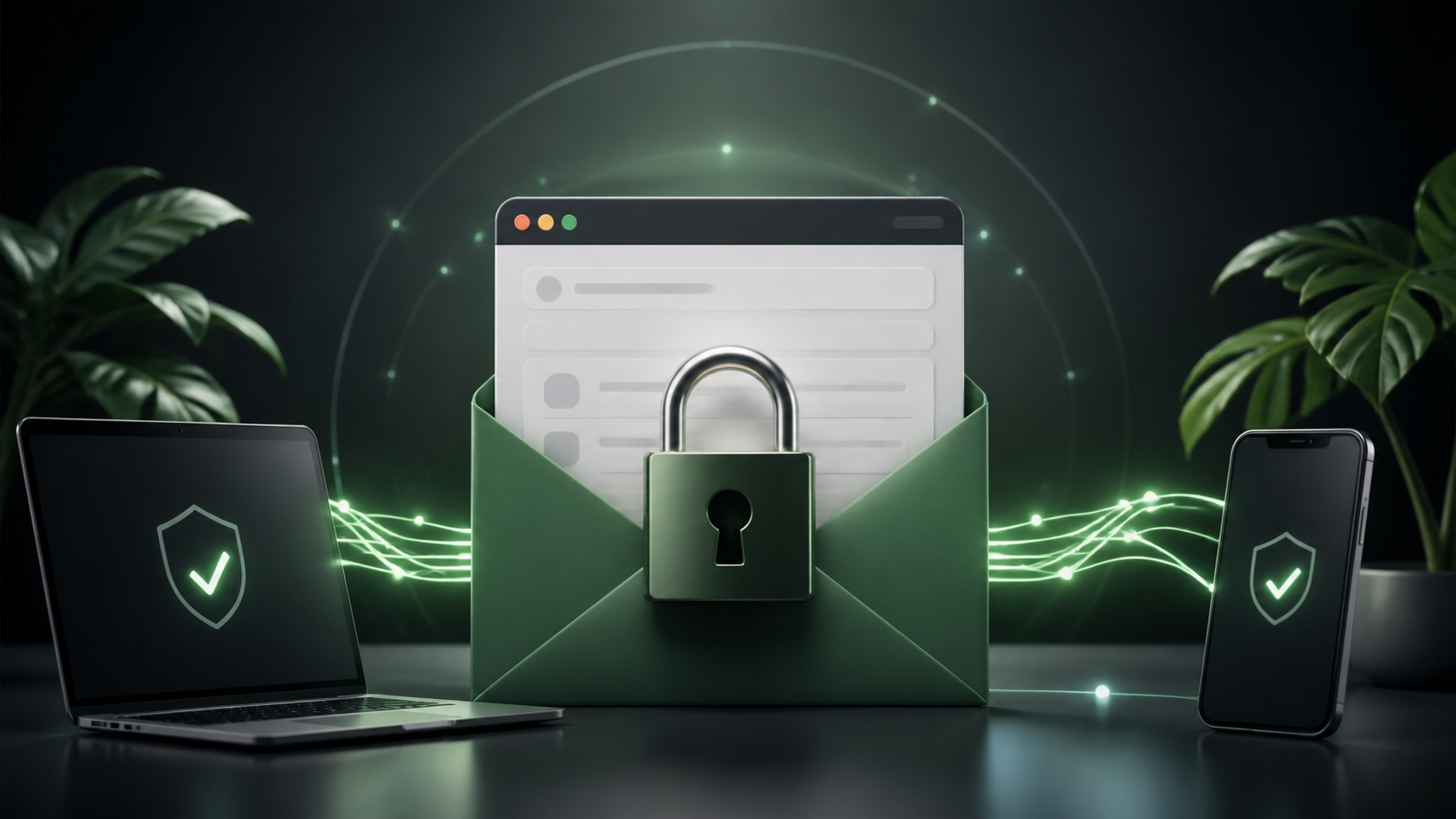
How end to end encryption chat works in browser
Understand how end to end encryption protects browser chats, what it can and cannot secure, and why it matters for private messaging.
Browser-based encrypted chat has a simple promise: your messages should stay private without forcing you to install a heavy app or learn a complicated workflow. That is the basic idea behind an end to end encryption chat. The browser helps you connect, but it should not be able to read the message content itself.
Done well, this can feel almost invisible. You open a page, join a conversation, type as usual and send. The difference is what happens behind the scenes. Before anything leaves your device, the message is turned into encrypted data that only the intended recipients can decrypt.
That balance matters. People often assume strong privacy means awkward software, extra steps or a worse chat experience. In practice, browser encryption can be both secure and straightforward, especially when the design is careful and the keys stay under the user’s control. That is the approach taken by privacy focused products such as PigeonChat.
What end to end encryption chat actually means in a browser
End to end encryption means the message is protected from the moment it leaves the sender’s device until it reaches the recipient’s device. In a browser chat, the browser acts as the place where encryption and decryption happen, usually through JavaScript and modern cryptographic APIs.
The server still plays a role, but a limited one. It can route messages, manage rooms and store encrypted blobs if needed, yet it should not have the keys needed to read message content. In other words, the server can help move the message, but it cannot meaningfully open it.
This is why the phrase encrypted private chats is more than a marketing line when the system is built properly. The content stays private even if the transport layer, hosting provider or database is exposed, because those systems only ever see ciphertext rather than readable text.
How browser encryption works step by step
A typical flow starts when your browser creates or loads the cryptographic keys used for a conversation. Those keys may be generated locally on first use, derived from a secure login process or exchanged with another participant using a key agreement scheme. The important part is that the browser does the sensitive work before any content is sent.
When you type a message, the browser encrypts it locally. The server receives only the encrypted payload, along with whatever routing data is needed to deliver it. The recipient’s browser then decrypts the payload after proving it has the right key. The conversation feels normal, but the message itself is never exposed in readable form to the middle layer.
For users, this should still feel like ordinary chat. A good privacy first chat app hides the cryptography behind familiar actions such as clicking a room, inviting a contact or pressing send. PigeonChat is designed with that principle in mind, because privacy only works in real life if people actually find the product usable.
Why browser-based encryption can still be secure
Many people worry that anything running in a browser must be less safe than a native app. That is not automatically true. Security depends on how the system is built, how keys are handled and how much trust you place in the browser environment itself. Modern browser cryptography can be robust when implemented carefully.
The browser is already a common place for sensitive tasks such as banking and document editing. The difference with chat is that encryption needs to happen locally and consistently, with minimal chances for the server to interfere. If the application avoids exporting keys, limits what the backend can see and uses sensible session handling, browser-based encryption can provide strong protection without adding unnecessary friction.
It is still worth being realistic. The browser is not magic. A compromised device, malicious extensions or phishing can weaken any encrypted system. But those risks affect native apps too. What end to end encryption chat protects against most effectively is unwanted access in transit and on the server side.
The usability side: privacy should not make chat harder
The strongest private messaging tools fail when they are awkward. People need quick access, clear contact lists, sensible notifications and smooth room joining. If a system asks users to manage complex keys manually for every chat, most people will either make mistakes or give up.
That is why good browser encryption focuses on good defaults. It should connect quickly, keep sign-in simple and make secure behaviour the normal behaviour. In practice, this means the user should not need to understand the underlying maths to benefit from it.
Useful design choices often include:
- Automatic key generation and storage handled locally
- Clear invite and verification flows for starting encrypted private chats
- Readable status indicators without technical jargon
- Fast loading and low setup friction in the browser
- Reasonable recovery options that do not expose message content
This is where products like the PigeonChat e2e chat app pigeonchat.site can be instructive. The goal is not to make people think about cryptography all day. The goal is to let them chat normally while the application handles the hard parts quietly and securely.
What browser encryption does and does not protect
It helps to be precise about the threat model. End to end encryption protects the contents of your messages from the service operator, network observers and anyone who can inspect the server database without the keys. That is a major improvement over standard chat systems where providers can often access message content directly.
However, encryption does not hide everything. Metadata can still exist, such as the fact that two accounts talked, when messages were sent, and possibly which room was active. A privacy first chat app should minimise this where possible, but no system can promise total invisibility if it still has to deliver messages.
It also does not protect a device that is already compromised. If malware or an untrusted browser extension can read your screen or intercept your input before encryption happens, the message may be exposed before the cryptography has a chance to help. That is why browser hygiene, device updates and cautious extension use still matter.
What to look for in encrypted private chats
If you are choosing a chat tool, there are a few practical signs that the encryption story is genuine rather than decorative. You do not need to audit the code yourself, but you should be able to see that the product takes privacy seriously and explains its model plainly.
Look for a service that says where encryption happens, who controls the keys and what the server can and cannot read. Strong products usually make these points clear. They also avoid vague language that sounds reassuring but says very little.
As a quick checklist, ask whether the system:
- Encrypts messages on the client side before sending
- Keeps decryption keys out of server hands
- Explains how group chats and invites are secured
- Uses secure transport as well as end to end encryption
- Handles recovery, device changes and login without exposing content
Frequently asked questions
Can a browser really be trusted with end to end encryption?
Yes, if the browser application is designed properly and your device is secure. The browser performs the local encryption and decryption, but the keys should remain under the user’s control. The main risks are the same kinds you face with any software: a compromised device, malicious extensions or a weak implementation.
Does the server still see anything in an end to end encryption chat?
Usually yes, but only the minimum needed to operate the service. That may include encrypted message data, account identifiers, room membership and timing information. The key point is that the server should not be able to read the message content itself.
Is browser chat less private than a native app?
Not necessarily. Both can be secure or insecure depending on the design. A well-built browser-based system can support encrypted private chats effectively, especially when it reduces friction and keeps the privacy model easy to understand. The right choice is the one that combines sound cryptography with sensible everyday usability.
In the end, browser-based end to end encryption works because it changes what the service can see, not how the user chats. The best systems protect content quietly in the background, so the experience stays simple while the message stays private. That is the real value of a privacy first chat app: security that fits the way people already communicate.
Ready to try PigeonChat?

Writer & Editor at PigeonChat
Related Articles
What makes an end to end encryption chat app secure

What a fully compliant EU chat app should include

Why people search for a WhatsApp alternative without a number
What end to end encryption chat really protects
Why chat folders matter for busy group conversations