
How chat folders help busy groups stay organized
Learn how chat folders reduce noise for school, university and work communities by separating important threads from casual chats.
Busy group chats are rarely chaotic because people do not care. More often, they are chaotic because everything arrives in one stream. Announcements, reminders, homework, planning, jokes and urgent questions all compete for attention at the same level. That is where chat folders make a practical difference. They do not reduce the amount of conversation, but they make the conversation easier to navigate.
For active chat groups, the real problem is not message volume on its own. It is context loss. When a school club, university society or project team uses one shared space for everything, members spend time searching for the right thread, reopening old messages and asking the same questions again. Folders help by grouping chats around purpose, so people can find what matters without wading through noise.
This is less about neatness and more about momentum. When the right chat is easy to find, people reply faster, follow through more reliably and miss fewer important updates. If you have ever watched a group decide to organise a revision session, a weekend event or a rota in the middle of a flood of unrelated chatter, you already understand the value of a clearer structure. Tools such as PigeonChat are useful partly because they respect that reality.
Why message overload happens in active chat groups
Most busy communities start with a simple structure and then grow beyond it. A single group for a class, club or team works well at first because everyone shares the same purpose. But as soon as the group needs to handle planning, updates, questions and social chat, the original structure begins to blur. People are then forced to scan long histories to find one detail that should have been easy to locate.
This is especially common in school and university settings, where one chat can end up holding timetable changes, assignment reminders, event planning and last-minute questions. The more important the group becomes, the more likely it is to fill with side conversations. The result is not just clutter. It is friction. Members hesitate to check messages because they expect to spend time sorting them out.
How chat folders create clearer context
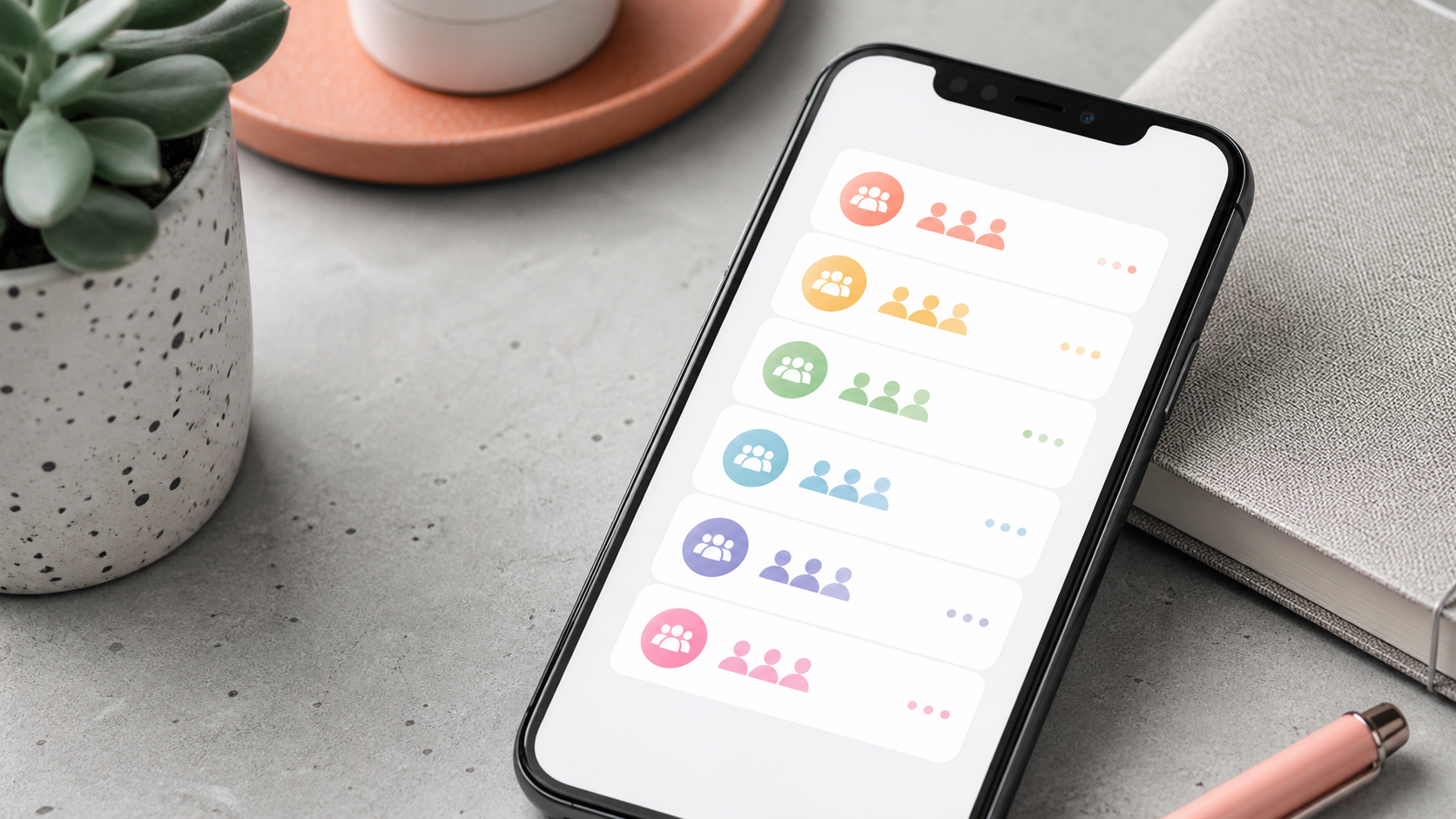
Chat folders solve the problem by giving different conversations different homes. Instead of treating every chat as equal, they let you separate by role or priority. A folder can hold core announcements, another can hold planning chats, and a third can keep informal discussion out of the way. That simple separation helps people understand where to look and what to expect.
In practice, folders make scanning easier. If you know that one folder contains active event planning and another contains general updates, you can check each one with a clearer goal. That means less context switching and less mental load. For busy groups, this matters because attention is usually the scarce resource, not information itself.
Folders also support better habits. When a group has a clear place for each kind of message, members are more likely to post in the right place in the first place. Over time, that can improve the quality of the whole conversation, because people stop using one space for everything.
Where folders help most in school and university
In school, chat folders can separate year groups, subjects, study groups and extracurricular clubs. That makes it easier for pupils to keep track of what is relevant to them without getting distracted by unrelated chatter. A student trying to find the revision plan for maths does not need to trawl through football updates or year trip messages.
At university, the benefit is even more obvious. Students often belong to multiple chat groups at once, including course groups, seminar groups, accommodation chats and society chats. Without folders, it is easy to miss an important deadline because it was buried beneath several unrelated discussions. With folders, each chat has a clearer purpose and a more predictable place in the day.
That is also helpful for organisers. Teachers, tutors, society officers and course reps often need to keep several conversations moving at once. Folders let them separate administrative work from general discussion, which makes it easier to stay responsive without feeling overwhelmed.
What a good folder structure looks like
The best folder system is simple enough that people actually use it. If the structure is too clever, members will ignore it and drift back to one catch-all chat. A useful rule is to organise by purpose first, and by urgency second. Keep the number of folders small and clear.
- Announcements - one place for essential updates that people need to see quickly.
- Planning - event prep, schedules, rota changes and coordination.
- Questions - a home for queries that may need answers from multiple people.
- Social - informal chat, jokes and lighter conversation.
- Archived or quiet chats - groups that are still useful but do not need constant checking.
You do not need to use every folder type above. The right structure depends on how your community works. A school group may only need announcements, homework and social. A university society may need event planning, committee chat and member updates. The point is to reduce search effort, not to build a perfect taxonomy.
How folders improve habits, not just organisation
One of the most useful effects of chat folders is behavioural. They gently teach people where to post, where to look and when to check in. That reduces duplicate messages and makes conversations feel more intentional. Over time, people become less likely to interrupt a planning chat with a casual aside, because there is a better place for that aside to go.
Folders also help members who are less active but still need to stay informed. Not everyone wants to read every message, and they should not need to. When the structure is clear, quiet members can focus on the one or two folders that matter to them most. That makes participation feel manageable rather than demanding.
For moderators and group admins, this can be the difference between a chat that feels under control and one that feels constantly on the edge of overload. A well-structured system does not remove the need for judgement, but it does reduce the number of small decisions people need to make every day.
Practical ways to introduce folders without confusing people
If you are setting up chat folders for an existing community, start by explaining the purpose in plain language. People should know that the goal is not to create extra rules for the sake of it. The goal is to make it easier to find important messages and keep conversation usable for everyone.
It also helps to model the behaviour yourself. If organisers consistently post announcements in the announcement folder and planning messages in the planning folder, others will follow. Small examples matter more than long instructions. When the structure is visible and simple, people adapt quickly.
For best results, review the system after a short period and remove anything that is not actually helping. A folder only earns its place if it solves a real problem. If one category stays empty or causes confusion, merge it or drop it. Good organisation should feel lighter, not heavier.
Frequently asked questions
Do chat folders replace good moderation?
No. Folders help people organise conversations, but they do not decide what belongs in a group or how members should behave. Clear moderation still matters, especially in active chat groups where tone, relevance and timing affect everyone.
Are chat folders useful for small groups too?
Yes, though the benefit is smaller. Even a small school project group or university society may have separate needs for planning, questions and casual chat. If the structure is simple, folders can prevent a group from becoming messy as soon as it grows.
What is the biggest mistake people make with folders?
The most common mistake is making the system too complicated. If members have to think too hard about where a message belongs, they will not use the folders consistently. A small, obvious structure is usually more effective than a detailed one.
Busy communities do not need more noise, and they do not need perfection. They need a better way to separate what is urgent from what is merely active. That is why chat folders work: they give people a simple map for conversations that would otherwise blend together. For school, university and every other lively group, that kind of clarity is often what keeps the chat usable.
Ready to try PigeonChat?

Writer & Editor at PigeonChat
Related Articles
Why chat folders matter for busy group conversations

How image sharing works in private chat apps

What chat features users expect in modern private apps

Why chat folders help busy groups stay organized

How chat groups help schools and universities stay organized