
How school chat groups stay private and organized
See how schools can keep chat groups private, reduce noise, and manage class updates with folders, moderation, and browser access.
School communication works best when it is structured. When messages are scattered across a public-style feed, important notices get buried, parents miss updates, and staff spend too much time repeating themselves. A school needs chat groups that are easy to follow, easy to moderate, and clearly separated by purpose.
That is why the conversation is not really about being online all the time. It is about creating the right rooms for the right people. A good system gives each class, year group, club, or staff team a defined space, with clear boundaries and sensible permissions. In practice, that means using private browser chat tools and well planned chat folders, rather than a single open stream that tries to serve everyone at once.
For schools, privacy and organisation go together. If people can find the right discussion quickly and trust that it is secure, they are far more likely to use it properly. PigeonChat is one example of a tool built around that idea, but even if you use something else, the principles are the same.
Why school chat groups need structure
A school is not one audience. It is many audiences with different needs, routines, and levels of access. Staff may need operational updates, parents may need class announcements, and students may need help with homework or trip logistics. If all of that sits in one place, it becomes noisy very quickly.
Structured school communication helps reduce confusion. A year group group can carry deadline reminders. A club group can handle event changes. A staff group can cover safeguarding reminders or rota changes. Each chat group has a purpose, and that purpose should be obvious from the start.
That structure also supports better behaviour. When people know where to post, what belongs in a thread, and who is expected to read it, the conversation stays cleaner. It is much easier to maintain a calm tone when the space itself is designed with order in mind.
Keeping school chat groups private
Privacy in a school setting is not optional. A message sent to the wrong group can expose personal information, create safeguarding concerns, or simply lead to awkward confusion. Good systems make access control straightforward, so only the right people can see a conversation.
This is where a private browser chat approach can be useful. If the chat is available in the browser, families and staff do not need to install extra software just to check updates. But browser access should not mean open access. It should still require proper sign-in, group membership, and sensible permissions.
Schools should also think about what should never be shared in a group at all. Medical details, disciplinary issues, and anything sensitive should usually stay out of group messaging. A private chat is a communication channel, not a replacement for professional judgement.
Using chat folders to reduce noise
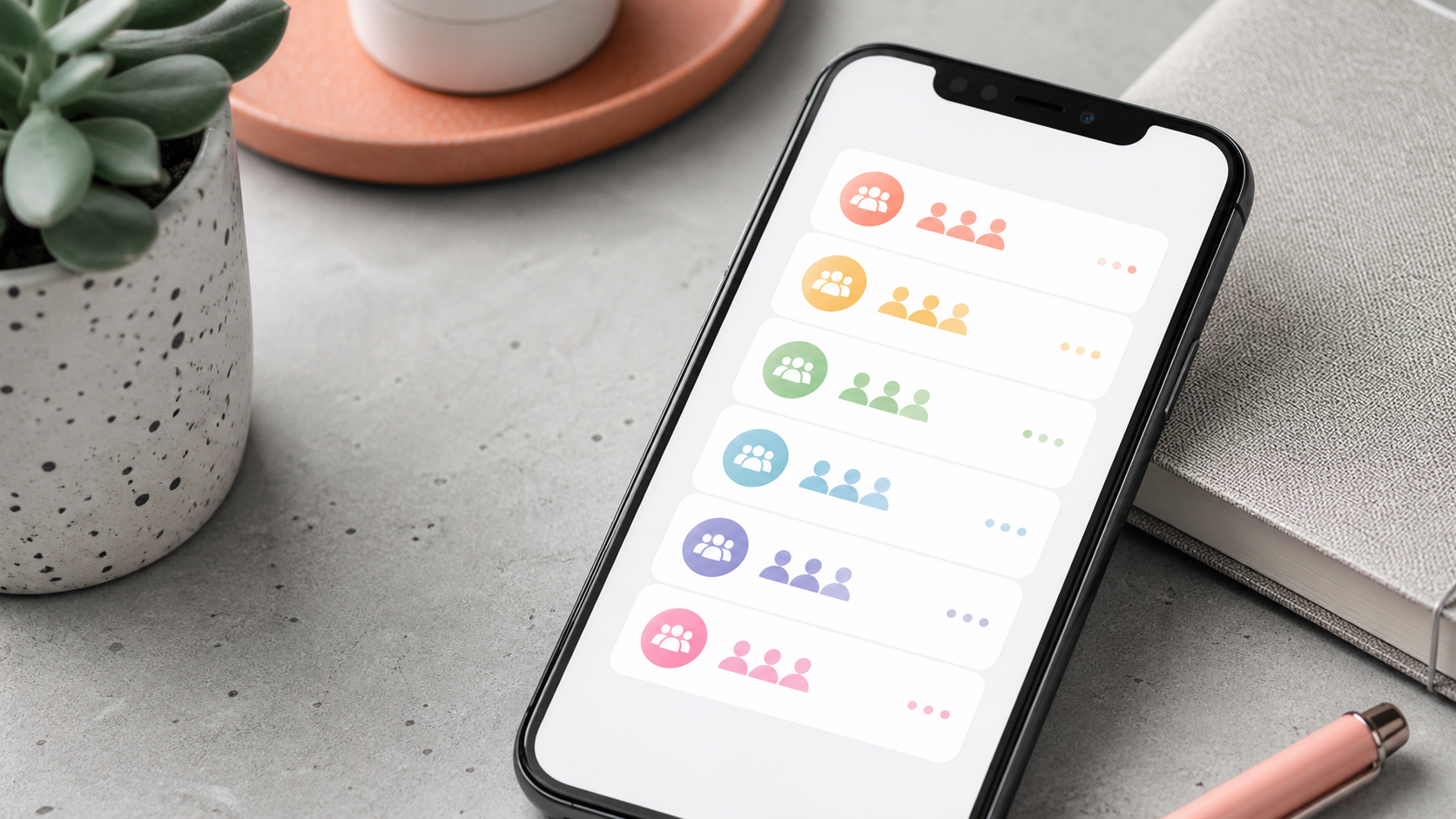
Chat folders are a simple but effective way to make messaging feel manageable. Rather than showing every conversation in one endless list, folders can separate staff, parents, classes, clubs, and admin updates. That means a teacher does not have to scroll past unrelated chats to find the ones that matter to them.
For schools, folders are especially useful when the same person belongs to several groups. A form tutor might need year group notices, subject team messages, and club coordination, all in one day. With clear folders, they can move between contexts without losing track of where a message belongs.
Well designed folders also help newcomers settle in. A new member of staff can instantly see which groups are for everyday communication and which are for specific tasks. That lowers the chance of missed messages and makes the system feel more approachable.
- Use folders to separate staff, student, parent, and admin conversations.
- Keep urgent operational updates in a clearly labelled space.
- Archive inactive groups rather than leaving them in the main view.
- Review folder names regularly so they still match how the school works.
Setting rules that keep conversations on track
The best messaging systems are not just about features. They are about habits. Every school should set a few clear rules for posting, replying, and escalating issues. For example, a group can be used for announcements only, while questions are directed elsewhere. That keeps important messages from disappearing into side conversations.
It helps to name the purpose of each group in plain language. Instead of a vague label, use something specific such as Year 9 Trips, KS2 Reading Club, or Staff Cover Changes. Clear naming reduces friction and makes it easier for people to choose the right place before they post.
It is also worth deciding who moderates each group. In many schools, that may be a teacher, office staff member, or team lead. The goal is not to police every message, but to keep the space usable and polite. A little structure goes a long way.
Choosing a system that works in the real world
In a busy school, the practical details matter. The best setup is one that works on different devices, loads quickly, and does not ask users to learn unnecessary steps. Families may check messages on a phone, while staff may prefer a laptop during the day. A browser-based system can suit both.
It is also helpful when the interface encourages good habits by default. If the layout makes it easy to see the right group, the right folder, and the latest message, people are less likely to make mistakes. That is one reason some schools look at tools such as PigeonChat, which focuses on straightforward group communication rather than broad social features.
The key point is simple. Schools do not need another open feed. They need a reliable way to organise communication so that people can act on it quickly, securely, and without unnecessary clutter.
Practical checklist for school communication
If you are planning or reviewing a messaging setup, start with the basics. A useful system should make it obvious who each group is for, what it is used for, and how private it is. That alone removes a lot of noise.
Here is a sensible checklist to work through:
- Separate groups by audience and purpose.
- Use private access, not public visibility.
- Create chat folders for fast navigation.
- Keep group names specific and consistent.
- Define who can post, reply, and moderate.
- Decide what information should never be shared in groups.
Once those basics are in place, the rest becomes easier. Staff spend less time searching, parents see fewer mixed signals, and students are less likely to be overwhelmed. Good organisation is not decorative. It is what makes the system usable.
Frequently asked questions
Why are structured chat groups better than a general social feed for schools?
Because schools need clear boundaries. A structured group keeps messages tied to the right audience, which reduces confusion and helps people find important updates quickly. A general feed is better at encouraging browsing, but schools usually need clarity, not browsing.
How do chat folders help staff and parents?
Chat folders separate conversations by role or topic, so people do not have to sift through unrelated messages. That is especially useful for staff who belong to several groups at once, or parents who only want class and school-wide updates.
Is private browser chat secure enough for school use?
It can be, if it uses proper sign-in, access control, and sensible moderation. Browser access is mainly about convenience. The important part is whether the system keeps groups private and limits visibility to the right people.
In the end, school messaging works best when it feels orderly, private, and easy to navigate. If a system helps people get the right information without extra noise, it is doing its job well. That is the standard schools should aim for, whether they are using PigeonChat or another platform.
Ready to try PigeonChat?

Writer & Editor at PigeonChat
Related Articles

How chat groups help schools and universities stay organized

How chat groups support schools and universities

Why chat folders help busy groups stay organized

How chat groups support schools and universities
Why chat folders matter for busy group conversations