

Why chat folders help busy groups stay organized
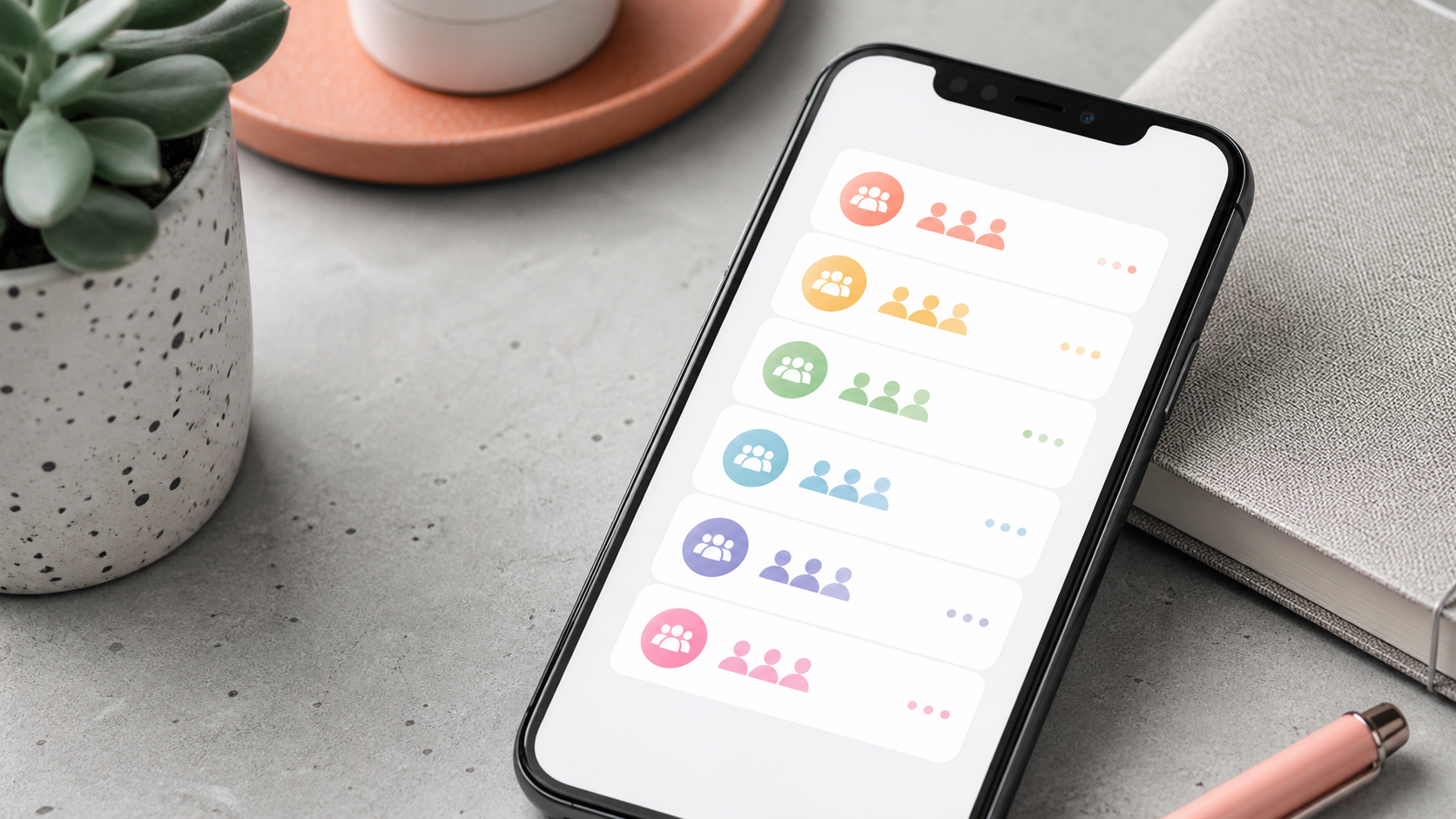
Chat folders can reduce noise in busy inboxes by separating work, school, family, and community threads into manageable spaces.
Busy group chats can feel efficient at first, then slowly turn into a long, noisy feed where important threads vanish beneath everything else. A question about next week’s rota sits beside a file drop, a joke, three unrelated replies and a decision that was made somewhere in the middle. By the time someone searches back, the moment has passed.
That is where chat folders make a real difference. Instead of treating every conversation as equal, folders let people group chat groups by purpose, priority or project. The result is not just less clutter. It is a more usable daily workflow, with message organization that matches how people actually work.
This matters whether you are managing a team, a volunteer group, a client space or a family organiser. Good chat features should reduce friction, not add more of it. With the right setup, tools like PigeonChat can make it much easier to separate urgent conversations from background noise without forcing everyone to change the way they talk.
Why group chats become hard to manage
Most groups do not become messy because people are careless. They become messy because the conversation has too many jobs to do at once. One channel may cover planning, updates, reminders, approvals and quick questions. Without structure, group chats begin to depend on memory, scrolling and guesswork.
The problem is worse when multiple chat groups overlap. The same people may be active in a project space, a social space and a support space, and each one has a different rhythm. When everything lands in the same list, the mental effort of deciding what to open can be as tiring as reading the messages themselves.
Chat folders help because they introduce a simple sorting rule. Instead of one long stream, you get categories that reflect intent. That makes message organization easier not only for the most active users, but for anyone who needs to catch up quickly after a busy day.
What chat folders actually do
At their simplest, chat folders let you collect related conversations into named groups. You might create folders for work, community, family, urgent messages or archived reading. The value is not visual neatness alone. It is faster decision-making every time you open the app.
Good chat features make folders flexible. You should be able to sort by people, group chats, unread messages or custom rules, depending on how you use the app. That flexibility is what turns a folder from a decorative label into a practical workflow tool.
Think of folders as a front door to your conversations. They help you choose the right context before you start reading. That matters because people often need different attention levels for different chat groups. A folder system can make that distinction obvious at a glance.
How folders change daily workflow
The biggest benefit of chat folders is reduced switching cost. Instead of checking every conversation in a random order, you can work through a focused set. A morning routine might begin with urgent messages, then move to project chats, then to general discussion. That is far easier than jumping between unrelated topics.
Folders also help with follow-up. If a discussion is waiting on a reply, putting that group into a dedicated folder makes it easier to revisit later. You are less likely to lose track of a half-finished task because it no longer disappears into the larger list.
- Separate urgent conversations from low-priority chatter
- Group chats by project, team, household or event
- Reduce the time spent scanning for the right thread
- Make unread messages easier to triage
- Keep archived or reference chats out of the way without deleting them
For many people, this is the point where chat folders stop feeling like an organisational extra and start feeling like part of the work itself. In PigeonChat, that kind of separation is useful because it reflects how different chat groups serve different purposes across the day.
Setting up folders without overcomplicating things
The best folder systems are boring in the right way. Keep the number of folders small enough that you can remember them instantly. If you create ten categories, you may end up spending more time deciding where something belongs than actually reading it.
A simple starting point is enough for most people. For example, you could use one folder for urgent work, one for active projects, one for social or internal chat, and one for reference material. If your conversations are heavily split by role, use that as the basis instead: clients, suppliers, internal, personal.
The aim is not perfect taxonomy. It is practical message organization. If a folder is only used once a month, it may not deserve to be visible every day. Better to keep the structure light and adjust it when your chat habits change.
When folders are especially useful
Chat folders are most helpful when a group has recurring patterns. A project team that meets weekly, a committee that handles approvals, or a family that shares practical updates all benefit from a clearer structure. In these settings, the conversation is not just social. It carries tasks that need to be found again later.
They are also useful when there are many chat groups with mixed urgency. If one space is for immediate action and another is for background information, folders help set expectations. People learn where to look first, and that alone can reduce avoidable delay.
There are a few signs that folders would help your workflow:
- You miss messages because important chats are buried
- You keep pinning or starring everything to avoid losing it
- You switch between the same conversations repeatedly
- You spend time searching instead of acting
- You feel mentally overloaded every time you open group chats
Good habits that make folders work better
Folders work best when the rest of your chat habits support them. Encourage people to keep topics in the right chat group where possible, instead of starting new side conversations for every small point. That reduces duplication and keeps the folder system reliable.
It also helps to agree on what belongs where. If everyone knows that one folder is for active work and another is for completed threads or reference, there is less confusion. The rules do not need to be formal. They just need to be clear enough that people can use them consistently.
Finally, review the structure occasionally. A folder that made sense for a busy month may be unnecessary later. The best message organization adapts to the way the group actually behaves, not the way you hoped it would behave.
Frequently asked questions
Are chat folders only useful for work?
No. They are useful anywhere conversations repeat and matter over time. That includes volunteer groups, community spaces, family coordination and hobby groups. Any place with active group chats can benefit from better sorting.
Do chat folders replace pinning or starring messages?
Not really. They solve a different problem. Pinning keeps a specific message visible, while folders organise whole conversations. Used together, they can make message organization much easier, but folders do more of the heavy lifting when you have lots of chat groups.
Will folders make chat feel too rigid?
They should not, if they are set up sensibly. A good folder system gives you structure without forcing every message into a strict process. The point is to reduce clutter and help people find the right place quickly, not to make conversation feel formal.
For busy groups, chat folders are one of the simplest ways to turn constant interruption into a calmer, more usable routine. They help people find what matters, reduce the effort of catching up and make group chats feel less like a torrent and more like a set of well-managed spaces. If you are exploring better organisation in your own team or community, PigeonChat is a useful example of how thoughtful chat features can support that kind of everyday clarity.
Ready to try PigeonChat?

Writer & Editor at PigeonChat
Related Articles
Why chat folders matter for busy group conversations

How image sharing works in private chat apps

What chat features users expect in modern private apps

How image sharing works in private chat apps

How chat groups help schools and universities stay organized